



The Old Art of the Moodboard
For decades, the creation of a client moodboard was a meticulous, time-consuming ritual. A creative team, tasked with defining the visual direction for a new brand or campaign, would spend hours, sometimes days, painstakingly scouring the internet. They’d
trawl through Pinterest, scroll endlessly through stock photo libraries, and sift through design archives, all in search of images that, when combined, would whisper the intended aesthetic. The goal was to build a visual consensus, a shared language between the agency and the client before a single piece of original creative was made. But the process was fraught with friction. The perfect image often remained elusive, buried under a mountain of ‘close enough’. The final collage, while evocative, was always a work of approximation, a puzzle assembled from pre-existing pieces.
Enter the AI Image Generator
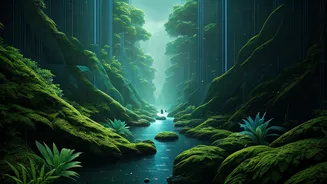
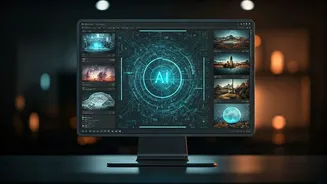
This traditional workflow is now being radically disrupted by generative Artificial Intelligence. Tools like Midjourney, DALL-E 2, and Stable Diffusion are no longer just novelties for creating surreal art online; they have become powerful co-pilots in the professional creative process. At their core, these are text-to-image models. An art director or strategist simply types a descriptive sentence—a 'prompt'—and the AI generates a unique, high-quality image based on that instruction. A prompt might be as simple as, “A minimalist cafe in Mumbai with terracotta pots and warm morning light,” or as abstract as, “The feeling of nostalgia captured in a hyper-realistic photograph of a vintage radio.” The AI doesn’t find an existing photo; it creates a new one from scratch, synthesising patterns from the billions of images it was trained on.
From Days to Minutes
The most immediate and dramatic impact on agencies is speed. What once took a team an entire day can now be accomplished in under an hour. Instead of searching for an image that approximates a vision, creatives can now generate the exact vision itself. An agency can produce dozens of visual variations for a single concept in minutes, exploring different colour palettes, lighting styles, and compositions on the fly. This acceleration has profound implications for the client-agency relationship. The initial 'chemistry check' on aesthetics happens faster. Clients can see a tangible, vivid representation of an idea almost instantly, allowing for quicker feedback, fewer misunderstandings, and a more collaborative and iterative start to a project. The days of waiting for the ‘big reveal’ are being replaced by a rapid, continuous visual dialogue.
A New Frontier for Creativity
While efficiency is the headline benefit, many creatives argue the real revolution is in the expansion of imagination. The traditional moodboarding process was inherently limited by what already existed and could be found. This led to a kind of visual echo chamber, where popular images from Pinterest or Getty Images would reappear across countless brand presentations, leading to aesthetic homogenisation. AI image generators break this cycle. They can conjure visuals that don't exist, blending styles and concepts in novel ways. A creative can ask for “1970s Bollywood sci-fi poster aesthetics applied to a modern fintech app” and get a truly unique starting point. This empowers agencies to present bolder, more distinctive ideas from day one, pushing clients beyond their visual comfort zones and unlocking entirely new creative territories.
The Human Curator Is Still Key
Despite fears of automation, this technology isn't making creative directors obsolete. Instead, it’s changing the nature of their skills. The new critical talent is 'prompt engineering'—the art and science of writing text that elicits the desired output from the AI. But more importantly, the human element remains essential for curation and strategy. An AI can generate a hundred beautiful images, but it takes a skilled strategist to know which one truly aligns with the brand’s purpose and the target audience’s desires. The AI provides the raw material; the human provides the context, the narrative, and the 'why'. The creative's job is shifting from 'image finder' to 'vision director' and 'strategic interpreter', using AI as an incredibly powerful paintbrush rather than being replaced by it.