





Why Bodyweight Squats?
The bodyweight squat is a foundational human movement, mimicking the simple act of sitting down and standing up. It's celebrated in fitness circles for its efficiency. With each repetition, you engage several of the largest muscle groups in your body,
including your quadriceps (front of thighs), hamstrings (back of thighs), and glutes (buttocks). This makes it a highly effective compound exercise. But the benefits don't stop at building strength. Regular squatting improves mobility and stability in your hips, knees, and ankles, which is crucial for long-term joint health. It also strengthens your core muscles, which are vital for good posture and reducing the risk of back pain. Best of all, it's a functional exercise that directly translates to easier daily activities, like lifting groceries or playing with children.
Mastering the Gentle Squat: A Step-by-Step Guide
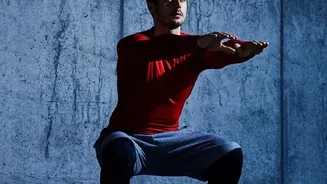
Proper form is everything. It ensures you get the maximum benefit while minimising the risk of injury. Start by standing with your feet about shoulder-width apart, with your toes pointed slightly outwards. Find a stance that feels natural and comfortable for your hips. Before you begin, engage your core by taking a breath and tightening your abdominal muscles, keeping your chest lifted and your shoulders back. Initiate the movement by pushing your hips back as if you are about to sit down in a chair behind you. Then, bend your knees and lower your body. Allow your arms to extend forward for balance. Go only as low as you can comfortably manage while keeping your heels flat on the floor and your back in a neutral position. A good goal for many is to have your thighs parallel to the floor, but don't force a depth that compromises your form. To stand back up, drive through your heels and mid-foot, extending your hips and knees to return to the starting position.
Common Mistakes to Avoid
As you practice, watch out for a few common errors. The most frequent is letting your knees collapse inward as you squat down. Consciously push your knees outward so they track in line with your toes. Another issue is lifting your heels off the ground. This often indicates tight ankles and shifts stress to your knees. If you find your heels lifting, try reducing your depth. Finally, avoid rounding your back. Keep your chest up and your spine neutral throughout the movement. A slight forward lean of the torso is normal and expected, but it shouldn't look like you're folding in half. Rushing the movement, especially on the way down, is also a mistake; a controlled descent is safer and more effective.
Your Five-Minute Gentle Squat Routine
Consistency is more important than intensity when you're starting. This simple five-minute routine can be done daily. Minute 1: Warm-up. March gently in place or perform some light leg swings to get your blood flowing and prepare your joints. Minutes 2-4: The Squat Set. The structure is simple: work for 45 seconds, then rest for 15 seconds. Repeat this three times. During the 45-second work period, perform your gentle bodyweight squats at a slow, controlled pace. Focus entirely on perfect form. If you're a beginner, you can even modify the exercise by squatting down to a sturdy chair and standing back up. * Minute 5: Cool-down. Finish with some gentle stretches for your legs, particularly your quadriceps and hamstrings. As you get stronger, you can progress by increasing the number of repetitions within the 45 seconds or by trying to squat a little deeper, as long as your form remains solid.