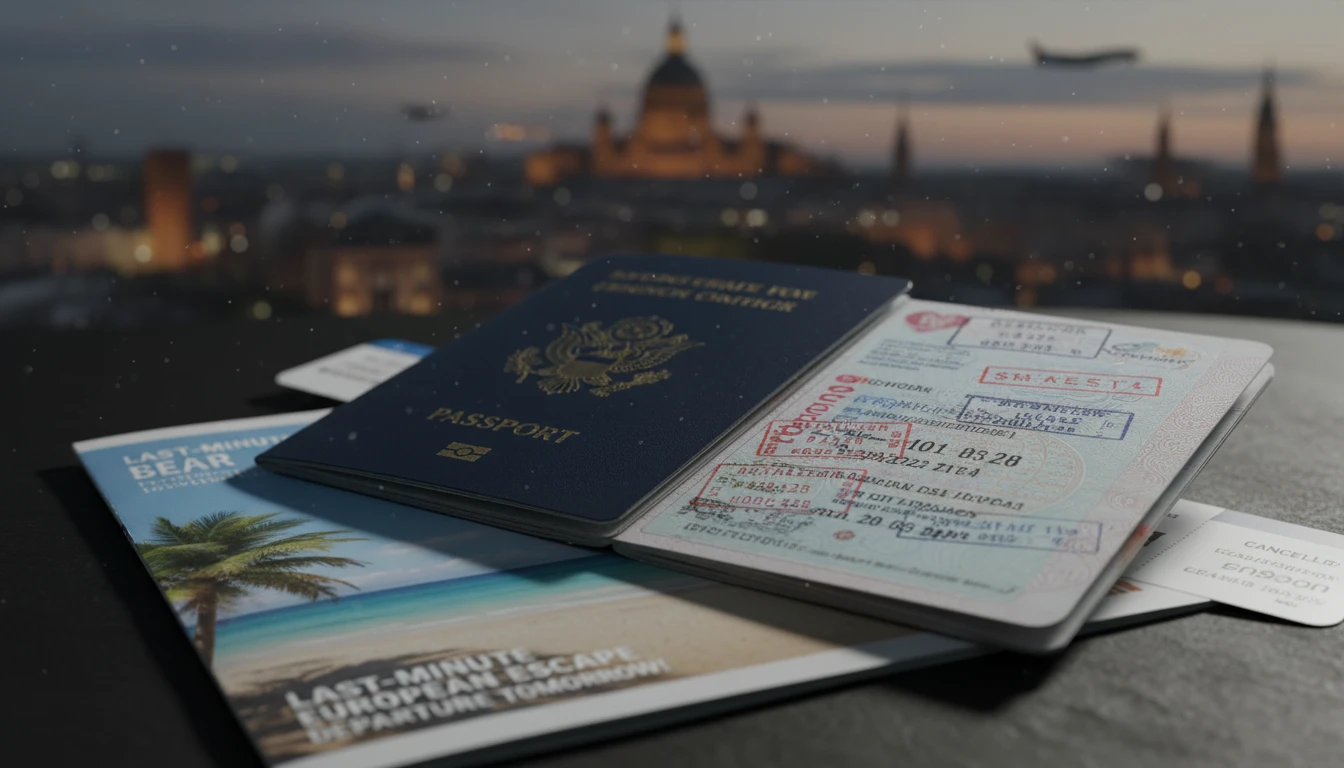









The Great European Dream Deferred
For countless Indian families and solo explorers, the idea of a quick trip to Paris, Rome, or the Swiss Alps has become a logistical nightmare. Social media and travel forums are filled with stories of cancelled flights, forfeited hotel bookings, and abandoned
holiday plans, all stemming from one core issue: the unpredictable and lengthy timeline for securing a Schengen visa. While the official processing time is cited as 15 calendar days, the reality on the ground is far different. During peak seasons, like the summer months of April through August, the entire process—from securing an elusive VFS appointment to getting a decision from an embassy—can stretch from six to eight weeks, and sometimes longer. This delay effectively kills any chance of a spontaneous getaway, forcing a radical shift in how Indians must approach European travel.
A Perfect Storm of Demand and Delays
The current situation is the result of a 'perfect storm' of factors. Post-pandemic wanderlust has unleashed a massive, pent-up demand for international travel. In 2025, Indians filed a record 1.15 million Schengen visa applications, making India the third-largest applicant market in the world, just behind China and Türkiye. This unprecedented surge has overwhelmed European consulates and their visa application centres across India, which are often still operating with limited staff. The result is a critical shortage of appointment slots, with dates at major centres in Delhi and Mumbai often filling up within minutes of being released. This leaves applicants in a constant state of refreshing web pages, hoping to snag a cancellation.
Not All Embassies Are Created Equal
The visa processing logjam is not uniform across all 29 Schengen countries. Wait times and approval rates can vary dramatically depending on the embassy. During peak summer months, popular destinations like France and Italy have seen processing times extend up to eight weeks after an appointment. Conversely, countries like Germany and the Netherlands are known for faster turnarounds, often processing applications within 5-10 working days, provided the documentation is flawless. However, securing an appointment at any of these embassies during peak season remains the primary challenge. Even countries with high approval rates like Switzerland, which was the top destination for Indian applicants in 2025, are grappling with the sheer volume, leading to significant backlogs.
The Real Cost of Waiting
The consequences of these delays go beyond simple disappointment. There is a real financial cost. Visa fees, which increased to €90 in June 2026, are non-refundable. In 2025 alone, rejected applications cost Indian travellers millions. Furthermore, the uncertainty forces travellers into a difficult position: book non-refundable flights and hotels to prove their itinerary, risking thousands if the visa is delayed or denied, or wait for the visa and face skyrocketing last-minute travel prices. Travel industry experts note that while visa application volumes have risen, the conversion to actual holiday bookings has dropped by as much as 10-15% because of the visa timeline uncertainty. Many are now opting for destinations with visa-free access or faster e-visa processes.
Planning Ahead is the New Spontaneity
For Indian travellers with their hearts set on Europe, the message is clear: the era of spontaneity is over, and meticulous planning is in. The new rule of thumb is to start the visa process at the earliest possible moment, which is six months before the intended travel date. Experts recommend applying at least six to eight weeks in advance during off-peak seasons and even earlier for summer travel. This involves booking an appointment 4-6 weeks out, allowing for a potential processing time of another 4-8 weeks. This new reality requires a fundamental mindset shift, turning what was once a simple holiday plan into a long-term strategic project.