





The Ominous Arrival
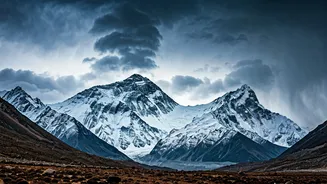
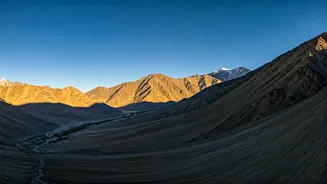
It begins not with a bang, but with a whisper. In a high-altitude town like Manali or Gulmarg, the first sign is a change in the quality of the sky. The deep, sapphire blue of a clear mountain day gives way to a milky, hazy veil. High-altitude cirrus
clouds, thin and feathery, streak across the sky, arriving from the west like celestial messengers. There’s a sudden drop in temperature, a chill that seeps into your bones, unrelated to the time of day. The wind, which usually whistles through the pine and deodar forests, dies down completely. This profound stillness is perhaps the most unsettling part—an entire valley holding its breath, waiting for the inevitable performance to begin. Birds quiet down, and the usual hum of mountain life seems to pause in anticipation.
So, What Exactly Is It?
Before the heavens open up, it’s worth understanding the science behind the spectacle. A Western Disturbance is an extratropical storm that originates in the Mediterranean region. Yes, the weather you’re about to experience in the Himalayas began its journey thousands of kilometres away. Propelled by high-altitude subtropical westerly jet streams, this low-pressure system gathers moisture from the Mediterranean Sea, the Caspian Sea, and even the Black Sea. It then travels eastwards across the Middle East, Iran, Afghanistan, and Pakistan before finally arriving over the Indian subcontinent. When this moisture-laden system collides with the formidable wall of the Himalayas, it is forced to rise, cool, and condense, releasing its payload as rain in the northern plains and, most spectacularly, as heavy snow in the high mountains.
The Symphony of Precipitation
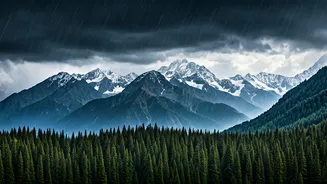
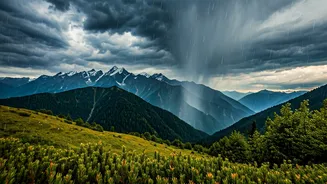
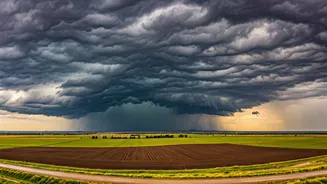
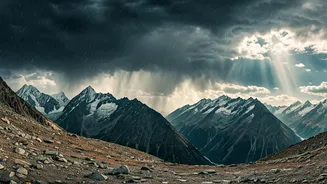
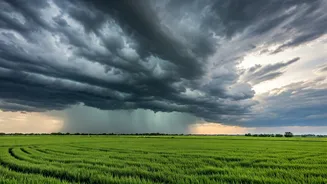
Then, it begins. The initial moments might be a gentle drizzle, a soft ‘pitter-patter’ on tin roofs and broad leaves. But this is just the opening act. As the core of the system moves in, the sky darkens to a dramatic shade of slate grey. The drizzle can quickly intensify into a torrential downpour. This isn't the warm, life-affirming rain of the monsoon; this is a cold, piercing rain that feels ancient and powerful. At higher elevations, this rain transforms into sleet and then, magically, into snow. The first flakes are large and wet, melting on impact. But soon, they become smaller, lighter, and more numerous, descending in a thick, silent curtain that transforms the world. The green of the pines turns white, sharp peaks soften into gentle mounds, and every sound is muffled by the accumulating blanket. Watching this transformation from a window, with a cup of hot chai in hand, is a primal and deeply moving experience.
A Lifeline for the Land
While we admire the beauty, it's crucial to remember that Western Disturbances are not just a pretty show. They are the primary source of winter precipitation across North India and are absolutely vital for the region's ecology and economy. The snow they dump in the Himalayas is the lifeblood of our perennial rivers like the Ganga, Indus, and Brahmaputra, feeding them through the dry summer months. For farmers in the plains of Punjab, Haryana, and western Uttar Pradesh, the winter rain brought by these systems is critical for the survival of Rabi crops, especially wheat, which is a staple for millions. In a very real sense, the prosperity of the plains is directly linked to the intensity of these storms in the mountains. They are a perfect example of nature’s intricate, interconnected web.
The World Washed Clean
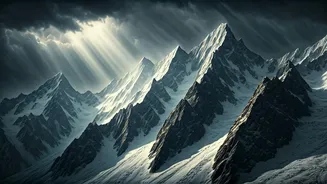
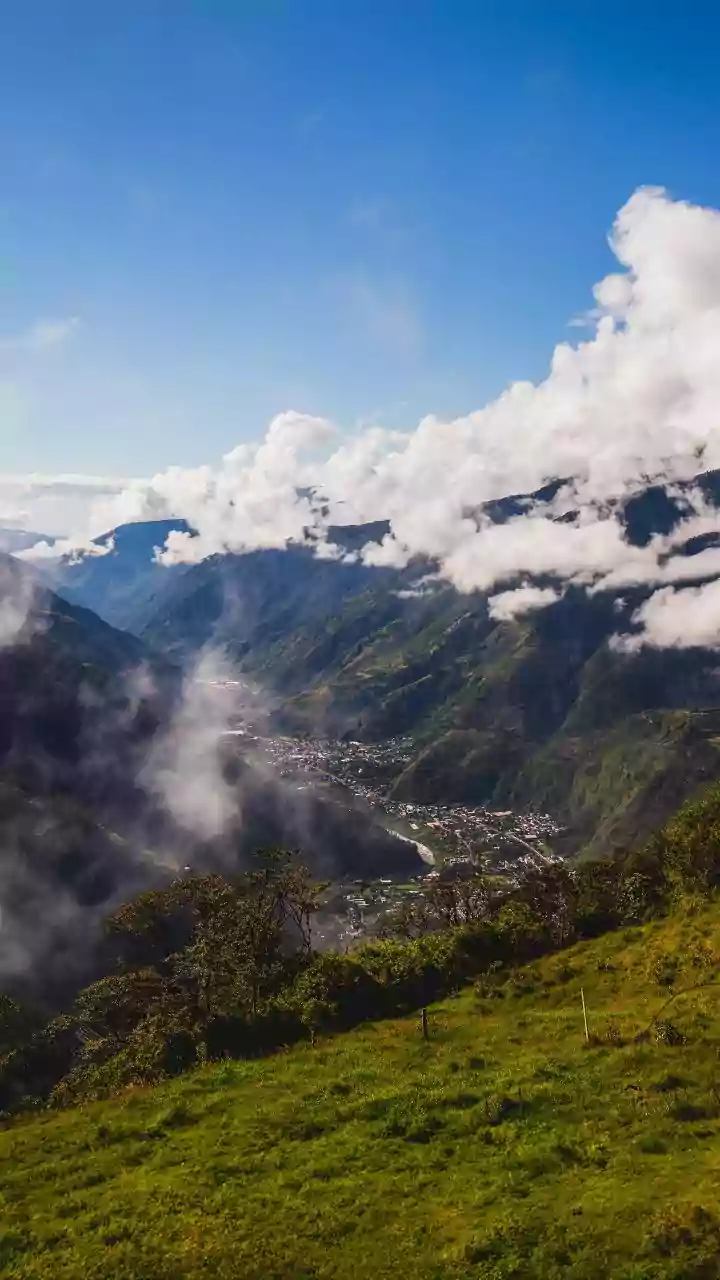
After a day or two of relentless rain or snow, the system passes. The departure is as dramatic as the arrival. The thick cloud cover begins to break, and shafts of brilliant sunlight pierce through, illuminating a world reborn. The air is so crisp and clean you can almost taste it, scrubbed free of dust and pollution. Snow-laden peaks glitter with an intensity that hurts the eyes, set against a sky of the deepest, most impossible blue. The colours of the valley—the dark green of the trees, the rich brown of the wet earth—seem more vibrant than ever. This is the gift of the Western Disturbance: a moment of breathtaking clarity and renewal, a reminder of the raw, untameable power of nature that both sustains and inspires.