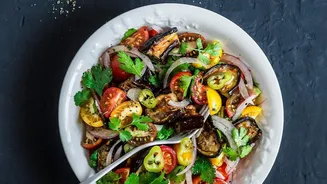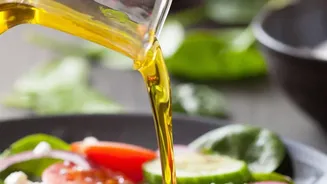



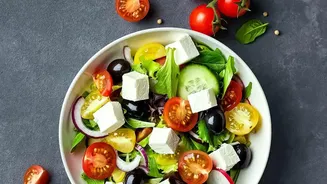

The soul of a great Mediterranean salad isn't just its fresh ingredients, but the vibrant dressing that ties them all together. A brilliant olive oil-based vinaigrette can elevate simple greens and vegetables into something truly special.
Start with the Star: Choosing Your Olive Oil
The foundation
of any Mediterranean dressing is, without question, the olive oil. For raw applications like a salad dressing, you should always reach for extra virgin olive oil (EVOO). Unlike refined oils, EVOO is cold-pressed, which preserves the fresh, complex flavours of the olives. These oils aren't just a fat; they are a key flavour component. When you taste a high-quality EVOO, you should notice three main characteristics: fruitiness (aromas of grass, apple, or even tomato), bitterness, and pungency (a peppery sensation at the back of your throat). These qualities are a sign of a fresh, polyphenol-rich oil. For dressings, the intensity matters. A delicate or medium-intensity EVOO is a versatile, all-purpose choice for simple green salads. A more robust, peppery oil is fantastic for heartier salads with bold ingredients like arugula, feta, or grilled vegetables.
The Acidic Counterpart: Lemon and Vinegar
To balance the richness of the oil, you need acid. This provides the bright, tangy kick that makes a vinaigrette so refreshing. Freshly squeezed lemon juice is a classic choice in many Mediterranean dressings, lending a zesty, clean flavour. When choosing vinegar, you have several excellent options. Red wine vinegar is a staple, providing a sharp and flavourful tang. White wine vinegar is a bit milder, while balsamic vinegar offers a deeper, slightly sweeter complexity that pairs well with richer salads. The key is to create a balance between the fat and the acid. A good dressing shouldn't be overly oily or excessively sour.
The Golden Ratio and Emulsification
While you can always adjust to your personal taste, a great starting point for any vinaigrette is the classic 3:1 ratio: three parts oil to one part acid. This provides a balanced foundation that you can build upon. Some prefer a sharper dressing and might lean toward a 2:1 ratio, while others like it milder. Once you have your oil and acid, you need to emulsify them—the process of combining two liquids that don't naturally mix. Adding a small amount of an emulsifier like Dijon mustard is a classic technique. The mustard not only adds its own tangy flavour but also helps to bind the oil and vinegar together into a creamy, cohesive dressing. You can achieve emulsification by whisking vigorously in a bowl while slowly drizzling in the oil, or by simply sealing all your ingredients in a jar and shaking it well until combined.
Building Flavour: Herbs and Aromatics
With the base of oil and vinegar established, it's time to add depth and character. Dried oregano is a hallmark of Mediterranean flavour and a must-have for many classic dressings. Other herbs like fresh or dried parsley and dill also work beautifully. For a pungent kick, finely minced fresh garlic is essential. If you find raw garlic too harsh, a pinch of garlic powder is a good substitute. A small amount of sweetener, like honey or maple syrup, can also be used to round out the flavours and balance the acidity, though it is often optional.
Putting It All Together: A Simple, All-Purpose Recipe
Ready to make your own? Here is a simple recipe you can whip up in minutes. In a small jar with a lid, combine 1/4 cup of red wine vinegar or fresh lemon juice, 1 minced garlic clove, 1 teaspoon of dried oregano, and 1 teaspoon of Dijon mustard. Add a pinch of salt and freshly ground black pepper. Close the jar and shake well to dissolve the salt. Now, add 1/2 to 3/4 cup of good-quality extra virgin olive oil. Secure the lid tightly and shake vigorously for about 30 seconds, or until the dressing is well combined and slightly creamy. Taste and adjust the seasoning as needed. If it's too sharp, add a little more oil. If it tastes flat, it might need another pinch of salt or a squeeze of lemon juice.