
The Universe’s Dusty Nurseries
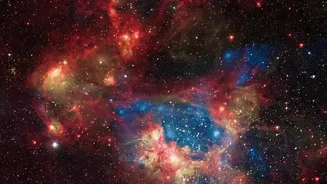
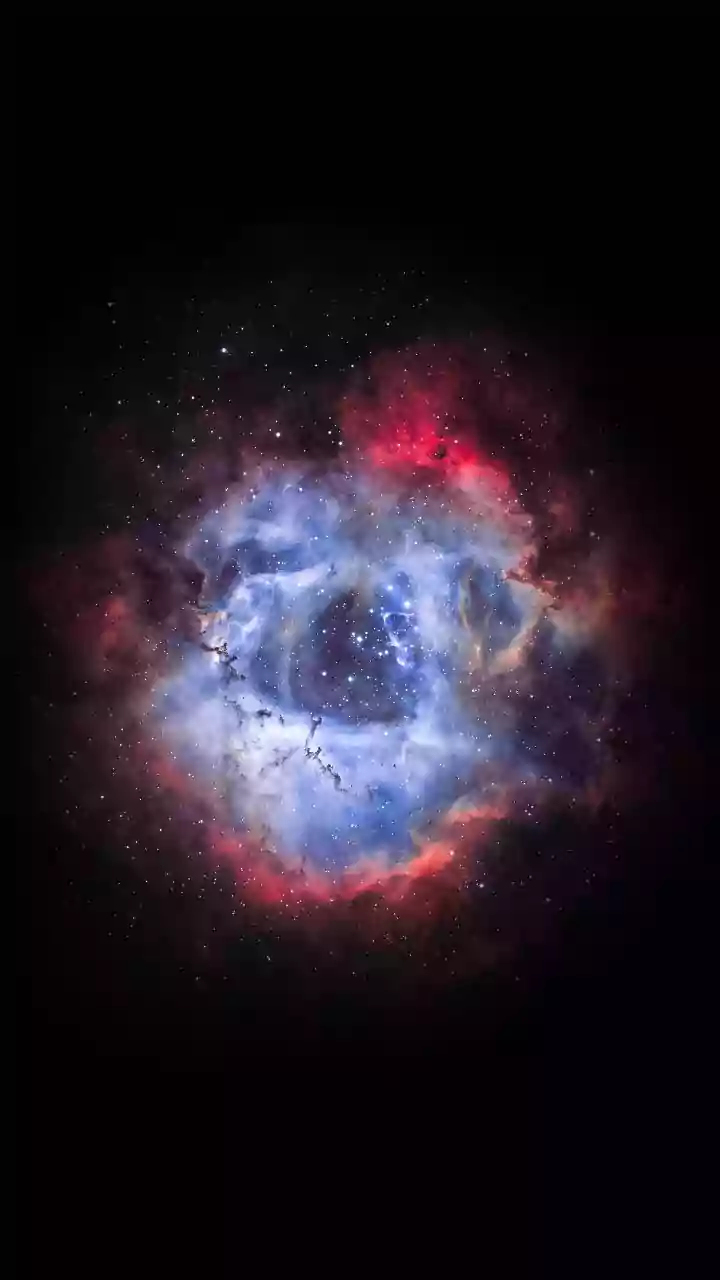
To understand how planets are born, you first have to know where stars come from. They don't just pop into existence; they form inside vast, cold, and dark clouds of gas and dust called molecular clouds. Think of them as cosmic nurseries. These clouds are enormous,
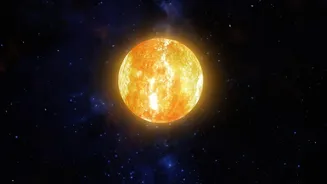
containing the raw materials needed to build not just one star, but sometimes thousands of them. Gravity slowly pulls the densest patches of this material together into clumps. As these clumps get denser and hotter, they begin to glow, forming protostars—the very earliest stage of a star's life. It's within the material surrounding these infant stars that new worlds are assembled.
A Problem of Visibility
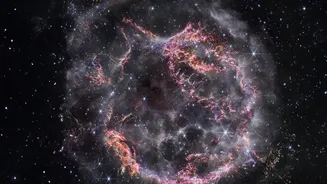
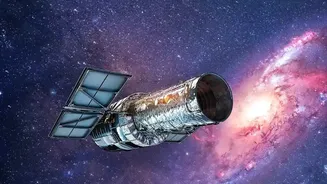
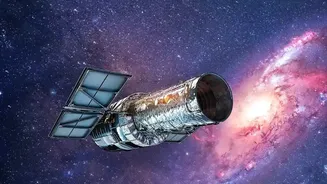
For astronomers, the biggest challenge has always been seeing inside these nurseries. The very same dust that provides the building blocks for stars and planets also creates an impenetrable shroud. To telescopes that see in visible light, like our eyes or even the Hubble Space Telescope to some extent, these clouds are almost completely opaque. It’s like trying to see through a thick wall of smoke. While Hubble can see in near-infrared and has provided valuable insights, the densest, coldest regions where the absolute youngest stars are forming remain hidden from its view. This has left crucial gaps in our understanding of the earliest moments of creation.
Webb’s Infrared Superpower
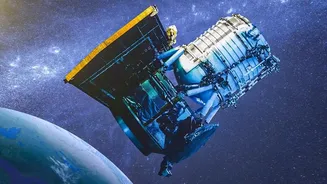
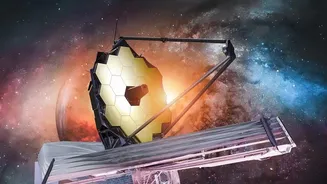
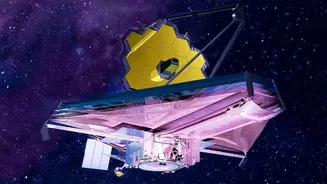
This is where the James Webb Space Telescope (JWST) changes the game. Webb is designed to see the universe primarily in infrared light. Unlike visible light, which has shorter wavelengths that easily scatter off dust particles, longer-wavelength infrared light can pass right through the dust, much like X-rays pass through soft tissue. This gives Webb an unprecedented ability to peer deep into the heart of these molecular clouds and witness the star and planet formation process directly. By detecting the faint heat glow of slightly warm dust and the light from newborn stars, Webb effectively lifts the cosmic veil.
Spotting the Seeds of New Worlds
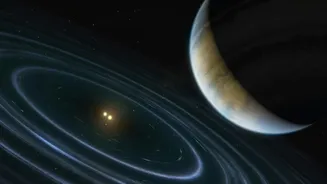
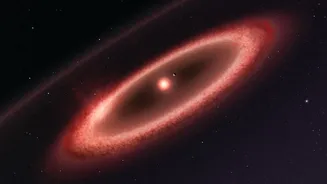
With its infrared vision, Webb isn't just seeing newborn stars; it's seeing what surrounds them. As a protostar forms, it is encircled by a spinning platter of leftover gas and dust known as a protoplanetary disk. This disk is where the action happens. It's the birthplace of planets. Webb’s high-resolution instruments can resolve these disks with stunning clarity, revealing their structure and composition. In recent studies, Webb has examined dozens of these systems, observing how jets and winds from the young star shape the disk and drive away gas over time, creating a timeline for when planets, especially gas giants, can form.
From Dust Grains to Planets
Inside a protoplanetary disk, the process of world-building begins. Tiny dust grains, some smaller than a particle of smoke, start sticking together. Over millions of years, these clumps grow, from pebbles to rocks to boulders, eventually becoming large enough for gravity to pull them into spherical planets. Webb’s instruments can analyze the chemical makeup of these disks, identifying key ingredients like water, carbon monoxide, and complex organic molecules. In one case, Webb confirmed the presence of water in the inner region of a disk, right where rocky planets like Earth are expected to form, suggesting that water can be available from the very beginning. These findings are crucial for understanding how many different types of worlds might exist across the galaxy.
A Blueprint for Our Own Origin
Studying these distant births isn't just about cataloging other solar systems; it's about understanding our own. Every new detail Webb uncovers about how material gathers, how disks evolve, and how quickly gas is cleared away provides another piece of the puzzle of our own cosmic history. Our solar system once looked like one of these dusty disks swirling around a young Sun. By watching other systems go through this process, we can refine our models of how Earth and its planetary neighbors came to be. It provides a living laboratory for testing our theories of planet formation, giving us a clearer picture of the chaotic and beautiful process that ultimately led to our existence.