








The Vikram-1 Mission: India's Private Space Leap
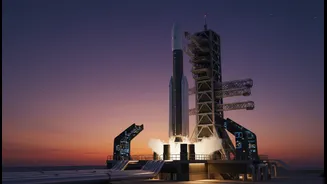
Skyroot Aerospace is set to make history with the launch of Vikram-1, India's first privately developed orbital rocket. Dubbed 'Mission Aagaman' (arrival), the launch is a landmark event scheduled for July 18 from Sriharikota, symbolising the arrival of India's private sector
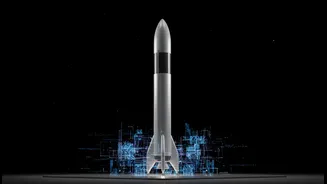
on the global space stage. The seven-storey-tall vehicle is designed to deploy small satellites, weighing up to 350 kg, into Low Earth Orbit. This mission is more than a single launch; it's a technology demonstrator that will validate the company's in-house developed systems, from its all-carbon composite structure to its 3D-printed engines. The data gathered will be crucial for Skyroot's goal of establishing frequent and reliable launch services, a key development in a market constrained by a lack of launch providers.
In-Demand Roles and Core Disciplines
The development and launch of a rocket like Vikram-1 is a massive undertaking requiring a wide range of engineering talent. For young graduates, this translates into direct job opportunities. Key roles revolve around core aerospace disciplines. Propulsion Systems Engineers are needed to work on the solid-fuel boosters and advanced liquid-fueled engines that power the rocket. Structural Engineers with expertise in materials science, especially carbon composites, are vital for building the rocket's lightweight yet robust body. Avionics Engineers design and test the critical electronic systems for navigation, guidance, and control. Furthermore, as rockets are complex systems, roles in software development for simulation and mission control, as well as in electrical integration and testing, are equally important.
Essential Skills That Set You Apart
A B.Tech in Aerospace or a related field is the foundation, but startups like Skyroot look for practical skills that demonstrate an ability to contribute from day one. Proficiency in industry-standard software is non-negotiable. This includes CAD (Computer-Aided Design) programs like CATIA or Siemens NX, and analysis software such as ANSYS or NASTRAN for finite element analysis. Experience with programming languages like Python or MATLAB for simulation and data analysis is also highly valued. Beyond technical tools, companies seek a strong understanding of fundamentals like thermodynamics, fluid mechanics, and materials science. Perhaps most importantly, a problem-solving mindset and the ability to work in a fast-paced, collaborative team are crucial attributes in the dynamic startup environment.
Building Your Profile Beyond the Degree
In a competitive field, what you do outside the classroom can make all the difference. Actively participating in student rocketry competitions or other hands-on technical projects provides invaluable practical experience. Building a portfolio that showcases your design and analysis projects is a powerful way to demonstrate your capabilities to recruiters. Internships at organisations like ISRO, DRDO, or other aerospace firms offer a real-world glimpse into the industry and an opportunity to network. While Skyroot is a major player, it's part of a burgeoning ecosystem. The skills you develop are highly transferable to other innovative Indian spacetech startups like Agnikul Cosmos, Dhruva Space, and Pixxel, which are also expanding and hiring. Staying informed about the entire sector broadens your career horizons.