







A Festival of Greenery and Gratitude
Harela, which literally means “Day of Green,” is a festival deeply woven into the agricultural and cultural fabric of Uttarakhand, particularly the Kumaon region. Celebrated in the month of Shravan (July-August) to welcome the monsoons, it marks the beginning
of the sowing season and symbolises fertility and prosperity. Traditionally, families sow grains like wheat and barley in baskets ten days before the festival. On Harela, the sprouted shoots are cut and placed on family members' heads as a blessing. It's an intimate, home-based ritual rooted in gratitude for nature's bounty and a prayer for a good harvest.
From Ritual to Mass Movement
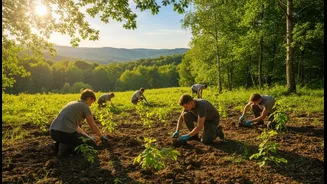
In recent years, Harela's focus on greenery has evolved into a large-scale environmental initiative. Government departments, schools, and communities now organise massive tree plantation drives during the festival period. These drives have ambitious targets, often aiming to plant hundreds of thousands of saplings across the state in a single day or season. In 2025, for instance, a record of over 8 lakh saplings were reportedly planted. Campaigns with themes like "Ek Ped Maa Ke Naam" (A tree in mother's name) are used to encourage public participation, linking the act of planting to cultural and emotional values. The scale is impressive, turning a traditional observance into a significant annual afforestation effort.
The Real Challenge: Beyond Planting
The success of a plantation drive is not measured by the number of saplings planted, but by how many survive to become trees. This is the core challenge facing the Harela drive. Experts warn that simply putting a sapling in the ground is not enough. Young trees are vulnerable and require consistent, multi-year care to establish themselves. Without this aftercare, even well-intentioned mass plantation events can result in high mortality rates, wasting resources and effort. The focus on hitting plantation targets can sometimes overshadow the more critical, long-term work of nurturing the new life that has been planted.
What a Sapling Truly Needs
For a sapling to survive its first few crucial years, several factors are critical. Consistent watering, especially outside the monsoon season, is paramount. Protection from grazing animals is another major hurdle in the hills, often requiring fencing or guards, which adds to the cost and complexity. Saplings also need to be of a species native to the local ecosystem to have the best chance of survival and to avoid unintended negative consequences, like altering local water tables. They are also susceptible to pests and diseases. Ensuring survival is a labour-intensive commitment that extends far beyond the festival day.
A Shift Towards Nurturing
Acknowledging this gap, there is a growing conversation around improving post-plantation care. Some district administrations in Uttarakhand are now stressing the need for protection measures and directing departments to create detailed action plans. The state claims a survival rate of nearly 80% in recent years, a figure that, if accurate and sustained, is commendable. However, independent experts note that survival rates can vary dramatically, and long-term success often depends on community involvement. Initiatives like the Maiti Andolan in Uttarakhand, where tree planting is linked to marriage rituals and the community takes responsibility for care, offer a successful model. Furthermore, schemes that provide financial incentives for protecting trees for several years, like Uttarakhand's 'Hamara Ped Hamara Dhan', signal a policy shift towards valuing survival over mere plantation numbers.