




A Laboratory in Low Earth Orbit
Space is the ultimate extreme environment. The absence of gravity, or microgravity, forces the human body to adapt in ways that are remarkably similar to the progression of certain diseases and the aging process on Earth. Astronauts experience accelerated
bone density loss, muscle atrophy, and cardiovascular changes. While these effects are a significant challenge for space travel, they also create a unique opportunity. By studying these rapid changes in a small group of healthy individuals, scientists can gain invaluable insights into conditions that take decades to develop on Earth, such as osteoporosis, muscle wasting diseases, and heart conditions. It is, in essence, a perfect laboratory for understanding human physiology.
Strengthening Bones and Muscles on Earth
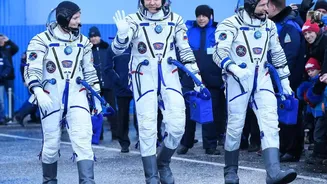
One of the most well-documented effects of space travel is the rapid loss of bone mass, at a rate far exceeding that of postmenopausal women on Earth. Similarly, muscles begin to weaken without the constant resistance of gravity. For India's space program, a key focus is understanding and mitigating these effects for its ‘Gaganauts’. Research spearheaded by ISRO and its partner institutions, like the Institute of Aerospace Medicine (IAM) in Bengaluru, is exploring countermeasures. The knowledge gained from preventing bone and muscle loss in astronauts has direct applications for treating osteoporosis and sarcopenia (age-related muscle loss) in India's growing elderly population, as well as helping patients recover from long periods of bed rest.
Innovations in Heart Health and Monitoring
The cardiovascular system also undergoes significant adaptation in space. Without gravity pulling blood downwards, fluids shift towards the upper body and head, forcing the heart to remodel and work differently. Studying this deconditioning process helps researchers understand heart disease and aging on Earth. Furthermore, keeping astronauts healthy in orbit requires sophisticated remote monitoring. For the Gaganyaan mission, ISRO is developing indigenous telemedicine technologies, including wearable bio-vests that continuously track vital signs like heart rate and ECG. These innovations are crucial for advancing telehealth services in India, making it possible to deliver high-quality medical expertise to remote and underserved rural communities where access to specialist doctors is limited.
Mental Resilience and Overall Wellness
Beyond the physical, the psychological challenges of being isolated in a confined space are immense. Research into the behavioural health of astronauts provides valuable data on managing stress, maintaining cognitive performance under pressure, and fostering mental resilience. These findings are not just for astronauts; they can inform better support systems for people in high-stress professions on Earth, from soldiers to emergency responders. ISRO has signed agreements with top medical institutions like AIIMS to study these aspects, along with genomics and immunology. Studying how an astronaut's immune system is suppressed in space, for example, can offer clues about age-related immune decline on Earth.