


Earth's Blurry Atmospheric Blanket
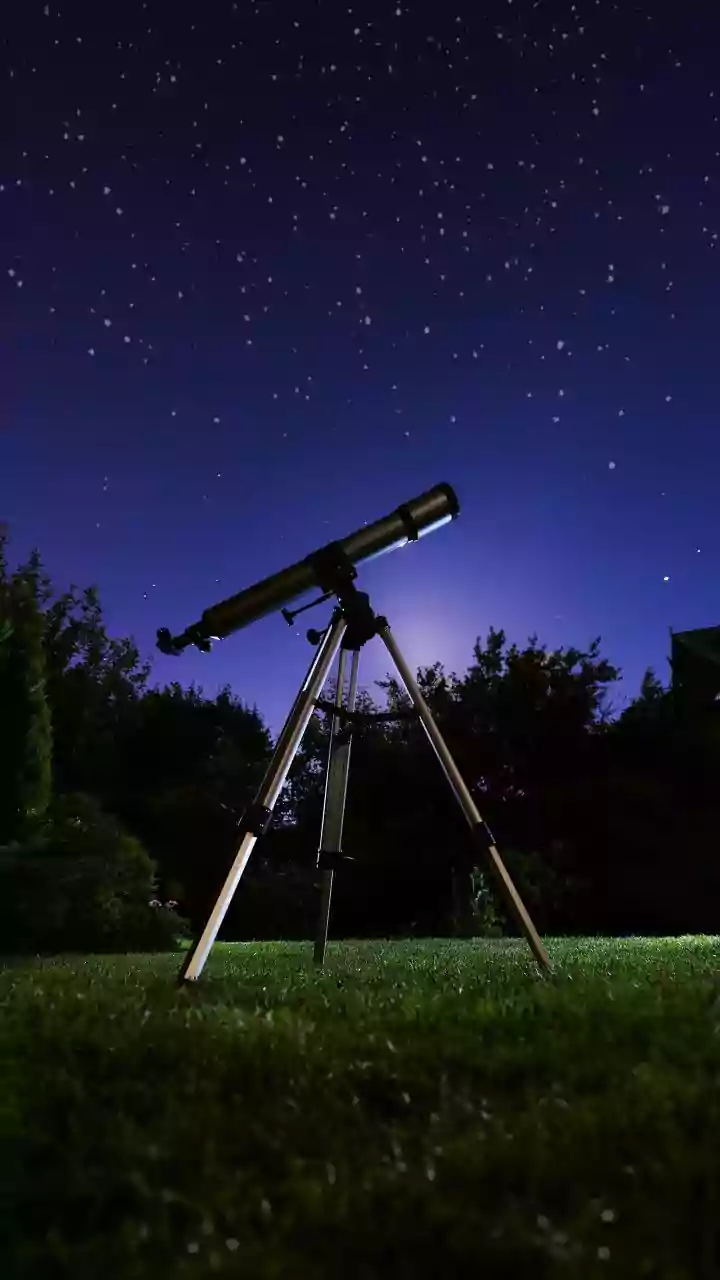
If you've ever looked up at the night sky and seen stars twinkle, you've witnessed atmospheric distortion firsthand. This 'twinkling' is caused by turbulence in our planet's atmosphere. Pockets of air at different temperatures and densities are constantly
moving, bending and scattering the light that travels from distant cosmic objects. For astronomers, this isn't a romantic twinkle but a major problem called 'astronomical seeing'. It blurs and distorts images, smearing out fine details and making it incredibly difficult to get a sharp view of anything in space. This effectively puts a limit on the resolution of even the most powerful ground-based telescopes, a frustrating barrier when trying to spot something as small and faint as an asteroid.
The Solution: Adaptive Optics
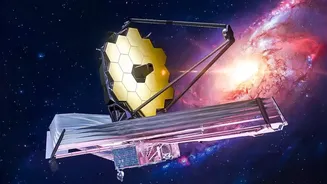
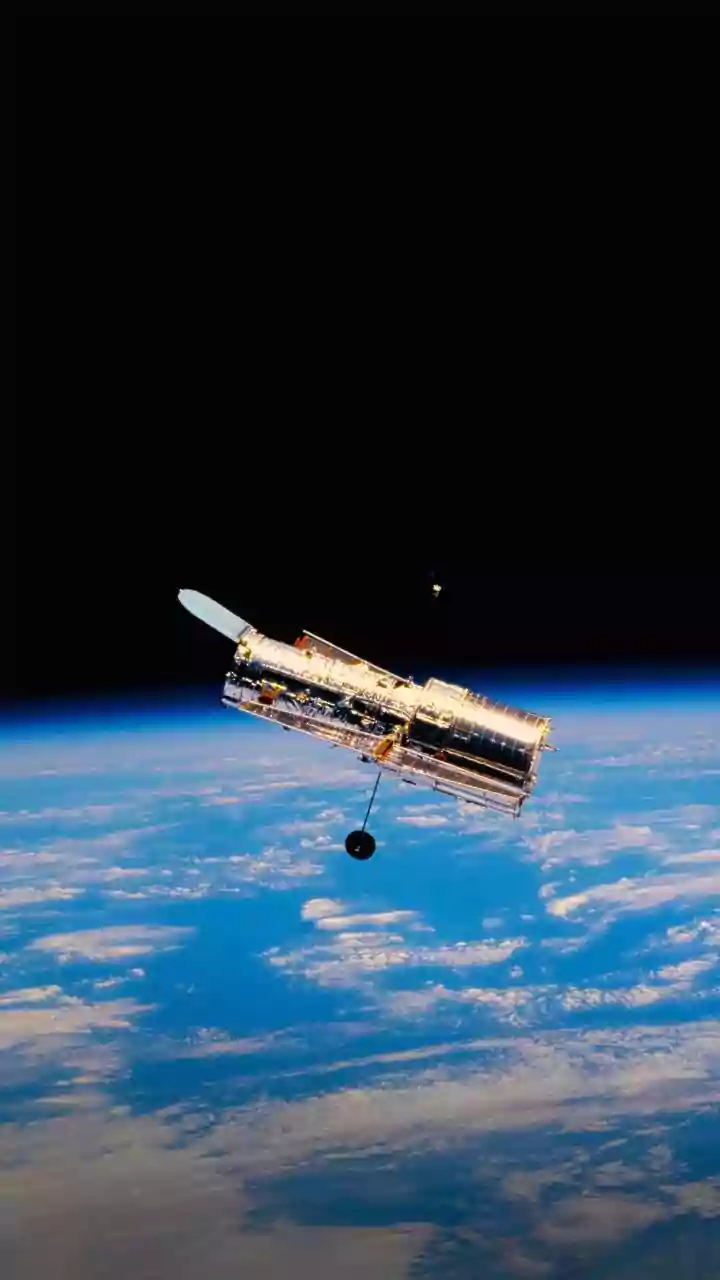
So, how do you un-blur a star? For decades, the only true solution was to put a telescope in space, above the atmosphere, like the Hubble Space Telescope. But launching and maintaining space telescopes is incredibly expensive. Enter adaptive optics (AO), a groundbreaking technology that allows observatories on the ground to achieve image clarity that rivals those in space. It is a system designed to compensate for atmospheric distortion in real-time, effectively 'un-twinkling' the stars and giving astronomers the crisp, stable images they need.
How It Works: A Real-Time Correction System
The genius of adaptive optics lies in its speed and precision. The system has three main components. First, it needs a reference point of light, called a guide star. The system analyses the light from this guide star using a special tool called a wavefront sensor, which measures exactly how the atmosphere is distorting the light hundreds or even thousands of times per second. This information is fed to a computer, which then controls the third component: a deformable mirror. This is a thin, flexible mirror that can change its shape with incredible speed, pushed and pulled by a series of tiny actuators on its back. The mirror morphs its surface to be the exact opposite of the distortion caused by the atmosphere, cancelling it out and delivering a corrected, sharp image to the telescope's camera.
Creating an Artificial Star
A significant challenge is that not every patch of sky has a bright, conveniently located natural guide star. To solve this, observatories create their own. They use a powerful laser to shoot a beam up into the mesosphere, about 90 kilometres above Earth's surface. This laser excites a layer of sodium atoms—deposited there by meteors burning up in the atmosphere—causing them to glow and create an 'artificial star'. This laser guide star provides a reliable reference point anywhere the telescope wants to look, dramatically expanding the reach and effectiveness of adaptive optics.
Tracking a Cosmic Needle in a Haystack
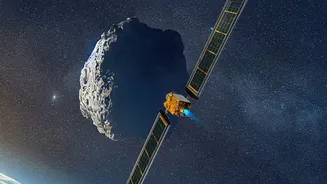
Near-Earth Asteroids (NEAs) present a unique challenge. They are often small, dark, and reflect very little light. Compounding this, they move rapidly across a telescope's field of view compared to distant stars. Without AO, their faint light would be smeared into an unidentifiable blur by the atmosphere. With AO, a telescope can concentrate that faint light into a sharp point, making the asteroid detectable. This allows astronomers to take precise measurements of the asteroid's position over time. These precise measurements are critical for calculating the object's orbit and determining if it poses a threat to Earth. The faster and more accurately we can lock onto an asteroid and plot its trajectory, the more warning time we have to react if it's on a collision course.