




What Exactly Is 'Dictation Mode'?
The phrase 'Dictation Mode' isn't an official educational term but a fitting description for two parallel developments in how multilingual students are engaging with language. The first is a revival of the classic, teacher-led dictation exercise. This
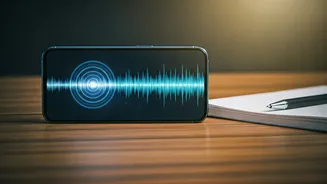
age-old method, where students write down what the teacher says, is being recognized again for its power to build foundational language skills. The second, and more modern, facet is the widespread adoption of digital dictation, or speech-to-text technology. Tools built into smartphones, tablets, and laptops now allow students to convert their spoken words into written text instantly. This tech-driven approach offers a completely different way to tackle writing assignments, bypassing the physical act of typing or handwriting.
The Old-School Revival
In a country as linguistically diverse as India, many students learn in a language different from their mother tongue. For a student whose primary language is Marathi, Telugu, or Bengali, mastering the spelling, syntax, and punctuation of English can be a significant hurdle. Traditional dictation directly addresses this. It forces learners to pay close attention to the sounds of a new language and connect them to written symbols. This multisensory exercise—listening, holding the words in memory, and writing them down—is incredibly effective for reinforcing grammar and spelling. Educators find it a powerful tool to hone the listening skills and accuracy crucial for academic success in a second or third language.
The New Wave of Technology
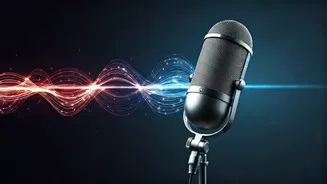
Simultaneously, the 'dictation mode' of technology has become ubiquitous. From Google Docs' 'Voice Typing' feature to the built-in speech-to-text functions on nearly every smartphone, students have powerful assistive tools at their fingertips. For a student who thinks faster than they can type or struggles with the mechanics of writing, this is revolutionary. They can now 'write' a five-hundred-word essay simply by speaking into a microphone. This is particularly helpful for brainstorming, getting initial thoughts down on paper without the friction of writing, and for students with learning differences like dysgraphia. This technology lowers the barrier to producing written content, allowing students' ideas to flow more freely.
The Benefits and the Drawbacks
Both forms of dictation offer clear advantages. The classic method builds discipline, improves short-term memory, and gives students a strong command of linguistic structures. Tech-based dictation, meanwhile, boosts confidence and productivity, allowing students to focus on the substance of their ideas rather than the struggle of transcription. However, both come with risks. An overemphasis on traditional dictation can lead to rote learning that stifles creativity and critical thinking; students may learn to transcribe perfectly without truly understanding the content. Conversely, an over-reliance on speech-to-text can make students passive. It may weaken their spelling and grammar skills, as they are no longer required to actively recall how words are formed and sentences are structured.
A Challenge for the Indian Classroom
This dual 'Dictation Mode' presents a unique challenge and opportunity for Indian education, especially in the context of the National Education Policy (NEP) 2020, which promotes multilingualism. The goal of the policy is not just to teach multiple languages, but to use them as a resource for deeper learning. Teachers must now decide how to balance these tools. Can a traditional dictation exercise be used to solidify vocabulary learned in the mother tongue and then applied in English? Can speech-to-text software be used as a first-draft tool, followed by a rigorous manual editing process where students must correct the AI's errors and refine their own text? The key is to use these methods not as shortcuts, but as bridges that enhance a student’s cognitive flexibility and true command over multiple languages.