




What is the Gaganyaan Mission?
At its core, the Gaganyaan project is India's first human spaceflight program. The primary objective is to demonstrate the capability to send a crew of three Indian astronauts, known as 'Gaganyatris', into a Low Earth Orbit of 400 kilometres for a three-day
mission and bring them safely back to Earth. If successful, India will join the elite club of nations—after Russia, the United States, and China—that have independently sent humans to space. The mission is not a sudden development but the culmination of decades of steady progress by the Indian Space Research Organisation (ISRO), transitioning from a world-class satellite launch provider to a comprehensive space power.
The Anatomy of a Landmark Mission
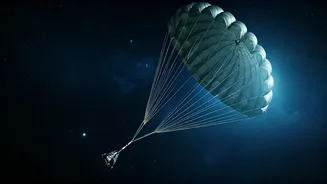
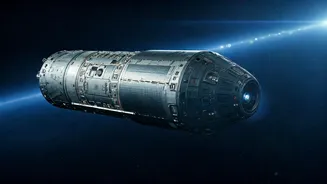
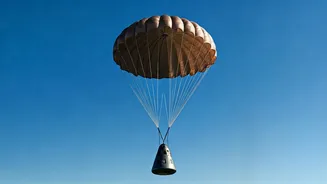
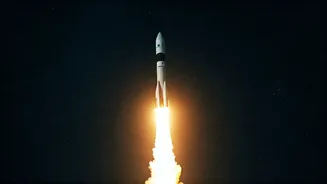
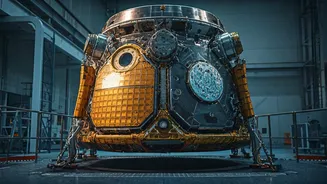
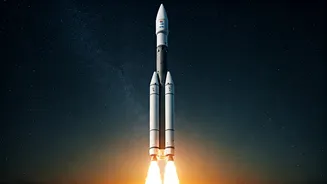
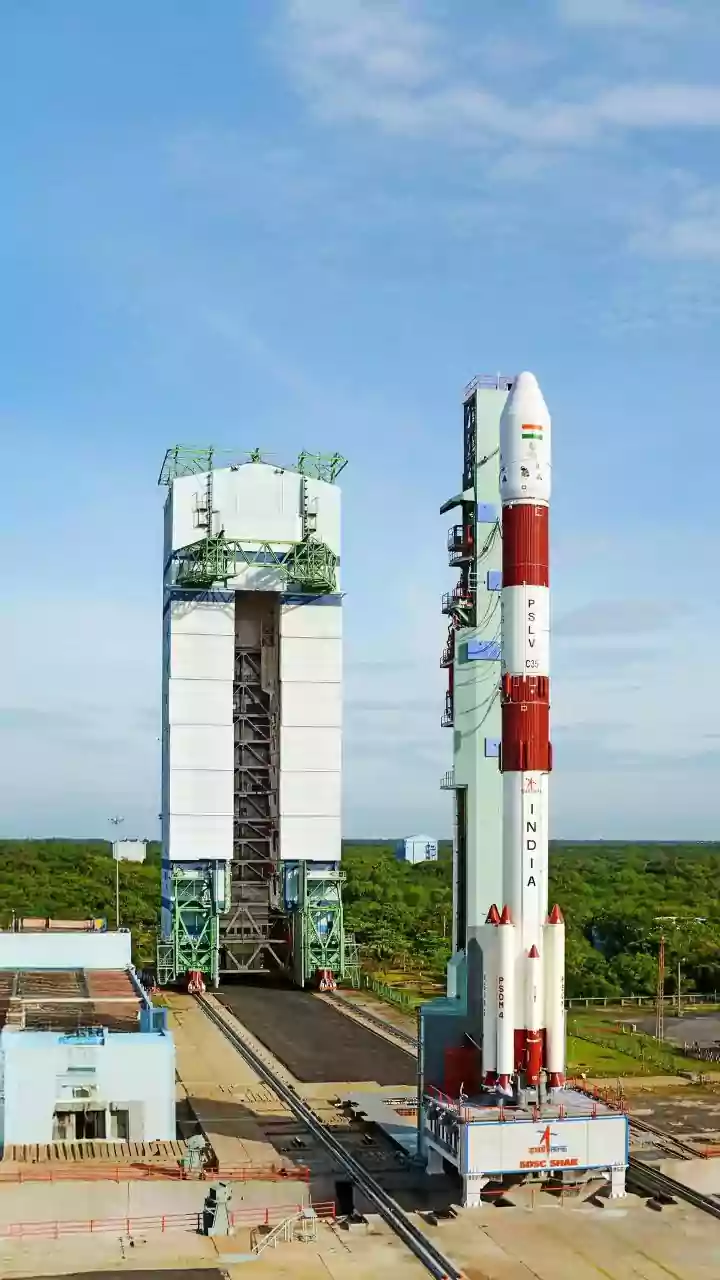
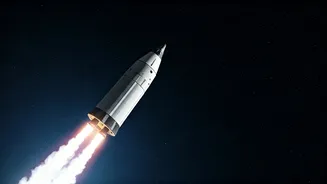
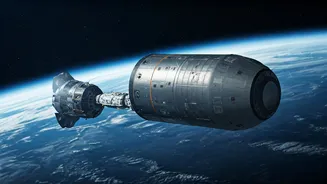
An immense technological undertaking, Gaganyaan relies on several critical components developed indigenously. The mission will use the powerful LVM3 rocket, which has been specially modified and human-rated (HLVM3) to meet the stringent safety and reliability standards required for carrying astronauts. The crew will travel inside the Orbital Module, which consists of two parts: the Crew Module, a pressurised, habitable space with an Earth-like environment, and the Service Module, which provides propulsion, power, and thermal control. A crucial element is the Crew Escape System, a fast-acting motor system designed to pull the Crew Module and its occupants to safety in case of any emergency during the launch phase.
Meet Vyommitra: The Humanoid Precursor
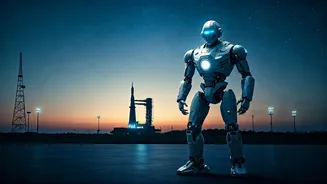
Before any human journeys into orbit, ISRO is conducting a series of uncrewed test flights to validate every system. A key passenger on these flights will be Vyommitra, a sophisticated humanoid robot. Named from the Sanskrit words for "space" and "friend", Vyommitra is a half-humanoid designed to mimic human functions. It can monitor the crew module's internal environment, operate switches, communicate in Hindi and English, and provide vital data on how a human body might react to the stresses of launch and the microgravity environment. This allows ISRO to test life support and control systems in real-world conditions without risking human life, embodying the mission's safety-first approach.
More Than a Technological Feat
The impact of Gaganyaan extends far beyond the launchpad. The mission is a powerful catalyst for industrial and economic growth. It is expected to create thousands of new employment opportunities and will involve sourcing a significant portion of its equipment from India's private sector, fostering a robust domestic space ecosystem. Success will not only enhance India's geopolitical stature and soft power but also open doors for future international collaborations in space exploration, including projects like building space stations or undertaking interplanetary missions. The program has already led to the development of new technologies in areas like life support and materials science that could have beneficial applications on Earth.
The Road Ahead: A New Chapter in Space
While the mission has faced delays, notably due to the COVID-19 pandemic and the sheer complexity of developing and testing new technologies, ISRO is proceeding with a meticulous and cautious strategy. Several uncrewed test flights are planned to precede the final crewed launch. According to recent updates, the first uncrewed flight (G1) is targeted for the latter half of 2026, with the first crewed mission now slated for 2027 or 2028, pending the successful outcome of all validation flights. This deliberate pace underscores the absolute priority being placed on crew safety. The four astronaut-designates, all experienced Indian Air Force pilots, continue their rigorous training for this historic flight.