







1. Slow Down, The Golden Rule
This might seem obvious, but it’s the single most important rule. Your vehicle’s tyres have less grip on wet roads, meaning it takes longer to stop. The speed limit is designed for ideal, dry conditions. When it’s raining, consider that a maximum, not
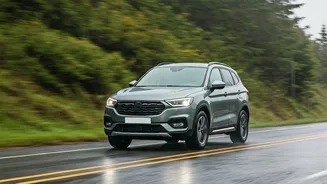
a target. Reduce your speed by at least a third. Driving slower gives you more time to react to hazards like a pedestrian dashing across the road or a car suddenly braking ahead. A lower speed dramatically reduces the risk of hydroplaning and gives you better control over your vehicle, especially on turns.
2. Double Your Following Distance
On a dry road, the recommended following distance is about three seconds. In the rain, you must double that to at least six seconds. How do you measure this? Pick a stationary object on the side of the road, like a lamp post or a tree. When the car in front of you passes it, start counting. If you pass the same object before you reach six seconds, you are too close. Increased distance provides the necessary buffer to brake safely without skidding. Tailgating is always dangerous, but on wet roads, it’s a recipe for a multi-car pile-up.
3. See and Be Seen
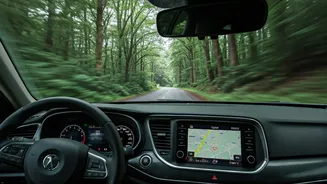
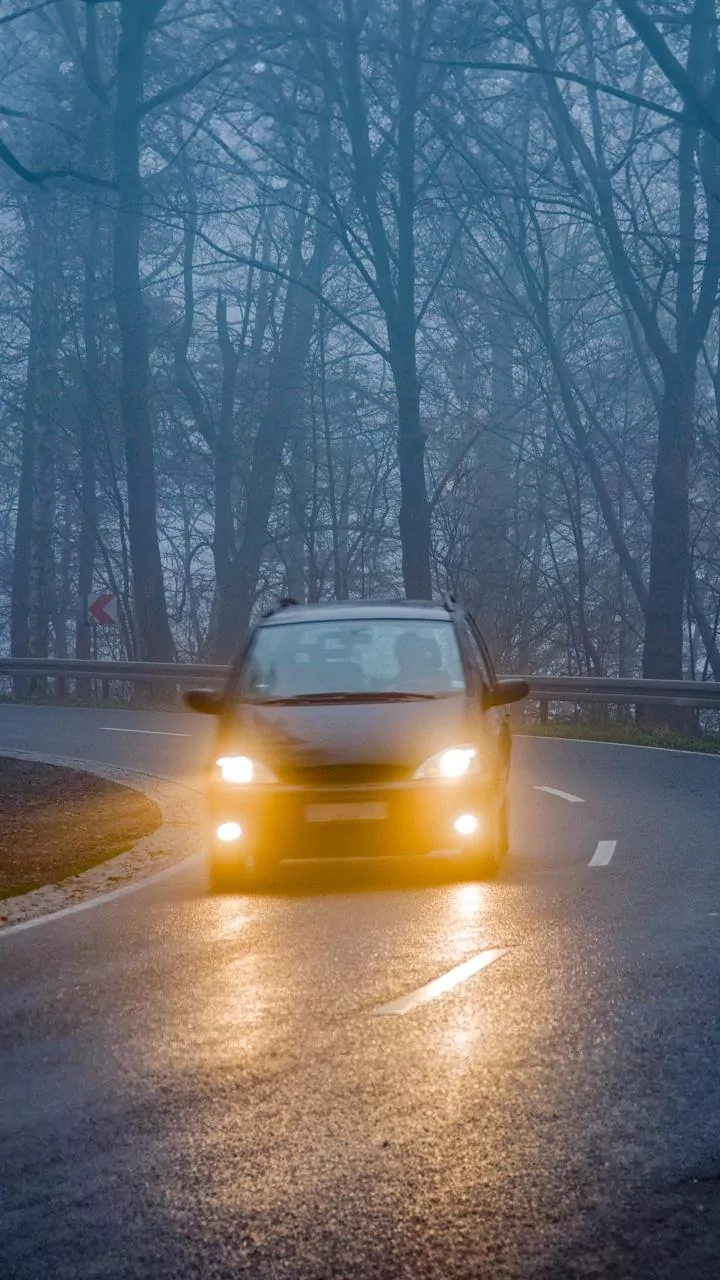
Visibility is dangerously low during a downpour. Switch on your low-beam headlights, even during the day. This isn’t just about helping you see the road; it’s about making your vehicle visible to other drivers, cyclists, and pedestrians. Ensure your windshield wipers are in good condition; old, cracked wipers will only smear water across the glass, making things worse. Use your defogger and air conditioning to keep the windshield from fogging up on the inside. Avoid using high beams, as they reflect off the raindrops and can blind oncoming drivers.
4. Understand and Avoid Hydroplaning
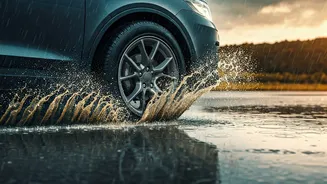
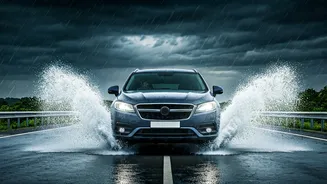
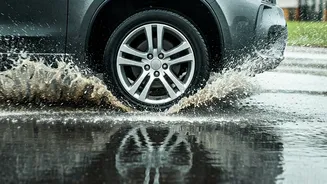
Hydroplaning is a terrifying experience where your tyres lose contact with the road and skim on a thin layer of water. It can happen at speeds as low as 50 km/h if the water is deep enough. To avoid it, stay away from puddles and drive in the tracks of the vehicle ahead of you. If you feel the car start to hydroplane (the steering will feel light and disconnected), do not slam on the brakes or jerk the steering wheel. Instead, ease your foot off the accelerator and steer gently in the direction you want to go until the tyres regain traction. Panicking is the worst response.
5. Navigate Waterlogged Roads with Care
Indian roads are notorious for waterlogging and hidden potholes. Never drive into standing water if you can’t tell how deep it is. It might be deep enough to stall your engine or, worse, hide a massive, axle-breaking pothole. If you must go through a puddle, drive through it slowly and steadily in a low gear. Once you’re through, gently tap your brakes a few times. This helps dry out the brake components, ensuring they work effectively when you need them next. If water is flowing rapidly across the road, do not attempt to cross it; your vehicle can be easily swept away.
6. Check Your Vehicle Before the Rain
The best way to handle wet roads is with a prepared vehicle. Before the monsoon season truly sets in, get your car checked. Pay special attention to your tyres. The tread depth should be adequate to channel water away. Bald tyres are a massive hydroplaning risk. Also, check your brakes, headlights, taillights, and windshield wipers. Having these components in top working order is non-negotiable for safe rainy-season driving. A well-maintained car is your first line of defence against the elements.
7. Drive Smoothly, Avoid Sudden Moves
Sudden acceleration, braking, or sharp turns can cause your tyres to lose traction on wet surfaces. All your inputs—steering, braking, and accelerating—should be smooth and gradual. Anticipate your moves well in advance. If you need to change lanes, do it slowly and signal early. When approaching a turn, brake gently on the straight before the corner, not in the middle of it. Smooth driving keeps the car balanced and stable, giving you maximum control when grip is already compromised.