
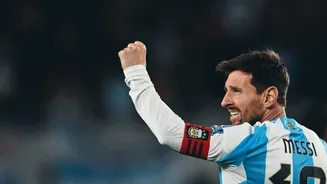
An Era Comes to a Close
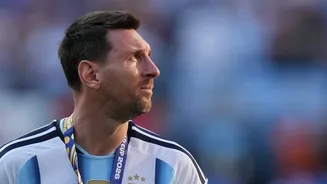
On September 1, 2026, Lionel Messi confirmed he would no longer play for Argentina, a decision that he said "hurts my soul". The announcement came just weeks after he led the team to a runner-up finish in the 2026 World Cup, losing a tight final to Spain.
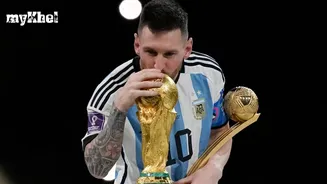
The 39-year-old leaves as Argentina's all-time leader in both appearances (207) and goals (125). His international career, once defined by heartbreaking losses in finals, was ultimately redeemed with the 2021 Copa América and the historic 2022 World Cup victory in Qatar. This final retirement—unlike his brief one in 2016—feels permanent, forcing a football-obsessed nation to look back and ask the ultimate question.
The Case for Maradona: The People's God
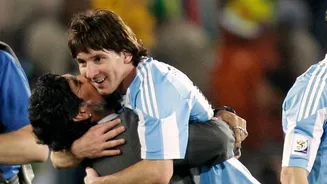
For decades, there was no debate. Diego Maradona was Argentina's undisputed football deity. His legacy is immortalized by the 1986 World Cup in Mexico, a tournament he dominated like no other player in history. He scored five goals and provided five assists, carrying a solid but unspectacular Argentina side to glory. That tournament included the infamous 'Hand of God' goal and the 'Goal of the Century' in the same quarter-final match against England—a sequence that perfectly captured his blend of roguish genius and transcendent skill. Beyond the statistics, Maradona embodied a rebellious, passionate spirit that resonated deeply with the Argentine public. He was a flawed hero from the streets who played with a fire and artistry that felt uniquely Argentine. For his supporters, his singular, magical achievement in 1986, lifting the nation on his shoulders, is a feat that can never be replicated.
The Case for Messi: The Modern Master
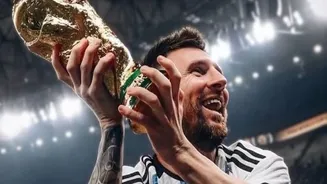
Lionel Messi's claim to the throne is built on two decades of relentless, superhuman consistency. Statistically, he dwarfs Maradona in nearly every metric. With more than 900 career goals for club and country, eight Ballon d'Or awards, and an astounding 46 major trophies, his career is a monument to sustained excellence. For years, the knock against Messi was his failure to deliver a major trophy for Argentina. He suffered painful defeats in the 2014 World Cup final and three Copa América finals. But he silenced all critics late in his career. He first led Argentina to the 2021 Copa América title, their first major trophy in 28 years, and followed it up with the 2022 Finalissima and the crowning glory: the 2022 World Cup. His performance in Qatar, with seven goals and three assists, was a masterclass in leadership and determination, finally delivering the one prize that had eluded him.
By the Numbers: Head-to-Head
When you lay the numbers side-by-side, Messi's statistical dominance is stark. For Argentina, Messi scored 125 goals in 207 appearances, while Maradona scored 34 in 91 caps. In World Cups, Messi played in six tournaments, scoring 21 goals, whereas Maradona played in four, scoring eight. Both men won one World Cup. However, Messi also secured two Copa América titles and an Olympic gold medal, trophies that Maradona never won. At the club level, the gap is even wider, with Messi winning four Champions League titles and numerous league championships, while Maradona's club success was more sporadic, highlighted by his legendary spell taking Napoli to two Serie A titles. The one area where Maradona's defenders make a strong case is the context of the era; he played on worse pitches and with far less protection from referees.
Legacy: The Rebel vs. The Virtuoso
Ultimately, the choice between Maradona and Messi often comes down to what one values in a hero. Maradona was a cultural icon, a symbol of defiance and flawed genius whose connection with the Argentine people went beyond football. He was 'El Pibe de Oro' (The Golden Boy), a figure of myth and legend. His leadership was loud, passionate, and emotional. Messi, in contrast, has always been the quiet virtuoso. For much of his career, he was seen as more of a Catalan than an Argentine, a perception that only changed after he began winning with the national team. His leadership is by example, through his unwavering professionalism and on-field brilliance. His legacy is one of near-perfect, sustained greatness, shattering records that may never be broken. He is less of a myth and more of a statistical certainty—the most effective and accomplished player to ever wear the famous blue and white stripes.