
A New Chapter in Astronomy
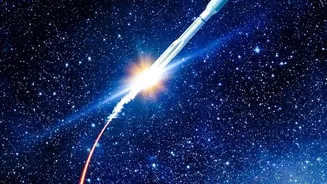
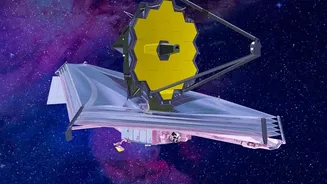
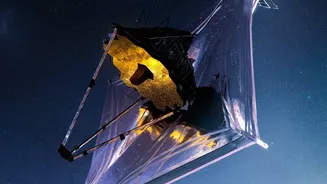
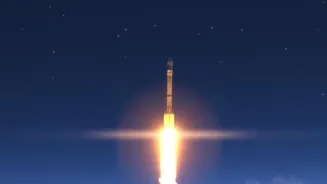
On August 30, 2026, the Nancy Grace Roman Space Telescope successfully launched aboard a SpaceX Falcon Heavy rocket, beginning its journey to an orbit about 1.5 million kilometers from Earth. Named after NASA’s first chief of astronomy, this next-generation
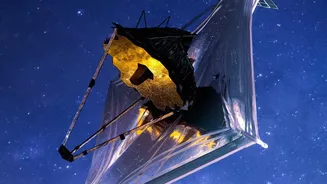
observatory isn’t just another eye in the sky; it's a data-gathering powerhouse designed to tackle some of the biggest questions in cosmology. While the James Webb and Hubble telescopes act like zoom lenses, focusing on specific targets in incredible detail, Roman is built for breadth. It’s a wide-angle survey telescope, designed to map vast stretches of the universe with a speed and scale that were previously unimaginable. Its primary mission is set for five years, during which it will fundamentally change how astronomers see the cosmos.
The Power of a Panoramic View
The secret to Roman's immense data-generating capability lies in its Wide Field Instrument (WFI). Although its primary mirror is the same 2.4-meter size as Hubble's, its advanced design gives it a field of view at least 100 times larger. This means that in a single snapshot, Roman can capture an area of the sky that would require hundreds of individual images from Hubble. Think of it as the difference between looking at the sky through a keyhole versus a panoramic window. This efficiency allows Roman to survey the universe about 1,000 times faster than Hubble, creating deep, sharp, and incredibly wide maps of stars and galaxies. The WFI is equipped with a camera of nearly 301 megapixels, enabling it to capture Hubble-quality images across this enormous field of view.
Unraveling the Universe's Darkest Mysteries
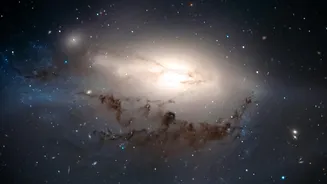
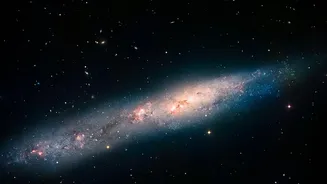
With this powerful survey capability, Roman will address two of the most profound puzzles in modern science: dark energy and dark matter. These mysterious components are thought to make up about 95% of the universe, yet scientists know very little about them. By mapping the precise locations and shapes of billions of galaxies over cosmic time, Roman will help astronomers trace the expansion history of the universe. This data will provide crucial clues about the nature of dark energy, the force believed to be causing the universe's accelerating expansion. Simultaneously, by studying how the light from distant galaxies is bent by gravity—a phenomenon known as weak gravitational lensing—Roman will create a detailed map of dark matter distribution, revealing how this invisible substance has shaped the cosmic web we see today.
A Census of a Billion Worlds
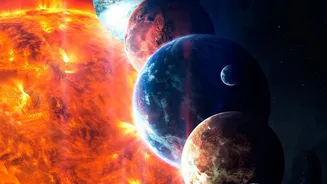
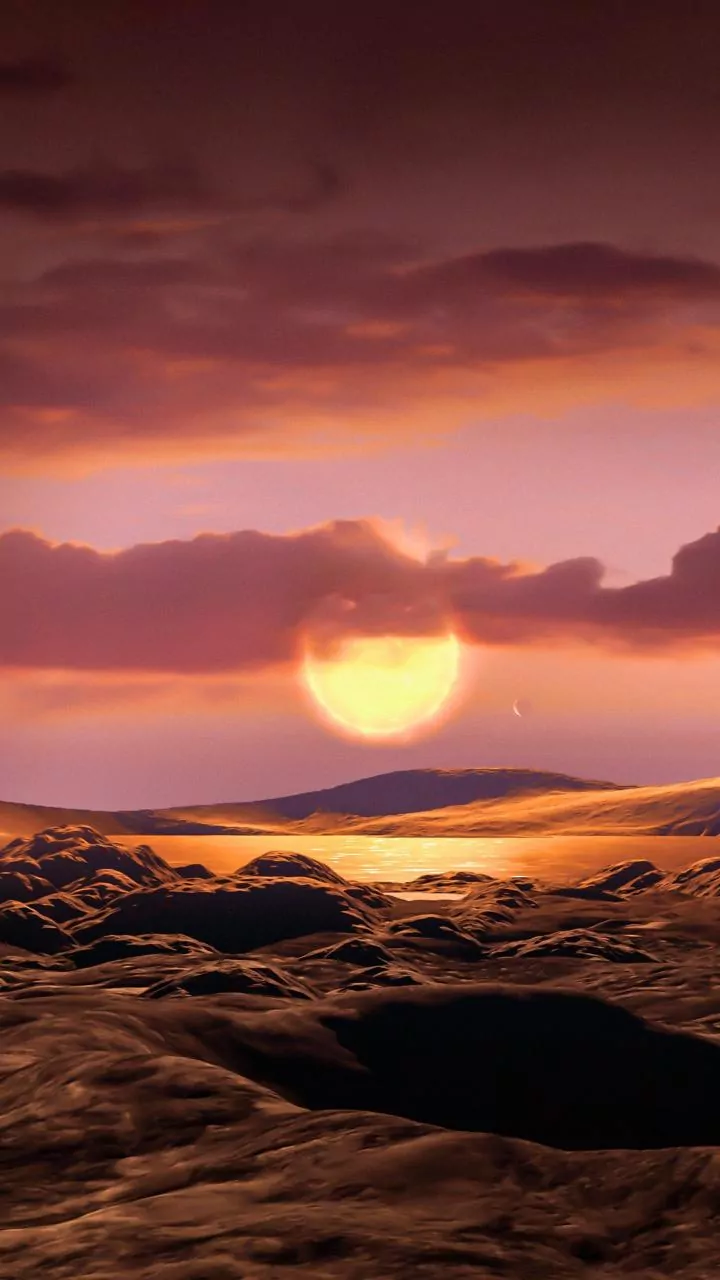
Beyond cosmology, Roman is set to revolutionize the search for planets outside our solar system. While missions like Kepler primarily used the transit method—watching for the dip in a star's light as a planet passes in front—Roman will heavily rely on a different technique called gravitational microlensing. This method, predicted by Einstein, occurs when a star and its planet pass in front of a more distant star, and their gravity acts as a natural magnifying glass, briefly amplifying the background starlight. This technique is especially effective for finding planets that are farther from their host star, in orbits similar to those in our own solar system, and even rogue planets that drift through space without a star. Astronomers estimate Roman could discover thousands of new exoplanets, creating a statistical census of worlds across our galaxy.
The Great Data Deluge
All this observation generates an almost incomprehensible amount of information. Roman is expected to beam back roughly 1.4 terabytes of raw data every single day. Over its five-year primary mission, it will accumulate more than 20 petabytes—a figure that dwarfs the total data collected by the Hubble Space Telescope in over three decades. Handling this torrent of data is a challenge in itself. To manage it, NASA has established the Roman Research Nexus, a cloud-based platform designed to process the information and make it accessible to scientists and the public worldwide. This approach marks a shift in how astronomical research is conducted, moving from individual data downloads to collaborative analysis in the cloud, ensuring the mission's discoveries can be shared and built upon for years to come.