


From Red Planet Air to Pure Oxygen
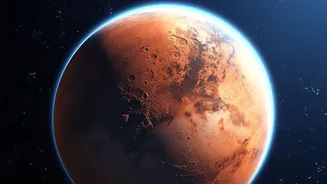
For decades, the biggest obstacle to sending humans to Mars hasn't just been the journey, but survival upon arrival. The Martian atmosphere is about 95% carbon dioxide, a toxic and unbreathable mix. Transporting all the necessary oxygen from Earth for
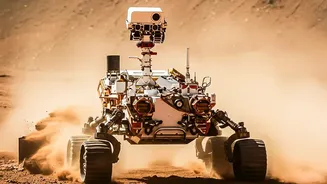
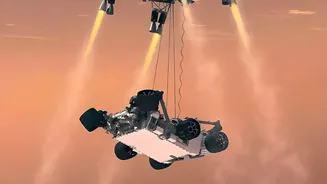
breathing and, more importantly, for rocket fuel to return home, is prohibitively expensive and complex. But a groundbreaking experiment aboard NASA's Perseverance rover has proven there is a better way. The Mars Oxygen In-Situ Resource Utilization Experiment, or MOXIE, has successfully demonstrated that we can 'live off the land' by manufacturing oxygen directly from the Martian air. This process, known as in-situ resource utilization (ISRU), is a game-changer, marking the first time a planet's natural resources have been harvested for human use.
How MOXIE Makes Air
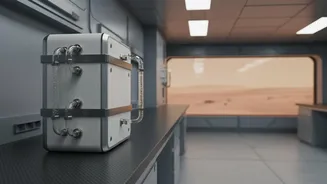
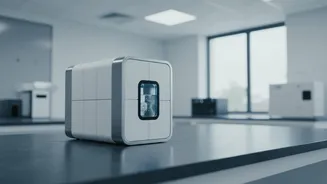
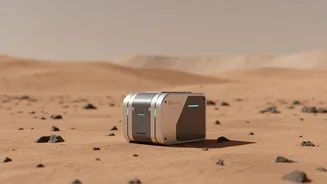
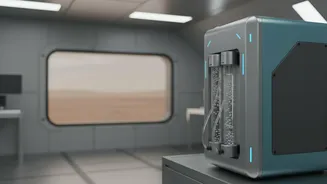
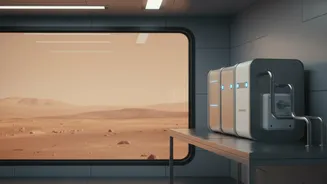
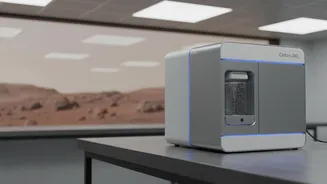
MOXIE works through a process called solid oxide electrolysis. First, it acts like a mechanical lung, drawing in Martian air through a HEPA filter to remove dust. This air is then compressed and heated to a blistering 800 degrees Celsius. At this extreme temperature, the device sends an electric current through the carbon dioxide, splitting the CO2 molecules into oxygen ions and carbon monoxide. The oxygen ions are then isolated and recombined to form pure, breathable oxygen (O2). The system checks the oxygen for purity before venting it, along with the carbon monoxide byproduct, back into the Martian atmosphere. The entire instrument is about the size of a toaster or small microwave, but its success has enormous implications. By the end of its mission, MOXIE had produced 122 grams of oxygen, roughly what a small dog breathes in 10 hours, proving the concept works reliably in the real Martian environment.
A Milestone in Martian Manufacturing
The headline claim of 'continuous' production refers to the system's proven ability to operate reliably and consistently. Throughout its mission, which began in 2021, MOXIE ran 16 successful experiments under a wide variety of Martian conditions, including different seasons, times of day, and fluctuating atmospheric densities. In each run, the instrument performed flawlessly, eventually doubling its original performance goals to produce up to 12 grams of oxygen per hour at 98% purity. While each test only ran for about an hour at a time due to power constraints from the rover, the repeated success across a full Martian year demonstrated the technology's robustness. The 'upgraded' nature of the system reflects the refined operational parameters that engineers used to push the device beyond its initial specifications, proving the core technology is even more capable than first anticipated.
The Blueprint for Future Martian Outposts
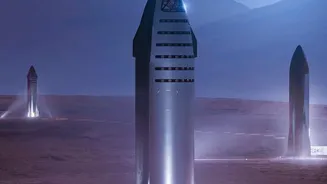
The success of MOXIE is less about the small amount of oxygen it produced and more about what it represents for the future. To support a human crew, a future oxygen-generating system would need to be about 100 times larger and capable of running continuously for thousands of hours. Such a scaled-up system, perhaps the size of a household stove, would be sent to Mars ahead of astronauts. It would work around the clock, producing and storing tonnes of liquid oxygen. This oxygen would serve two critical purposes: providing breathable air for the astronauts' habitat and, most crucially, supplying the roughly 25-30 metric tons of liquid oxygen needed as an oxidizer to fuel the Mars Ascent Vehicle for the journey home. Without the ability to produce this propellant on-site, the cost and complexity of a return mission would be astronomical.
What Happens Next?
With MOXIE's mission complete, the focus now shifts to developing its successor. Researchers are using the lessons learned to design a full-scale, robust system that can be deployed on the Martian surface. The challenges are significant. A larger system will require a dedicated power source, likely nuclear, and must be engineered for extreme longevity and reliability, as there will be no chance for repairs. Engineers must also perfect a way to store the produced oxygen as a liquid, which requires cryogenic temperatures. Despite these hurdles, MOXIE has turned a theoretical concept into a demonstrated capability. It has provided the foundational proof that future explorers on Mars can create a breathable bubble of air and the fuel to get home, all from the thin red air around them.