







The Pothole Pandemic
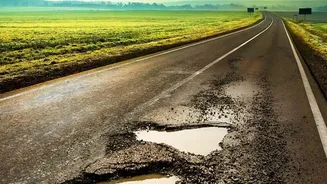
For commuters across India, the monsoon season brings with it the certainty of pothole-ridden roads. These are not just a minor inconvenience; they cause traffic snarls, damage vehicles, and lead to thousands of accidents annually. In 2022 alone, potholes
were responsible for over 4,400 accidents and more than 1,800 fatalities on national highways, marking a significant increase from the previous year. The cycle of damage and repair is a costly one, placing a relentless burden on municipal and national budgets. Every year, authorities spend crores on temporary patchwork that often washes away in the next downpour, leaving citizens frustrated and infrastructure in a perpetual state of disrepair. This endless loop highlights the urgent need for a more durable and sustainable solution.
What is Self-Healing Bio-Asphalt?
Imagine a road infused with microscopic life forms that spring into action to repair damage. That's the core idea behind self-healing bio-asphalt. This innovative material embeds dormant bacteria, such as species like Bacillus, within tiny capsules mixed into the asphalt. When a micro-crack forms on the road's surface due to wear and tear or water ingress, these capsules break open. The exposure to air and moisture awakens the bacteria from their slumber. Fed by nutrients also included in the mix, these microorganisms begin a natural metabolic process. The key byproduct of this process is calcite, a form of limestone, which meticulously fills the cracks and seals the damage from within. This essentially allows the road to 'heal' itself at a microscopic level, preventing small fissures from growing into menacing potholes.
From the Lab to Indian Roads
While the concept sounds like science fiction, it's a very real area of research and development in India. The National Highways Authority of India (NHAI) is actively exploring self-healing materials to improve road durability and reduce maintenance. Leading research bodies like the CSIR-Central Road Research Institute (CRRI) and several IITs are at the forefront, experimenting with variants designed for India's unique challenges, such as extreme weather and heavy traffic loads. However, it's important to note that the term 'adoption' doesn't yet mean widespread use. The technology is largely in the pilot and testing phase. NHAI is considering small-scale tests on select highways to evaluate the performance and cost-effectiveness of these materials before any large-scale implementation is approved. Other related technologies, like bio-bitumen derived from agricultural waste, are also gaining traction, with commercial production recently initiated to create more sustainable roads.
Weighing the Pros and Cons
The most significant advantage of self-healing asphalt is its potential to dramatically extend the lifespan of roads, possibly by 30-50%, and slash long-term maintenance costs. By autonomously repairing micro-cracks, the material prevents the severe degradation that leads to potholes, ensuring safer and smoother travel. Environmentally, this technology is a major win. It reduces the need for frequent, carbon-intensive repair work and the consumption of new materials. The primary hurdle, however, is the high initial cost. Estimates suggest that self-healing asphalt could be 25% more expensive than conventional materials upfront. While the long-term savings are expected to balance this out, it requires a significant initial investment. Furthermore, its performance and scalability across India's diverse climatic zones and traffic conditions are still being evaluated through pilot programs.
The Road Ahead
The journey from promising pilot projects to a nationwide standard is long, but the potential is transformative. If proven successful and cost-effective, self-healing asphalt could fundamentally change how India builds and maintains its vast road network. It aligns perfectly with national missions like Bharatmala and Gati Shakti, which aim not just to expand infrastructure but to build smarter, more resilient assets. The technology represents a shift from a reactive 'patchwork' approach to a proactive, preventative maintenance model. For the millions of Indians who navigate treacherous roads each monsoon, the prospect of self-healing highways offers a glimmer of hope for a future with safer, more reliable, and pothole-free journeys.