
Our Sister Planet Takes Center Stage
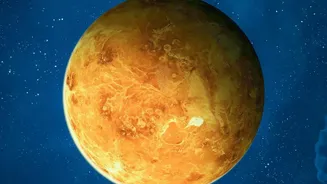
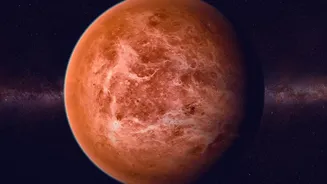
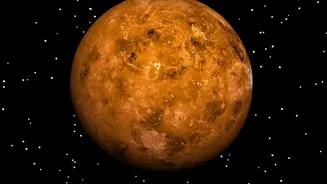
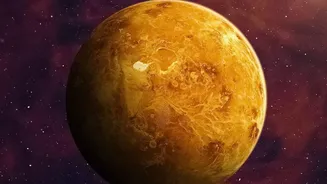
Venus is often called Earth's twin because of its similar size and mass, but its appearance in our sky is what truly makes it special. Throughout August 2026, Venus will be the undisputed queen of the evening. It shines as the 'Evening Star' because its orbit
is inside ours, meaning we always see it lingering near the sun—either just after sunset or just before sunrise. This month, it reaches what astronomers call its greatest eastern elongation, its farthest apparent distance from the sun in the evening sky. This positioning makes it exceptionally bright and easy to spot, even from light-polluted cities. It will outshine every star in the sky, appearing as a steady, silvery-white beacon.
When and Where to Look
The best time to look for Venus is in the western to west-southwest sky, starting about 30 to 45 minutes after your local sunset. The planet will be bright enough to punch through the twilight glow. In fact, it will likely be the first point of light you see as the sky begins to darken. Throughout August, Venus will be visible for a couple of hours before it sets below the horizon. As the month progresses, you can watch it move against the backdrop of the constellation Virgo. It will appear to be closing in on Virgo's brightest star, Spica, which will be to Venus's upper left early in the month and much closer by the end.
How to Be Sure It's Venus
If you're new to stargazing, you might wonder if you're looking at a bright star or even an airplane. Here’s how to tell the difference. Unlike stars, which twinkle, Venus shines with a steady, unwavering light. This is because its reflected sunlight passes through our atmosphere as a disk, not a point, making it less susceptible to atmospheric turbulence. Airplanes, on the other hand, will have flashing lights and will move noticeably across the sky in just a few seconds. Venus will appear stationary in the short term, only moving slowly toward the horizon over the course of the evening. Its sheer brightness is also a major clue; after the Moon, it's the brightest object in the night sky.
A World of Extreme Beauty and Brutality
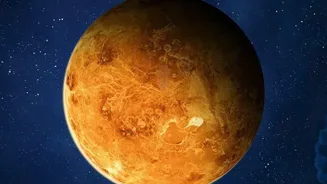
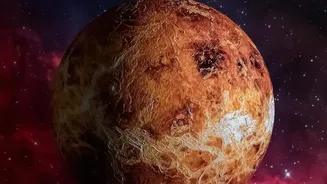
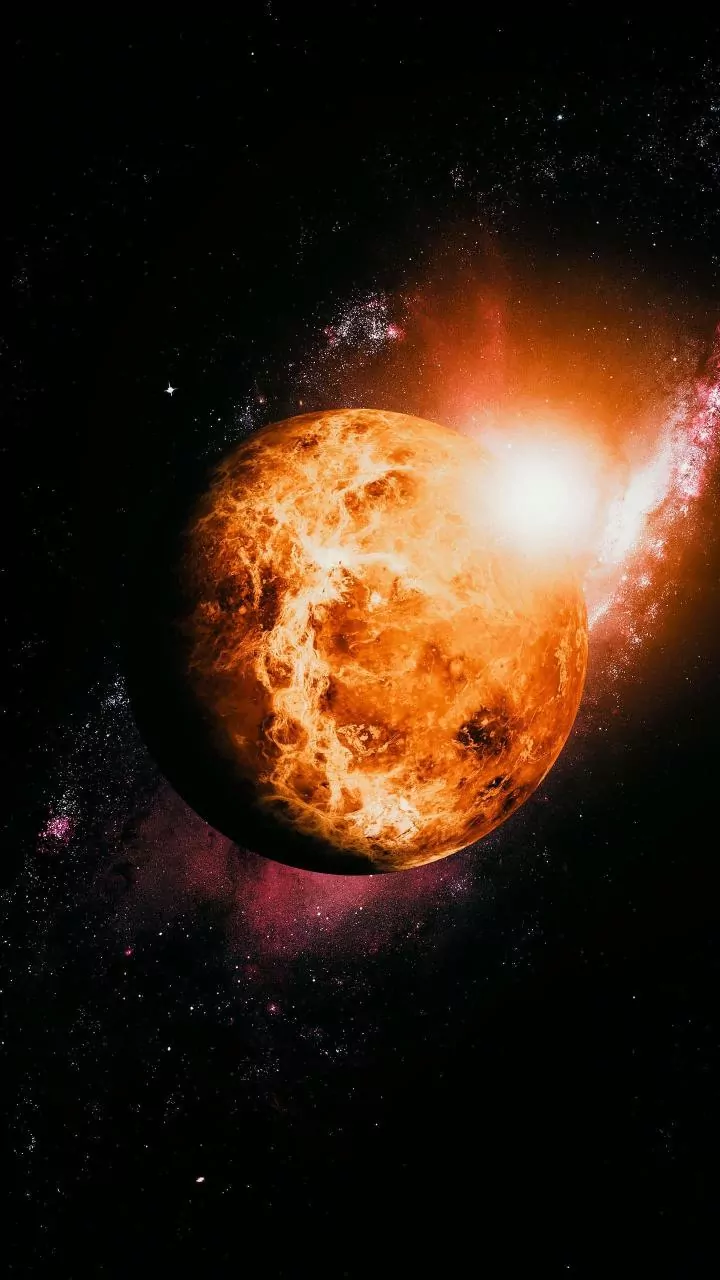
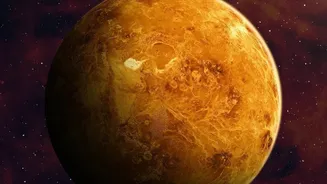
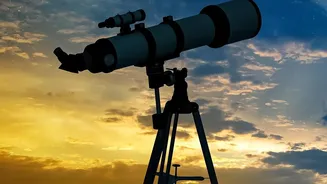
As you gaze at its serene light, it's wild to consider what Venus is really like. The planet is shrouded in thick, highly reflective clouds of sulfuric acid. These clouds are what make Venus so incredibly bright, as they bounce about 70% of the sunlight that hits them back into space. However, these same clouds create a runaway greenhouse effect, trapping heat and making Venus the hottest planet in our solar system. Surface temperatures are a scorching 475°C, hot enough to melt lead. So while it is named for the Roman goddess of love and beauty, its surface is anything but hospitable. Seeing it with a telescope will reveal its phase, similar to our moon's. In August 2026, it will appear as a small half-disk.
Simple Tips for the Best View
You don't need any special equipment to enjoy the sight of Venus; your eyes are more than enough. However, a simple pair of binoculars will enhance the view and make its brightness even more impressive. For the best experience, find a spot with a clear view of the western horizon, away from the direct glare of streetlights if possible. Give your eyes about 15-20 minutes to adjust to the darkness; this will help you see not only Venus in all its glory but also the fainter stars that emerge around it. This August offers a perfect, simple, and rewarding opportunity to connect with the cosmos right from your own backyard or balcony.