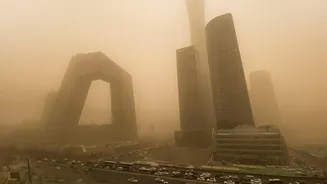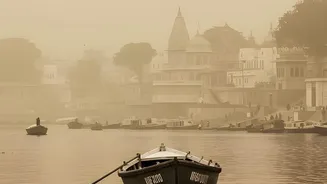




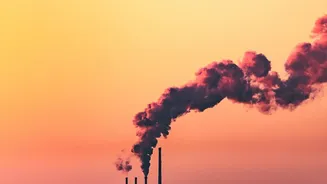

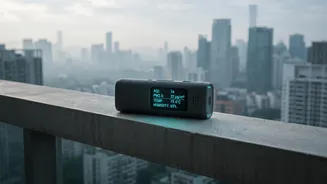
As winter descends upon India, so does the familiar blanket of smog. For athletes and fitness enthusiasts, this poses a critical dilemma: stick to your outdoor routine and risk your health, or stay inside and lose your edge? Here's your guide.
Understanding the Air Quality Index (AQI)
The Air
Quality Index, or AQI, is a simple tool designed to tell you how polluted the air is. It converts complex data about various pollutants—like PM2.5 and PM10, which are tiny, harmful particles—into a single number and colour-coded category. This system, used by government agencies like the Central Pollution Control Board (CPCB), helps you understand the immediate health risk. The higher the AQI value, the greater the health concern, especially for those engaging in strenuous activity. Athletes are particularly vulnerable because during exercise, breathing rates can increase dramatically, causing them to inhale a larger volume of unfiltered air deep into their lungs. This bypasses the body's natural defences and can lead to inflammation, reduced stamina, and even impaired cognitive function.
The Green and Satisfactory Zones: AQI 0-100
When the AQI is between 0 and 50 ('Good') or 51 and 100 ('Satisfactory'), the air quality is considered safe for the vast majority of people. For outdoor sports and exercise, this is your green light. An AQI in this range poses minimal impact to your health. At the higher end of this scale, towards 100, individuals who are exceptionally sensitive to air pollution might experience minor breathing discomfort, but for most athletes, it is safe to train and compete as planned. These are the days to take full advantage of the outdoors without significant worry about the air you're breathing.
The Moderate Zone: AQI 101-200
This is the 'Moderate' zone, and it's where you need to start paying closer attention. While the air isn't outright dangerous for the general population, it can cause problems for sensitive groups. This includes children, the elderly, and anyone with pre-existing heart or lung conditions like asthma. For healthy athletes, prolonged and strenuous activity in this range might lead to some breathing discomfort. Some experts suggest that when the AQI exceeds 150, it is wise to start modifying your activity; for example, by reducing the intensity of your workout by about 30%. A run on a day with an AQI of 180 is not the same as a run on a clear day. Consider it a yellow flag: proceed with caution.
The Poor and Very Poor Zones: AQI 201-400
Once the AQI crosses the 200 mark, you are in the 'Poor' (201-300) and 'Very Poor' (301-400) categories. At this point, rescheduling outdoor sports is strongly recommended for everyone. An AQI above 200 can cause breathing discomfort to most people on prolonged exposure. In the 'Very Poor' range, the risk escalates to respiratory illness even with moderate activity. Doctors advise that any strenuous outdoor activities, such as running or team sports, should be avoided entirely. The increased breathing during exercise means you are inhaling a hazardous level of pollutants, which can strain your respiratory and cardiovascular systems. If you must be outside, a certified N95 mask is recommended, and you should stay away from high-traffic areas.
The Severe Zone: AQI 401+
An AQI above 400 is classified as 'Severe'. In these conditions, all outdoor physical activity should be cancelled. The air is now toxic enough to affect even healthy individuals and can cause serious health impacts for those with existing conditions. Health advisories are clear: avoid all outdoor exertion. The risks are no longer minor and range from acute respiratory distress to significant cardiovascular strain. During these high-pollution episodes, the only safe place to exercise is indoors, preferably in a space with an air purifier to reduce the level of indoor pollutants.
Smart Timing and Other Strategies
The AQI isn't static; it changes throughout the day. Contrary to popular belief, early mornings in winter are often the most polluted time. Due to a phenomenon called temperature inversion, pollutants get trapped near the ground overnight and peak between 6 AM and 10 AM. The air is often cleanest between late morning and early afternoon, roughly from 11 AM to 3 PM, after the sun has warmed the ground and allowed the trapped pollutants to disperse. When you do exercise, try to choose parks or areas with less traffic. On days with poor air quality, moving your workout indoors is the safest bet. Using real-time AQI apps can help you find the safest window to stay active.