




The Compact Conundrum: Why Moisture Builds Up Fast
In a small home, the same amount of moisture from cooking, showering, or even breathing gets concentrated in a much smaller volume of air. [12] This means the relative humidity can spike rapidly. [11] Unlike larger houses with more air to dilute water
vapour, tiny homes and apartments can’t easily absorb it. [12] Modern, energy-efficient builds are often tightly sealed, which is great for heating bills but can trap moist air inside. [12] When this warm, humid air hits a colder surface like a window or an exterior wall, it condenses into water. [12] This condensation can lead to musty smells, damage to wooden furniture and floors, and create the perfect environment for mould and mildew to grow. [1, 2, 7] Managing this isn't about eliminating moisture, but about preventing it from getting trapped.
Cultivate Smart Airflow Habits
The single most effective strategy against humidity is ventilation. Make it a routine to open windows for 10-20 minutes each day to exchange stale, moist indoor air for drier outdoor air. [6, 13] For the best results, create a cross-breeze by opening windows on opposite sides of your home. [4, 6] Even in winter, a short period of ventilation is crucial. Use ceiling fans or small portable fans to keep air circulating, preventing moisture from stagnating in corners or behind furniture. [3, 13] This simple step helps moisture mix with the air and find its way out, rather than settling on surfaces. [10]
Tackle Moisture at the Source
Many daily activities produce significant amounts of water vapour. Being mindful of these can make a huge difference. When cooking, always use the exhaust fan over your stove to pull steam and odours outside. [3] In the bathroom, which is a major humidity hotspot, run the exhaust fan during your shower and for at least 20-30 minutes afterward to clear the steam. [3, 13] If you don't have an exhaust fan, cracking a window open while showering helps. [3] Taking shorter, cooler showers also produces less steam. [3, 9] Finally, avoid drying laundry indoors if possible, as a single load can release a large quantity of water into the air. [6, 18] If you must dry clothes inside, do it in a well-ventilated room with a fan running or a dehumidifier nearby. [18]
Manage Your Indoor Jungle
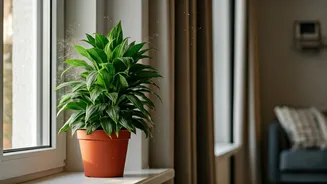
Houseplants release moisture into the air through a process called transpiration. [20, 21] While a few plants won't cause a major issue, a large collection can contribute significantly to indoor humidity levels. [16, 21] If your home already feels damp, consider grouping your plants together in one area rather than spreading them throughout. This creates a more humid microclimate for the plants without affecting the entire home as much. [16] Some plants, known as air plants, don't grow in soil and can absorb some moisture from the air, making them a smarter choice for humid spaces. [4] Avoid overwatering, as damp soil also adds moisture to the air. [8]
Declutter for Better Circulation
Good airflow is a key enemy of humidity, and clutter is the enemy of airflow. In a small space, it’s easy for areas to become cramped. Stacks of books, overflowing closets, and furniture pushed directly against exterior walls can trap pockets of stagnant, moist air. [10] This prevents the air from circulating and drying out, creating prime spots for condensation and mould. [12] By keeping your space organised and leaving a small gap between furniture and outside walls, you allow air to move more freely. [1] This ensures that your ventilation efforts are more effective and helps maintain a more consistent, healthy environment throughout your home.
Invest in Smart Tools
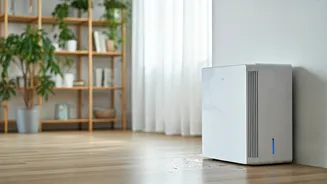
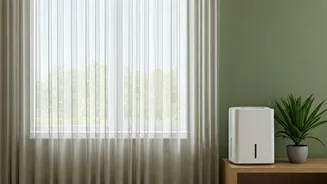
While habits are your first line of defence, a few tools can provide powerful support. A hygrometer is an inexpensive device that measures the relative humidity in your home, giving you real-time data so you know when to act. [28] The ideal range is generally between 40% and 50%. [23, 27] If you consistently struggle with high humidity, a dehumidifier is a worthwhile investment. [8] Compact models are available that are well-suited for smaller rooms. [26] For enclosed spaces like closets or cabinets, you can also use passive moisture absorbers containing materials like calcium chloride to draw water from the air. [8]