
A Northern Affair of Milk and Ghee
In North India, particularly in Uttar Pradesh's Braj region—the land of Mathura and Vrindavan where Krishna's childhood stories unfold—Janmashtami food is dominated by milk and its derivatives. This is no surprise, given Krishna’s identity as a cowherd
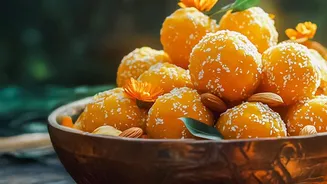
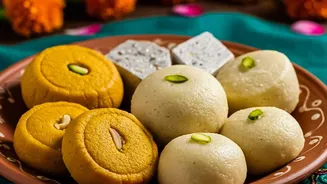
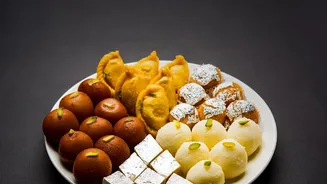
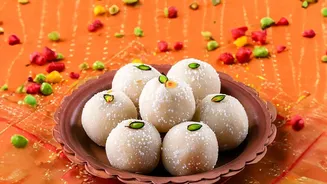
and his legendary love for butter and milk. A key offering is Panjiri, a dry sweet made from roasted coriander powder, ghee, sugar, and loaded with nuts. Another iconic preparation is the 'Chappan Bhog', a grand offering of 56 distinct food items. This lavish spread symbolizes gratitude and love, and while its contents can vary, it is invariably rich in milk-based sweets like peda, kheer, and rabdi. The peda from Mathura, a sweet made from condensed milk, is so famous that it has become synonymous with the festival itself.
The Savoury West: Maharashtra's Community Dish
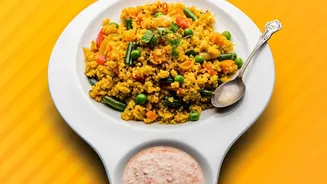
Travel west to Maharashtra, and the flavour profile of Janmashtami changes significantly. Here, the star of the festival is Gopalkala, a savoury dish that reflects community and camaraderie. Gopalkala is a simple, no-cook mixture of flattened rice (poha), curd, cucumber, coconut, and peanuts. The name itself is revealing: 'Gopal' refers to Krishna, and 'kala' means mixture. Legend says that Krishna would share a meal with his cowherd friends by mixing whatever food they all brought, and this dish commemorates that spirit of togetherness. It is especially associated with the boisterous Dahi Handi celebrations, where the pot broken by 'Govindas' is often filled with Gopalkala. In neighbouring Gujarat, the menu often includes regional favourites like shrikhand, a sweet strained yogurt dish, and Patra, steamed colocasia leaves layered with a spiced gram flour paste.
Eastern India’s Seasonal Sweetness
In West Bengal, Janmashtami food is deeply connected to the monsoon season's bounty. The quintessential sweet here is Taler Bora, or sugar palm fritters. The Asian palmyra palm fruit, known as 'taal', ripens around the time of the festival. Its fragrant pulp is mixed with rice flour, coconut, and sugar or jaggery, then deep-fried into small, golden-brown balls. The preparation of Taler Bora is a cherished household tradition, and the sweet is first offered to Krishna as bhog before being shared. This highlights how local ecology and seasonal availability of ingredients have shaped the region's devotional food practices, creating a unique culinary identity for the festival.
Southern Crunch: Rice Flour and Jaggery
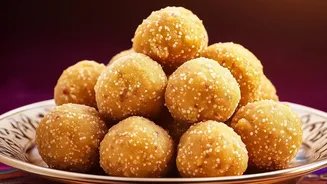
In South India, where the festival is often called Krishna Jayanthi or Gokulashtami, the offerings have a distinctly different texture and base ingredient. Here, rice flour is the hero. Homes are filled with the aroma of deep-fried snacks. Essential items include Uppu Seedai (savoury rice flour balls spiced with cumin and butter) and Vella Seedai (a sweet version made with jaggery). Another staple is Murukku, a crunchy, spiral-shaped snack also made from rice flour. The reliance on rice and jaggery instead of the wheat and milk-heavy preparations of the North is a clear marker of the South's different agricultural landscape and culinary traditions. Beaten rice, or Aval, is also a favourite offering, prepared either sweet with jaggery and coconut or as a savoury dish.