



Why Control Is Crucial
Many people perform torso twists with rapid, uncontrolled swinging, believing that faster equals better. However, this approach relies on momentum, not muscle engagement, and places dangerous rotational stress on your spine. The lumbar (lower) spine has
a very limited capacity for rotation, only about 5 to 10 degrees. When you force it to twist quickly and repeatedly, you risk straining muscles and ligaments, or even causing serious disc injuries. Controlled, deliberate twists engage the correct muscles—primarily your obliques—while protecting your vertebrae from harmful shearing forces. Slowing down ensures that you are building strength and stability, not just creating the illusion of a workout.
The Muscles You're Actually Working
When done correctly, the standing torso twist is an excellent exercise for your core musculature. The primary movers are your internal and external obliques, the muscles running along the sides of your abdomen. These are responsible for rotating your torso and stabilising your trunk. The exercise also engages deeper core muscles like the transverse abdominis, which acts like a corset to support your spine, as well as the rectus abdominis (the 'six-pack' muscles) and spinal erectors in your lower back. Strengthening this entire group improves posture, enhances balance, and builds functional strength for everyday movements.
How to Perform the Perfect Standing Twist
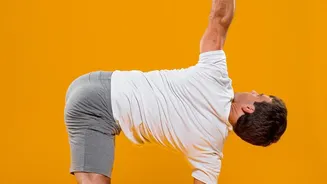
To get the most out of this exercise while keeping your back safe, follow these steps with precision and focus: 1. Set Your Stance: Stand with your feet shoulder-width apart and a slight bend in your knees. This provides a stable base. 2. Position Your Arms: Cross your arms over your chest or bend them at 90-degree angles at your sides. Alternatively, you can extend them straight out in front of you. 3. Engage Your Core: Before you move, brace your abdominal muscles as if you're about to be punched in the stomach. This is key to stabilising your spine. 4. Initiate the Twist: Slowly and deliberately rotate your torso to one side. The movement should come from your waist and rib cage, not from swinging your arms or hips. Try to keep your hips facing forward as much as possible. 5. Control the Return: Twist only as far as you can comfortably go while maintaining control, then smoothly return to the centre. 6. Alternate Sides: Repeat the movement on the other side, maintaining the same slow and controlled tempo throughout the entire set.
Common Mistakes to Avoid
Watch out for these frequent errors that reduce the effectiveness of the exercise and increase injury risk: Using Momentum: Swinging your body back and forth is the most common mistake. If you're not feeling your oblique muscles working, you're likely moving too fast. Twisting from the Arms: The rotation should originate from your core. Your arms should move with your torso, not lead the movement. Moving the Hips: While some hip movement is natural, your hips and pelvis should remain relatively stable. Excessive hip rotation takes the focus off your obliques. Over-rotating: Pushing past your natural range of motion can strain your lower back. A controlled twist where you feel the muscles engage is far more beneficial than a deep, forced twist. * Hunching Your Back: Maintain a tall, straight spine throughout the exercise. Rounding your back reduces core activation and puts stress on your spine.
Benefits Beyond a Stronger Core
Incorporating controlled standing torso twists into your routine offers several advantages. It improves spinal mobility, particularly in the thoracic (upper and mid) back, which can get stiff from prolonged sitting. This helps counteract poor posture and can relieve back pain by strengthening the supporting muscles. The exercise also enhances your body's anti-rotational strength, which is the ability to resist unwanted twisting forces. This is crucial for preventing injury in sports and daily life, whether you're lifting groceries or swinging a golf club. Ultimately, it builds a more stable, resilient, and coordinated core.