




More Than Just Mimicry
For centuries, we've been fascinated by parrots' ability to copy human speech. But scientists now understand this is not mere 'parroting'. It's a complex process known as vocal learning, an ability shared by only a few animal groups, including humans,
songbirds, and dolphins. This means parrots don't just record and play back sounds; their brains actively process auditory information, remember it, and then physically reproduce it. This ability is so advanced that it allows them to not only learn words but also the cadence, pitch, and emotional tone of the speaker. This hints at a deeper level of auditory processing, which forms the foundation for potentially picking up something as nuanced as an accent.
The Unique Parrot Brain
The secret to this remarkable skill lies in the unique structure of the parrot's brain. Unlike other birds, parrots possess specialised brain circuits for vocal learning. Research led by Duke University identified that parrots have a 'shell' or outer ring system around their core vocal learning centres. Scientists believe this additional neural architecture gives them extra flexibility in learning new sounds. This 'song system' has direct connections between the parts of the brain that hear sounds and those that control the vocal organs. This wiring allows for a tight feedback loop, enabling a parrot to listen to a sound, attempt to reproduce it, and then refine its performance based on what it hears—a process strikingly similar to how human infants learn to speak.
The 'Voice Box' and Social Drive
Anatomically, parrots don't have vocal cords like humans. Instead, they use a special organ called the syrinx, located at the base of their windpipe. By precisely controlling the muscles around the syrinx and changing the shape of their throat and beak, they can modulate airflow to create a vast range of complex sounds, including the phonemes of human speech. But biology is only half the story. The motivation to mimic is deeply social. Parrots are flock animals that use complex calls to communicate and bond. When living with humans, they perceive their human family as their 'flock'. By mimicking the sounds of their environment—including the specific accent of their caregivers—they are actively trying to fit in, communicate, and strengthen social bonds. It’s their way of saying, ‘I’m one of you’.
From Theory to Reality
While large-scale, controlled studies on accent adoption are still emerging, the anecdotal evidence is compelling and supported by our understanding of vocal learning. Many parrot owners report their birds speaking with a clear local twang. In the wild, different populations of the same parrot species have been found to develop distinct regional dialects in their calls. This demonstrates their natural ability to converge on the vocal patterns of their social group. Applying this to a human household, a parrot would be intensely exposed to a single, consistent accent for years. Given their biological tools and social drive, it's highly plausible that they would reproduce speech patterns with that specific regional flavour. They aren't just learning 'hello'; they are learning your 'hello'.
Not All Parrots Are Alike
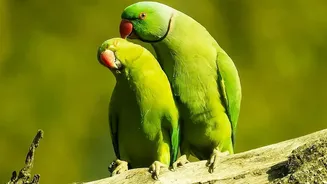
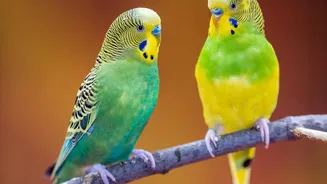
It’s important to note that this ability varies widely among species. African Grey parrots are widely considered the most proficient vocalists, known for their large vocabularies and the clarity of their speech. Studies on one famous African Grey, Alex, showed he could associate words with meanings, suggesting a cognitive level beyond simple mimicry. Other skilled speakers include Amazon parrots, Budgerigars (parakeets), and Rose-ringed parakeets. These species, with more developed 'shell' structures in their brains, seem better equipped for complex vocal imitation. The accuracy of their mimicry, including accent, depends on the individual bird, its species, and the amount and quality of social interaction it receives.