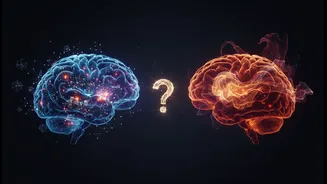






The High Cost of Plausible Lies
We've all seen it. An AI chatbot generates a beautifully written, perfectly structured answer that is completely, utterly wrong. These fabrications, politely termed "hallucinations," are not just minor glitches; they are a fundamental problem holding
AI back. They happen when a model, designed to predict the next most plausible word, fills a knowledge gap with a statistically likely but factually incorrect statement. The consequences range from annoying to actively dangerous. Students are given fake historical quotes, developers get code based on non-existent libraries, and in high-stakes fields like law and medicine, the risks are even greater. As of early 2026, over 1,200 court cases have been identified where fabricated AI-generated content was submitted. This isn't a sustainable path. The core issue is that models are often trained and benchmarked in ways that reward guessing over admitting uncertainty.
The 'Fake It Till You Make It' Design Flaw
Large Language Models (LLMs) are not databases of facts; they are masters of linguistic pattern recognition. Their goal is to sound human and coherent, and they learn from vast datasets that include everything from peer-reviewed papers to internet comments, complete with all of humanity's biases and misinformation. This design creates an incentive to produce a confident answer, even when the underlying data is weak or contradictory. The model doesn't "know" it's lying; it's simply completing a pattern. This creates a difficult paradox: the very trait that makes these tools engaging and easy to use—their fluent, self-assured tone—is also what makes them untrustworthy. To move forward, we need to shift the goal from creating a convincing know-it-all to building a reliable, self-aware assistant.
A New Mandate: Intellectual Humility for AI
The solution isn't to stop AI from being uncertain, but to get it to tell us when it is. Imagine if, instead of inventing a case law citation, an AI assistant noted, "I am inferring this legal principle, as I cannot find a direct citation." Or if a medical summary tool highlighted a statement with, "Confidence on this point is low due to conflicting data in the source material." This is the concept of transparent AI, where the system's inner workings and decision processes are made clearer to the user. This approach, known as uncertainty quantification, is a major area of AI research. It involves designing models that can assess and communicate their own confidence levels, distinguishing between things they know (epistemic certainty) and things that are inherently random or unknowable (aleatoric uncertainty).
Is Technically Humble AI Possible?
Building this capability is challenging, but not impossible. Researchers are already exploring several paths. Some methods involve analyzing the probability scores the model assigns to the words it generates; a low probability can be a red flag for a hallucination. Other approaches, like Retrieval-Augmented Generation (RAG), aim to reduce hallucinations by forcing the model to base its answers on a specific set of verified documents, rather than its general training data. Even with RAG, however, error rates can still be significant. The real challenge lies in getting models to express their uncertainty in natural, understandable language. Studies have shown that simply asking a model to say when it's unsure can improve accuracy. The goal is to move beyond a simple, and often unreliable, confidence score and toward a more nuanced dialogue about what the AI knows and what it's assuming.
The Business Case for Honest AI
Building trust is the single biggest barrier to the widespread adoption of AI in critical enterprise functions. Businesses and consumers are wary of systems that can't be held accountable. An AI that openly flags its own limitations would be far more valuable than one that projects false confidence. It would allow users to critically assess the output and use it more responsibly. This transparency transforms the AI from a 'black box' oracle into a collaborative partner. It reduces legal and operational risks, fosters greater user confidence, and ultimately allows organizations to deploy AI in higher-stakes situations. The future of useful AI isn't an omniscient machine, but a tool that understands the boundaries of its own knowledge and communicates them clearly.