


India's Next Interplanetary Frontier
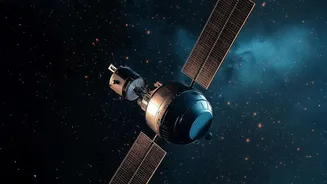
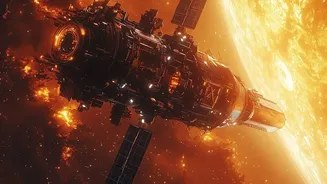
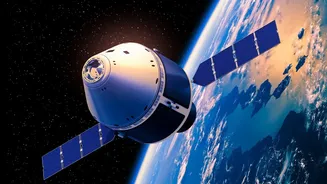
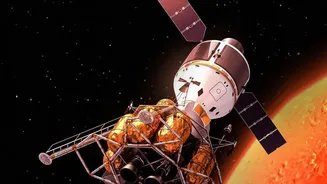
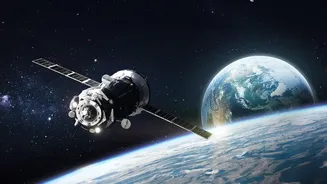
Following the historic successes of the Chandrayaan missions to the Moon and the Mangalyaan mission to Mars, the Indian Space Research Organisation (ISRO) is embarking on its next great interplanetary adventure. The Venus Orbiter Mission, named Shukrayaan,
represents a bold new chapter for India's space program. Formally approved by the Union Cabinet in September 2024, the mission is a testament to the nation's growing confidence and capability in planetary exploration. Scheduled for a March 2028 launch, Shukrayaan will journey for 112 days to reach the second planet from the Sun. This mission isn't just about planting a flag; it's a sophisticated scientific endeavour designed to answer fundamental questions about a world that, despite being our neighbour, remains shrouded in secrecy.
Venus: The Ultimate Hostile Environment
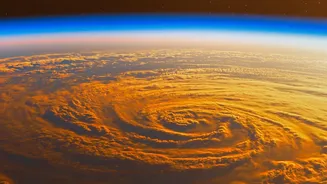
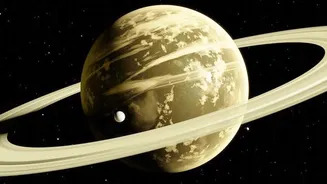
Venus is often called Earth's 'sister planet' due to its similar size and mass, but it’s more of an 'evil twin'. The planet is a true vision of hell, with surface temperatures hot enough to melt lead and a crushing atmospheric pressure over 90 times that of Earth's. Its entire surface is permanently obscured by a thick, unbroken blanket of sulfuric acid clouds, making direct observation impossible. This runaway greenhouse effect, where heat is trapped by the dense atmosphere, serves as a cautionary tale for climate change on our own planet. These extreme conditions are precisely why sending an orbiter equipped with specialised instruments is so critical. The challenge is immense, but the potential scientific rewards—understanding how two similar planets could evolve so differently—are even greater.
The High-Tech Toolkit for Peering Through the Veil
To get past the planet's formidable cloud cover, Shukrayaan will be equipped with a suite of advanced sensors, carrying a scientific payload of approximately 100 kilograms. The star of the show is a high-resolution Synthetic Aperture Radar (SAR). Unlike a regular camera, radar can effectively 'see' through clouds, darkness, and weather, allowing ISRO to map the Venusian surface with unprecedented detail. This will help scientists identify volcanic plains, craters, and other geological features. Another key instrument is a ground-penetrating radar, which aims to study the shallow subsurface of Venus for the first time. The mission will also carry thermal cameras, spectrometers, and plasma analysers to study the composition of the atmosphere, cloud dynamics, and the interaction between Venus and the solar wind.
What Does India Hope to Discover?
The scientific objectives for Shukrayaan are ambitious and wide-ranging. A primary goal is to investigate the surface and subsurface to understand its geological history, including searching for signs of active volcanism. The mission will also conduct a deep dive into the Venusian atmosphere, studying its chemical composition, its super-rotating dynamics, and the mysterious processes that drive its violent weather. One particularly intriguing payload, a collaboration between Russia and France called VIRAL, will investigate atmospheric gases. Furthermore, instruments developed in partnership with Sweden and Germany will study how the solar wind interacts with the Venusian ionosphere. These studies are crucial for piecing together the puzzle of Venus's evolution and why it turned into such an inhospitable world.
A Technologically Ambitious Undertaking
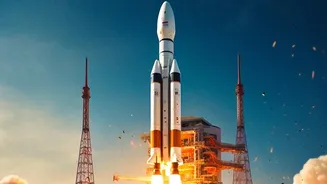
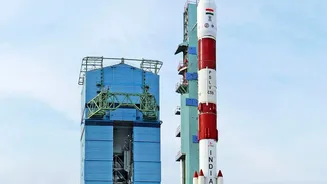
The Shukrayaan mission is not just a scientific quest but also a significant technological demonstration for ISRO. For the first time, ISRO will employ aerobraking to finalise the spacecraft's orbit. After an initial large elliptical orbit, the orbiter will repeatedly dip into the upper layers of the Venusian atmosphere. This maneuver uses atmospheric drag to slow the spacecraft down and circularise its orbit, saving a massive amount of fuel and allowing for a heavier scientific payload. The LVM-3 rocket, ISRO's heavy-lift launch vehicle, has been identified to carry the 2,500 kg orbiter into space. Once operational, the data collected over its five-year mission will be archived and made available to the global scientific community, solidifying India's position as a major player in space science.