



Squats and lunges are foundational for building strong legs, but wobbling through them is a common struggle. Nailing your form is key not just for results but for safety. Here’s how to master these moves and find your balance.
The Powerhouse Lower-Body Duo
Squats and lunges are often
called the king and queen of lower-body exercises for a reason. They are compound movements, meaning they engage multiple muscle groups at once. Primarily, they target the quadriceps at the front of your thighs, the hamstrings at the back, and the glutes. Beyond just building strength and muscle definition, these exercises are incredibly functional. They mimic everyday movements like sitting in a chair or picking something up. Regularly performing squats and lunges improves mobility in your hips and ankles, strengthens stabilizing muscles, and can even boost your metabolism by working such large muscle groups. This translates to better performance in other activities and helps protect your joints from long-term injury.
Mastering the Squat Form
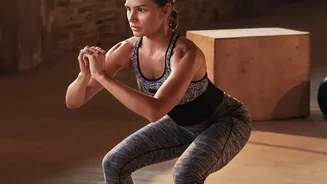
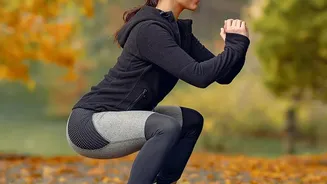
Proper squat form is about more than just bending your knees. Start with your feet slightly wider than hip-width apart, with your toes pointing slightly outwards. Before you move, engage your core by bracing your abdominal muscles. Initiate the movement by pushing your hips back as if you're about to sit in a chair. Keep your chest up and your back straight as you lower down. Aim to get your thighs at least parallel to the floor, ensuring your body weight is pressed through your heels, not your toes. A good way to check your form is to make sure your knees are tracking in line with your feet and not caving inward. Pushing through your heels, return to the starting position, squeezing your glutes at the top.
Perfecting the Lunge
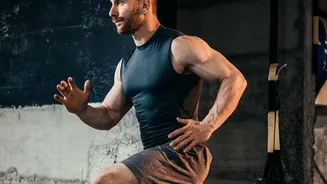
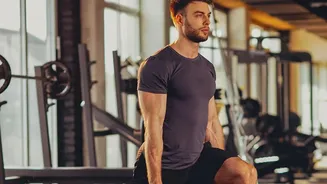
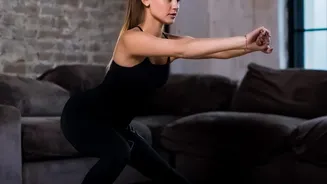
Lunges are more challenging for balance because they are a unilateral exercise, working one leg at a time. This is also what makes them great for identifying and correcting muscle imbalances. To start, stand with your feet hip-width apart. Take a controlled step forward with one leg. A common mistake is to step as if you are on a tightrope; instead, imagine your feet are on separate train tracks to create a stable base. Lower your hips until both knees are bent at approximately a 90-degree angle. Your front knee should be aligned over your ankle, and your back knee should hover just above the floor without touching it. Keep your torso upright and your core engaged. To return, push off your front heel to bring your foot back to the starting position.
The Secret to Staying Stable
If you feel wobbly, you’re not alone. Balance issues in squats and lunges often stem from a few key areas. The most important factor is core stability. Your core includes more than just your abs; it's the entire system of muscles around your torso, hips, and back that keeps you steady. Before each rep, take a breath and actively brace your core as if you're about to be pushed. This creates a rigid trunk, providing a stable platform for your legs to move. Your gaze also matters. Find a fixed point on the wall in front of you and keep your eyes on it throughout the movement. Looking down or around can easily throw you off. Finally, ensure your weight distribution is correct—primarily through the heels in a squat and focused on the front foot in a lunge.
Common Mistakes and How to Fix Them
Two frequent errors sabotage lower-body workouts: knees caving inward and leaning too far forward. Knees caving in, known as knee valgus, often points to weak glutes and hip stabilizers. To fix this, consciously push your knees outward so they stay aligned with your feet. Leaning forward excessively shifts the load away from your legs and onto your lower back. This is common in squats when people initiate the movement with their knees instead of their hips. Always start by hinging at the hips. In lunges, a narrow 'tightrope' stance is a major cause of instability. Widening your stance from side-to-side will instantly improve your balance. Also, avoid putting too much weight on your back foot during a lunge; about 80% of your weight should be on the front leg.
Beginner-Friendly Modifications
If you're new to these exercises or struggling with balance, don't be afraid to modify them. For squats, try performing them in front of a chair or bench. Lower yourself until you lightly touch the surface, then stand back up. This helps build confidence and correct form without the fear of falling. Another option is a stability ball wall squat, where you place a ball between your lower back and a wall for support. For lunges, beginners can hold onto a sturdy chair, wall, or squat rack for support. This removes some of the balance demand, allowing you to focus purely on the movement and strengthening your leg muscles. You can also start with stationary lunges (split squats) before progressing to walking lunges.