

A Crown of Ice and Mystery
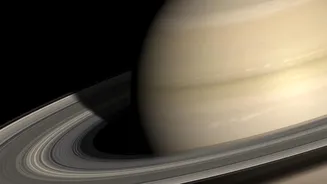
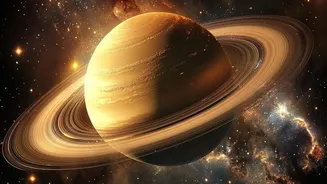
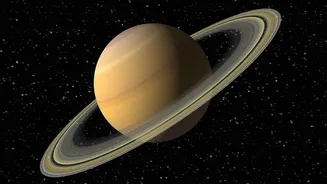
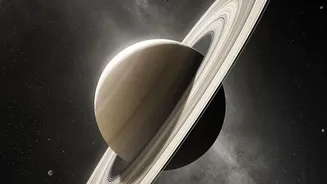
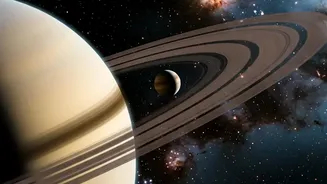
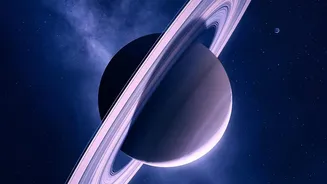
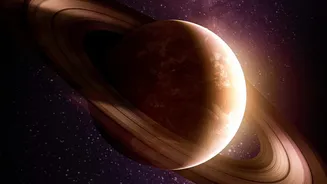
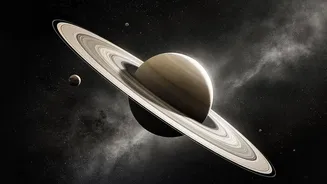
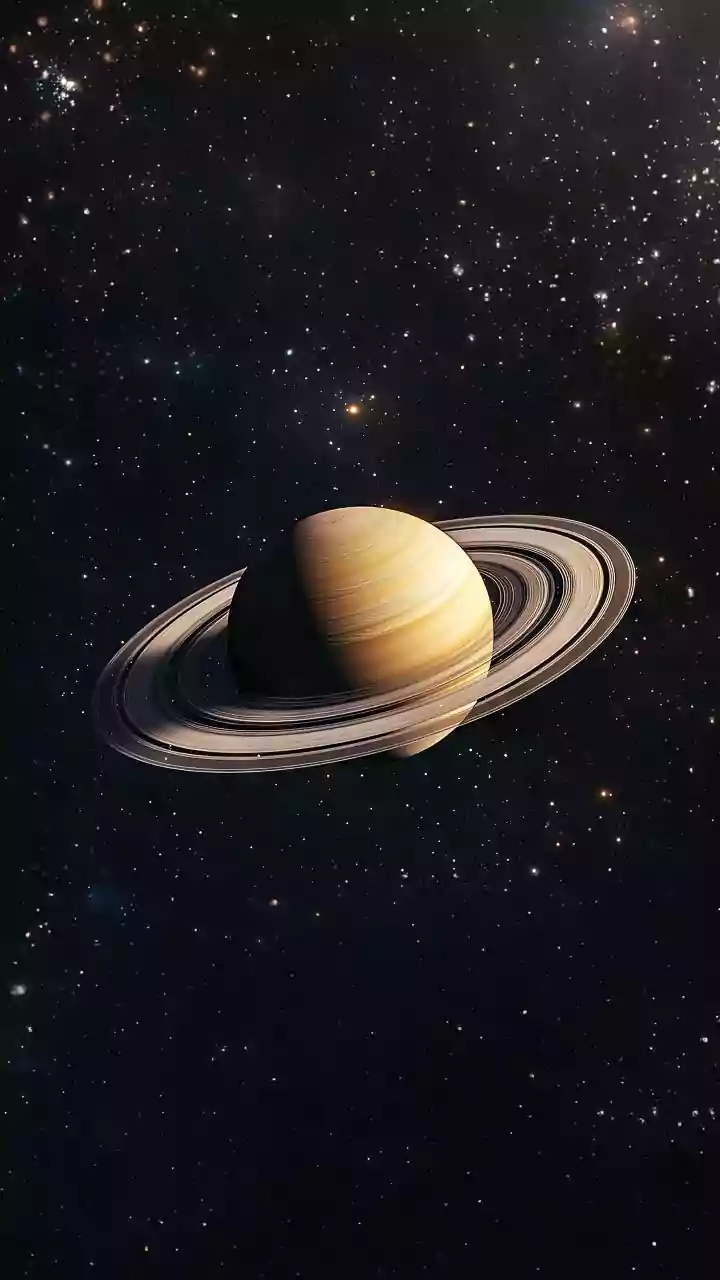
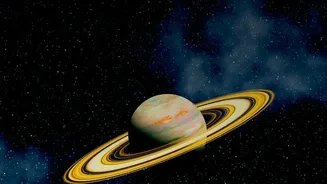
Saturn without its rings is almost unimaginable. Since they were first glimpsed through a telescope in the 1600s, they have been an object of fascination. For a long time, the prevailing scientific view was that the rings were ancient, perhaps forming
alongside Saturn itself over four billion years ago. They were seen as a static, primordial feature of our solar system, a vast and glittering field of ice and rock particles held in a delicate gravitational dance. This story made sense; after all, in the slow, grinding timescale of the cosmos, it was easy to assume that such a massive structure must be as old as the planet it encircles. But this simple, elegant picture of Saturn’s origins has been completely upended by observations that show a far more active, violent, and temporary system than we ever imagined.
Whispers From a Dying Probe
The first major clues that our understanding was wrong came from the final, daring act of NASA's Cassini spacecraft. After 13 years of studying the Saturnian system, the probe executed its “Grand Finale” in 2017, performing a series of dives between the planet and its innermost rings before plunging into the atmosphere. In those final moments, Cassini sent back revolutionary data. It confirmed that material from the rings was falling into Saturn in a process dubbed “ring rain”. Scientists found that a surprising amount of matter, tens of thousands of pounds per second, was being pulled from the rings into the planet's upper atmosphere. Even more startling was the composition of this rain. It wasn't just water ice; Cassini’s instruments detected a complex cocktail of organic molecules, including methane, butane, and propane, hinting at a much more intricate chemical relationship between the planet and its rings.
A 40-Year-Old Secret Revealed
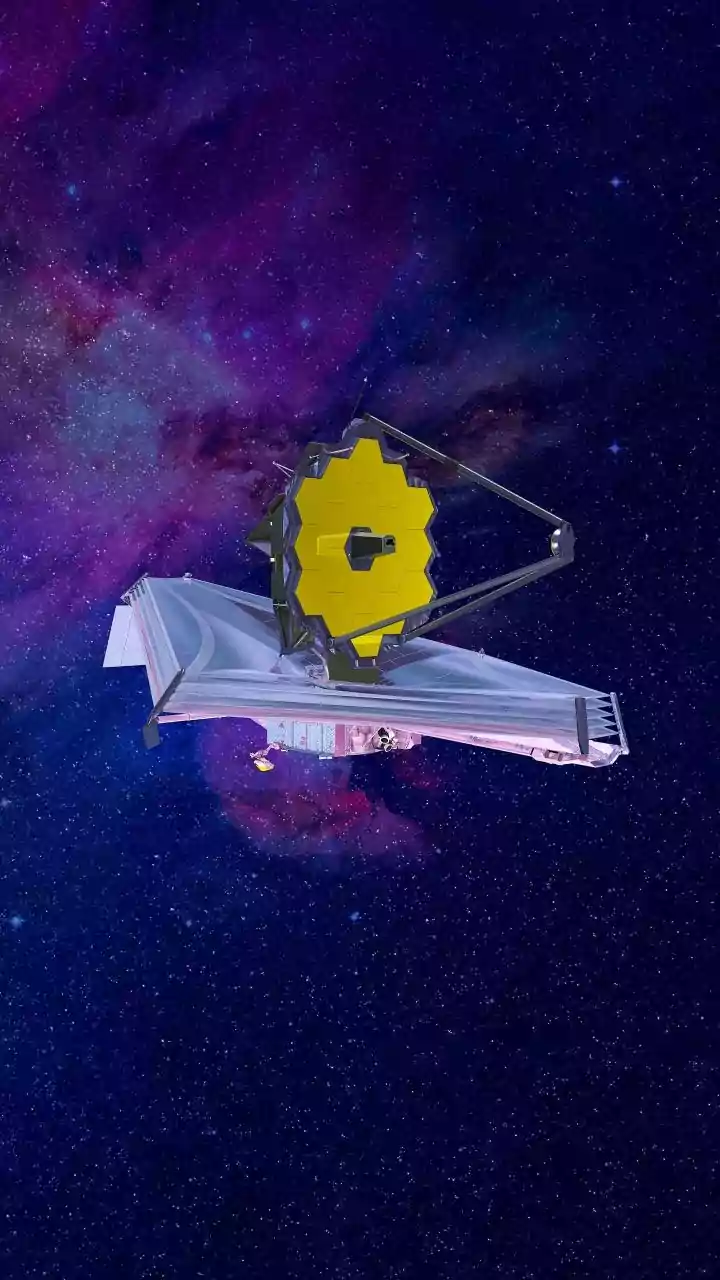
While Cassini provided the first direct taste of this interaction, a more recent breakthrough came from looking back at older data with fresh eyes. By combining 40 years of ultraviolet observations from four separate space missions—Voyager 1 and 2, the International Ultraviolet Explorer, Cassini, and the Hubble Space Telescope—scientists confirmed a startling phenomenon: the rings are actively heating Saturn’s upper atmosphere. This analysis revealed an unusual excess of hot hydrogen in Saturn's atmosphere, a telltale sign that something external was dumping energy into it. The most feasible explanation is the constant shower of icy ring particles, which heat the atmosphere as they fall and break apart. This discovery showed that the rings are not a separate, passive feature, but an integral part of Saturn's atmospheric engine, fundamentally changing its climate and chemistry.
A Fleeting Cosmic Masterpiece
The most profound implication of this ring rain is that Saturn's most famous feature is on a cosmic clock. The rings are disappearing at what scientists call a “worst-case-scenario” rate. The amount of water and dust draining from the rings is enough to fill an Olympic-sized swimming pool every half an hour. Based on this rate of decay, the entire ring system could be gone in as little as 100 million years. This might sound like a long time, but compared to Saturn’s 4.5-billion-year lifespan, it’s a mere flash in the pan. This discovery also solved another mystery: the rings’ age. They couldn't have survived for billions of years while shedding so much mass, which means they are likely very young, probably no more than 100 to 400 million years old. This means they may have formed when dinosaurs still roamed the Earth, likely from one or more icy moons that were shattered by a collision or tidal forces. We are incredibly lucky to be alive in the brief epoch when Saturn has its glorious crown.