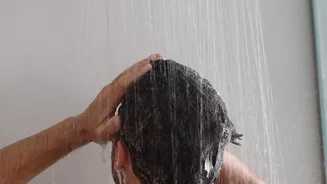







Start with a Smart Cleansing Strategy
The foundation of any good monsoon hair routine is keeping your scalp clean. The high humidity causes sweat, oil, and environmental pollutants to build up, creating a perfect breeding ground for fungal infections and dandruff. It’s a common mistake to either
wash too frequently, stripping natural oils, or too little, allowing buildup to clog follicles. For most people, washing hair two to three times a week with a gentle, sulphate-free shampoo strikes the right balance. If you get caught in the rain, it's crucial to at least rinse your hair with clean water as soon as possible, as rainwater can be acidic and carry pollutants that disrupt your scalp's pH balance. Consider switching to a clarifying shampoo once a week to deeply cleanse the scalp and remove any stubborn residue.
Condition Correctly to Combat Frizz
Frizz is the primary battle during the monsoon. Hair becomes frizzy when it absorbs excess moisture from the air, causing the hair shaft to swell. A good conditioner is your best defence, as it smooths the hair's cuticle, making it harder for humidity to penetrate. However, avoid heavy, rich conditioners that can weigh your hair down, especially if it's fine or oily. Apply conditioner primarily to the mid-lengths and ends, where hair is the driest. For an extra layer of protection, a leave-in conditioner applied to damp hair can be a game-changer, helping to seal in moisture and provide a barrier against humidity throughout the day.
Master the Art of Drying
Never, ever leave your hair to air-dry for hours in humid weather. Prolonged dampness weakens the hair roots, encourages fungal growth on the scalp, and leads to breakage. Tying up wet or damp hair is one of the worst habits, as it traps moisture directly against the scalp. The best approach is a combination of gentle towel drying and low-heat blow-drying. Instead of rubbing your hair with a rough towel, gently squeeze out excess water with a soft microfibre towel or a cotton T-shirt to minimise friction and frizz. Once your hair is about 70-80% dry, you can use a blow-dryer on a cool or low-heat setting to finish the job, holding it at least six inches away from your hair. When detangling, always use a wide-toothed comb on damp, conditioned hair, starting from the ends and working your way up to the roots to prevent breakage.
Nourish with Natural Hair Masks
Give your hair an extra dose of nourishment with a weekly DIY hair mask. These can be made with simple ingredients from your kitchen. A popular choice for monsoon is a mask made from yoghurt and honey. Yoghurt provides protein to strengthen hair, while honey acts as a natural humectant, locking in moisture. For tackling dandruff and scalp itchiness, a paste of neem and coconut oil can be effective due to their anti-fungal properties. Another excellent option is a banana and coconut oil mask; the banana helps soften the hair while the oil penetrates the shaft to reduce protein loss. For a simple anti-frizz treatment, mix aloe vera gel with a few drops of almond oil and apply it to your hair before washing. Apply these masks for about 30 minutes before rinsing and shampooing as usual.
Style Smartly and Protectively
On particularly humid days, protective hairstyles are your best friend. Simple, loose styles like braids, low ponytails, or buns can prevent your hair from getting tangled and frizzy. These styles keep your hair contained and minimise its exposure to the damp air. Avoid tight hairstyles that can pull on the roots, which are already vulnerable during the monsoon. If you use styling products, opt for lightweight, anti-humidity serums or creams and apply them sparingly to avoid a greasy, weighed-down look. A light mist of a flexible-hold hairspray can also help tame flyaways and keep your style in place without making it stiff.