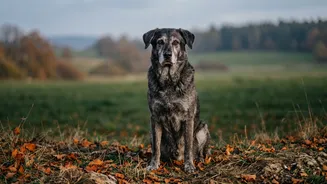





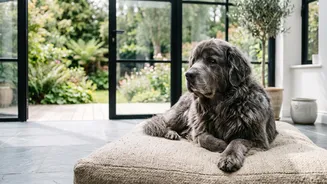

Anyone who has loved a large dog knows the heartbreaking reality: their time with us feels unfairly short. Now, a groundbreaking study offers the first clear molecular explanation for why our gentle giants age faster than their smaller counterparts.
The Long-Standing Mystery of 'Dog Years'
It’s
a strange paradox in the animal kingdom. Across different species, larger animals tend to live longer—think of a whale versus a mouse. But within a single species like dogs, the opposite is true. A Great Dane or a Saint Bernard is lucky to reach a decade, while a tiny Chihuahua can live to be nearly 20. For years, dog lovers and scientists have observed this size-lifespan trade-off, wondering about the biological reasons. The new research, which drew on data from nearly 900 dogs in the Dog Aging Project, finally provides a crucial piece of the puzzle, finding the answer not just in how they grow, but deep within their DNA.
Meet the 'Epigenetic Clock'
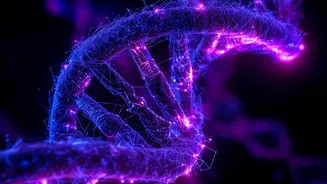
To understand the findings, we first need to look at a concept called epigenetics. Think of your dog’s DNA as its body’s instruction manual. Epigenetics is a layer of chemical tags on top of that manual that tells the body which pages to read and which to ignore. One of these tags is called DNA methylation. These methylation patterns change predictably as we age, acting like a 'biological clock' that can be different from chronological age (the number of birthdays). Essentially, even if a German Shepherd and a Pomeranian are both five years old, their bodies might have aged differently at a cellular level. This new study used these epigenetic clocks to see if big dogs are just dying sooner, or if they are genuinely aging faster.
What the Study Found: The Role of 'Jumping Genes'
The researchers discovered that large dogs do, in fact, age faster at a molecular level. The key was found in the dysregulation of 'transposable elements', often called 'jumping genes'. These are segments of DNA that can copy themselves and move to new spots in the genome. Normally, DNA methylation acts like a brake, keeping these jumping genes locked down to prevent them from causing damage and instability. With age, these methylation brakes start to wear off. The study found that this process happens much faster in large dogs. Giant breeds lose about 35% more methylation on a key type of jumping gene (called LINE1) each year compared to small breeds.
Why Does This Accelerated Aging Happen?
When the methylation 'brakes' are lost, these jumping genes can become more active, moving around and potentially damaging other parts of the DNA. This genomic instability is linked to many age-related conditions, including inflammation and cancer, which are known to be more common in larger dog breeds. The study suggests that the rapid growth we've selected for in large breeds may have come at an epigenetic cost. Their cells have to divide more to achieve their size, which could lead to more 'wear and tear' on the methylation patterns that keep the genome stable. In short, the very thing that makes them majestic also seems to speed up their internal clock.
What This Means for Big Dog Owners
While we can't change our dogs' genetics, this research empowers us with knowledge. Understanding that a four-year-old Great Dane is biologically older than a four-year-old Dachshund reinforces the importance of proactive care for large breeds. This includes regular veterinary check-ups tailored to their accelerated aging, a balanced diet to support their bodies, and careful monitoring for age-related issues like joint problems and cancer. This research doesn't provide a magic bullet to extend their lives, but it highlights why attentive care from an earlier chronological age is so critical. The findings also open new avenues for veterinary research, potentially leading to interventions that could one day help manage this accelerated aging process.