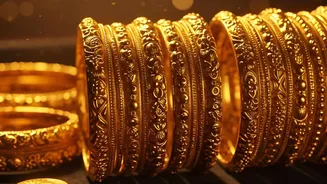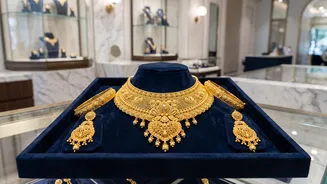








The Soaring Price of Gold
This festive season, gold prices have been a major topic of conversation, touching historic highs. On November 6, ahead of Dhanteras, MCX gold futures were quoted at ₹1,42,167 per 10 grams. Prices for 24-karat gold have consistently traded around the
₹1.41 lakh mark for 10 grams through mid-November, with some fluctuations. These levels are a significant jump, approximately 20% higher than the previous year's festive season. The surge is not a purely domestic phenomenon. International gold prices have been driven up by global geopolitical tensions, stubborn inflation, and central banks worldwide increasing their gold reserves to diversify away from the US dollar. In India, these global pressures are amplified by a weakening rupee, which makes imports more expensive, and high import duties of 15%.
Unwavering Demand Amidst High Costs
Despite the intimidating price tags, the festive spirit of buying gold remains unshaken. Preliminary estimates from the All India Gem and Jewellery Domestic Council suggest that gold sales during Dhanteras 2026 reached an astounding ₹60,000 crore, marking a 15-20% increase in value compared to last year. This highlights a crucial trend: while the total volume or weight of gold purchased may not have increased significantly, consumers are spending more money. The cultural and traditional significance of buying gold during festivals like Dhanteras and Diwali, where it is seen as a symbol of prosperity and good fortune, continues to be a powerful driver of demand. For millions, it is an essential part of the celebrations, an auspicious act that transcends mere financial calculation.
How Buying Habits Are Adapting
The high prices are, however, forcing a change in consumer behaviour. Buyers are adapting to manage affordability without abandoning the tradition. Jewellers report a noticeable shift towards lightweight jewellery and lower-purity options like 18-karat or 14-karat gold. Instead of forgoing purchases, many are opting for smaller items like coins and bars. Another major trend is the rise of old-gold exchanges. An increasing number of consumers are trading in their old jewellery to fund new purchases, which helps offset the high cost of new metal. This has boosted India's gold recycling industry and demonstrates a shift in mindset, where gold is increasingly viewed not just as a family heirloom but also as a liquid financial asset that can be monetised when prices are attractive.
Gold's Enduring Role as a Safe Haven
Beyond tradition, gold's appeal as a solid investment continues to grow. In times of economic uncertainty and rising inflation, gold is considered a reliable safe-haven asset that protects purchasing power. This has fuelled demand for investment-focused products. The World Gold Council has noted that while jewellery demand in terms of volume has seen pressure, demand for bars and coins has been more resilient. Furthermore, there is growing interest in digital gold and Gold Exchange Traded Funds (ETFs), particularly among younger, tech-savvy investors. These instruments offer a convenient way to invest in gold without the associated costs of making charges and storage, showing that the methods of owning gold are evolving even as the fundamental desire for it remains constant.