







From Race to Relay
For decades, the story of human spaceflight was a tale of two titans: the United States and the Soviet Union. The Space Race was a spectacle of national prestige, a technological sprint to plant a flag on the Moon. But the immense cost and complexity
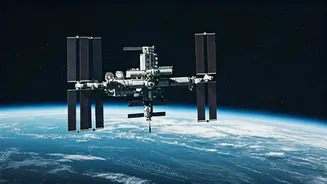
of pushing humanity further into the cosmos have made the solo-superpower model unsustainable. Today, the finish line is no longer about one nation getting there first, but about how many can journey together. This new era is defined by collaboration, not competition. International partnerships are now the primary vehicle for ambitious projects, from maintaining the International Space Station (ISS) to planning the return to the Moon and the eventual journey to Mars. This shift is driven by a simple reality: sharing the financial burden and pooling intellectual resources allows for greater ambition and a more sustainable pace of exploration.
The Artemis Accords: A New Global Framework
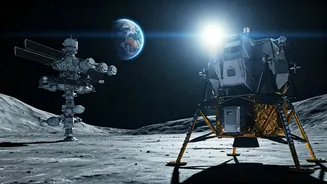
The most significant example of this new collaborative spirit is the Artemis Program, a U.S.-led initiative to return humans to the Moon. Unlike the Apollo program of the 20th century, Artemis is fundamentally an international effort. The Artemis Accords are a set of non-binding principles to guide cooperation in civil space exploration, signed by dozens of nations. India became a signatory in June 2023, joining countries like Japan, Canada, the United Kingdom, and the United Arab Emirates. Signing the accords signals a commitment to peaceful, transparent, and cooperative space exploration. This framework allows partner nations to contribute technology, hardware, and astronauts, making lunar exploration a truly global project. For India, signing the Accords was a strategic move, aligning its ambitious space goals with the world's leading space-faring nations and opening doors for deeper collaboration with NASA.
Private Companies: The New Space Taxis
It’s not just nations that are joining forces; the private sector has emerged as a critical enabler of this shared effort. Companies like SpaceX and Boeing, through NASA's Commercial Crew Program, have effectively become space taxis, transporting astronauts from various countries to the International Space Station. This has broken the monopoly previously held by national space agencies. Private astronaut missions, often organized by companies like Axiom Space, are now a regular occurrence, flying international crews and private citizens to the ISS for science and commercial activities. For instance, Axiom's missions have included astronauts from countries across the globe, showcasing the expanding access to space. This commercialization of low-Earth orbit allows national agencies like NASA to focus their resources on deep-space exploration, while a burgeoning private industry serves the needs of a global clientele.
India's Ascent as a Collaborative Space Power
India, through the Indian Space Research Organisation (ISRO), is a key player in this new collaborative landscape. Having signed the Artemis Accords, India is positioning itself for a greater role in human spaceflight. A landmark agreement will see NASA train ISRO astronauts, with the goal of a joint mission to the International Space Station. This partnership is exemplified by the Axiom-4 mission in 2025, which gave an Indian astronaut valuable experience in microgravity. Furthermore, ISRO's own flagship human spaceflight program, Gaganyaan, benefits from international expertise, with collaborations in astronaut training and life support systems. Beyond human spaceflight, the NASA-ISRO Synthetic Aperture Radar (NISAR) mission, launched in 2025, is a premier example of bilateral cooperation in Earth sciences. These partnerships are crucial as India works towards its own space station, the Bharatiya Antariksh Station, by 2028 and a crewed lunar landing in the future.