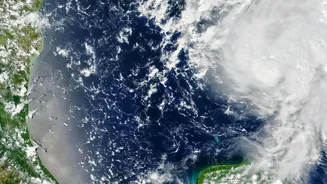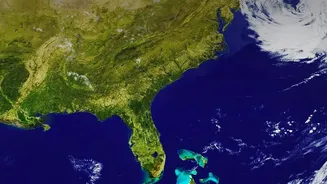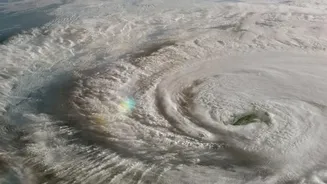







The recent fury of Cyclones Murasu and Arnab, striking India’s coasts in quick succession, has once again brought a critical conversation to the forefront: Are the storms that shape our weather and lives fundamentally changing?
A Tale of Two Storms
In late October and early
November 2026, two powerful cyclones battered India’s coastline, leaving a trail of destruction. First, Very Severe Cyclonic Storm Arnab made landfall along the Andhra Pradesh coast on October 28, bringing intense winds and torrential rain that also impacted southern Odisha. Farmers were hit particularly hard, with standing crops of paddy, maize, and vegetables destroyed. Just days later, as recovery efforts began, Severe Cyclonic Storm Murasu struck the same region on November 3, causing further damage to infrastructure and agriculture. The back-to-back storms displaced thousands, damaged homes, and uprooted electricity poles, highlighting the immense challenge of dealing with such rapid-fire disasters.
The Shifting Seas
While the Bay of Bengal has historically been the more active basin for cyclones in the northern Indian Ocean, recent decades have seen a worrying trend: the Arabian Sea is becoming a more frequent and ferocious breeding ground for storms. Studies have noted a significant increase in the frequency, duration, and intensity of cyclones in the Arabian Sea. One study points to a 52% increase in cyclone frequency and a 150% rise in very severe cyclones in the Arabian Sea over the last four decades. Conversely, the Bay of Bengal has seen a slight decrease in the overall number of cyclones, though the ones that do form are often of higher intensity.
What's Fuelling the Fury?
The primary driver behind these changes is the rapid warming of our oceans, a direct consequence of climate change. The Indian Ocean is warming faster than the global average, and the Arabian Sea, in particular, has seen sea surface temperatures rise by as much as 1.2 to 1.4 degrees Celsius. Warmer seas provide more thermal energy and moisture, which are the essential fuel for cyclones. This increased heat not only helps storms to form but also allows them to intensify rapidly, a phenomenon that makes forecasting their peak strength a significant challenge. This 'rapid intensification' means a storm can escalate from a cyclonic storm to a very severe one in a matter of hours, giving coastal communities less time to prepare.
Impacts Beyond the Coastline
The consequences of these stronger storms are not limited to wind damage. They bring extreme rainfall, leading to widespread flooding and landslides, as seen in the aftermath of Cyclone Arnab. For agricultural states like Andhra Pradesh and Odisha, the economic toll is immense, with vast tracts of farmland inundated and crops destroyed, threatening the livelihoods of thousands of farmers. Furthermore, rising sea levels, another effect of climate change, amplify the danger by contributing to more severe coastal flooding and storm surges during a cyclone event.
Adapting to a New Reality
In the face of these growing threats, India has made significant strides in disaster management and preparedness. The India Meteorological Department (IMD) has drastically improved its forecasting accuracy, providing timely and precise warnings that have been crucial in saving lives. The establishment of a robust early warning system, along with proactive measures like the National Cyclone Risk Mitigation Project, has enabled authorities to conduct mass evacuations and minimise casualties. The response to Arnab and Murasu, which saw thousands moved to shelters, demonstrates the effectiveness of these systems. However, the increasing frequency and intensity of storms mean that these efforts must constantly evolve, with a greater focus on building resilient infrastructure and providing better support for affected communities to recover and rebuild.