







California’s Vernal Pools
Imagine walking across a dry, cracked patch of grassland in California's Central Valley. It seems barren, almost lifeless. But after the winter rains arrive, this same patch transforms into a glittering mosaic of shallow pools, each one teeming with life.
These are vernal pools, a unique and threatened type of temporary wetland. The magic is in the soil, which contains a dense clay layer that prevents water from draining away. This creates the perfect incubator for the dormant eggs of fairy shrimp and the seeds of specialized wildflowers that can't compete in ordinary environments. For a few spectacular weeks, these pools are ringed with brilliant concentric circles of goldfields, meadowfoams, and blue-purple Downingia, creating a breathtaking natural spectacle that vanishes as quickly as it came once the sun dries the land again.
The Desert Superblooms of the Southwest
The deserts of Southern California and Arizona are defined by their austerity—vast, sun-baked landscapes of rock and sand. But they hold a secret. Buried beneath the surface, countless wildflower seeds lie dormant, some for decades, waiting for a precise set of conditions. When winter rains are timed just right, soaking the ground deeply and followed by warm, sunny days, the desert floor erupts in a once-in-a-generation 'superbloom.' Places like Anza-Borrego Desert State Park and Death Valley National Park shed their muted tones for impossible carpets of desert sand-verbena, golden evening primrose, and purple desert fivespot. It’s not just any rain that works; it requires a sustained soaking that washes the protective, germination-inhibiting coating off the seeds. When it happens, it's a pilgrimage-worthy event, a vibrant, fragrant refutation of the desert’s barren reputation.
The Sudden Appearance of Texas Rain Lilies
Across the prairies and plains of Texas and the Southeast, a different kind of magic unfolds. Days after a heavy summer thunderstorm, delicate, star-shaped flowers suddenly push through the soil, standing at attention in fields and gardens. Known as rain lilies, or Zephyranthes, these resilient bulbs are programmed to respond directly to the barometric pressure changes and soil saturation that accompany a significant rainfall. They don’t wait for a season; they wait for a storm. Within two to four days of a good drenching, their slender stems and white or pink blossoms create a soft, ethereal blanket over the landscape. Unlike a superbloom, which is a rare event, rain lilies can bloom multiple times a year, each time a welcome surprise gifted by the passing clouds.
The Glowing Moss of the Pacific Northwest
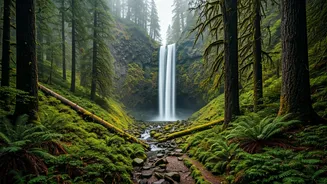
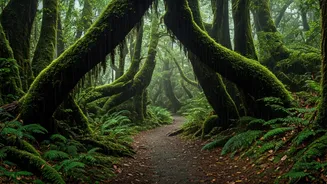
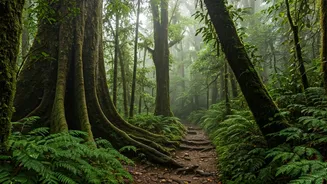
Not all rain-fueled blooms involve flowers. In the temperate rainforests of Washington's Olympic Peninsula and the coastal ranges of Oregon, rain is the lifeblood of a different kind of spectacle. Here, the 'bloom' is an explosion of green. After a period of relative dryness, the first autumn rains awaken the sprawling communities of mosses, lichens, and ferns that cloak every surface. The effect is transformative. The forest floor, tree trunks, and hanging branches, once a muted olive, suddenly glow with an almost fluorescent, emerald vibrancy. The mosses, rehydrated and revitalized, become plump and lush, turning the entire forest into a surreal, green-hued wonderland. It's a quieter, more immersive bloom—one you can walk through, breathe in, and feel on a profoundly primal level.