




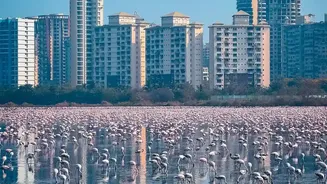
Look up from the city street, past the concrete and glass, and you might see it: a flash of feathers, a flicker of fur. Our cities are not just for us. They are teeming with wild animals who are learning to call these urban jungles their home.
A New Kind of Jungle
The term
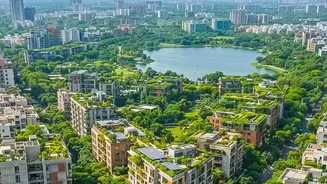
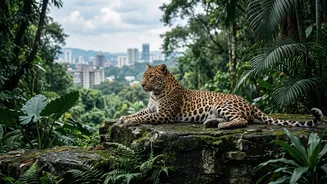
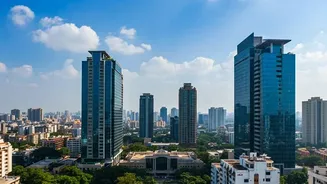
'concrete jungle' has always been a metaphor, but it's becoming more literal every day. As cities expand, they swallow forests, grasslands, and wetlands, forcing wildlife to either retreat or adapt. Surprisingly, many are choosing to adapt. From the leopards of Mumbai to the rhesus macaques of Delhi, animals are demonstrating remarkable resilience and intelligence, turning our urban spaces into their own unique ecosystems. This isn't just about a few pigeons or stray dogs; it's a global phenomenon where wild species are actively modifying their behaviour to survive, and even thrive, alongside millions of people. They are exploiting new food sources, finding shelter in our infrastructure, and navigating the dangers of a world built for humans. This has led to an unprecedented level of human-wildlife interaction, challenging our very definition of where nature belongs.
Mumbai's Elusive Predators
Perhaps no story of urban adaptation is as dramatic as that of the leopards in Mumbai. The Sanjay Gandhi National Park (SGNP), a large protected forest, is uniquely situated within the city's limits, creating an extraordinary interface between a dense human population and a thriving population of large carnivores. These leopards have learned to use the city's corridors—overgrown drains, railway lines, and quiet alleys—to move stealthily, primarily at night. Their diet has also adapted; while they hunt natural prey within the park, they supplement it by preying on the large population of stray dogs on the city's fringes. This has a surprising public health benefit, as it helps control the stray dog population. The coexistence is a delicate balance, showcasing how apex predators can carve out a niche in one of the world's most populous megacities.
The Urban Songbirds
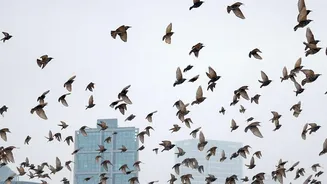
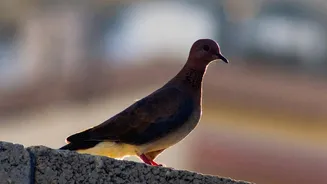
It’s not just mammals that are changing. The soundtrack of our cities is literally being rewritten by birds. To be heard over the low-frequency rumble of traffic and construction, many urban birds have started singing at a higher pitch and greater volume. Studies have shown that city birds can sing significantly louder than their rural counterparts to ensure their territorial calls and mating songs cut through the noise. This change, known as the Lombard effect, was once thought to be a uniquely human trait, where we raise our voices in noisy environments. But it seems this acoustic adaptation is crucial for survival in the city. Some research also suggests that the very structure of cities, with their hard, sound-reflecting surfaces, favours higher-pitched calls, which travel more clearly between buildings than they do through dense forests.
Clever and Opportunistic Neighbours
Success in the city often comes down to being a generalist. Animals with flexible diets and curious minds are best equipped to handle urban life. Rhesus macaques in cities like Delhi and Jaipur are prime examples. These highly intelligent primates have learned to navigate complex urban landscapes, from raiding kitchens and markets for food to using temples and buildings as their vertical forests. Their diet has shifted significantly from natural vegetation to food provided by people, intentionally or not. Similarly, other animals like palm civets and even snakes find niches in our gardens, drains, and rooftops, often playing a quiet role in controlling rodent populations. Peregrine falcons, once birds of remote cliffs, now nest on skyscrapers, which mimic their natural habitat and offer a commanding view of their favourite urban prey: pigeons.