


A New Window to the Cosmos
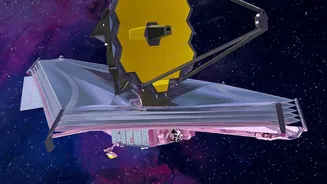
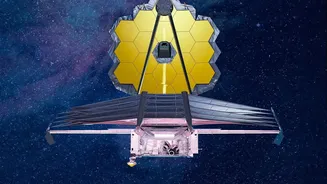
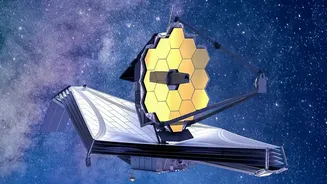
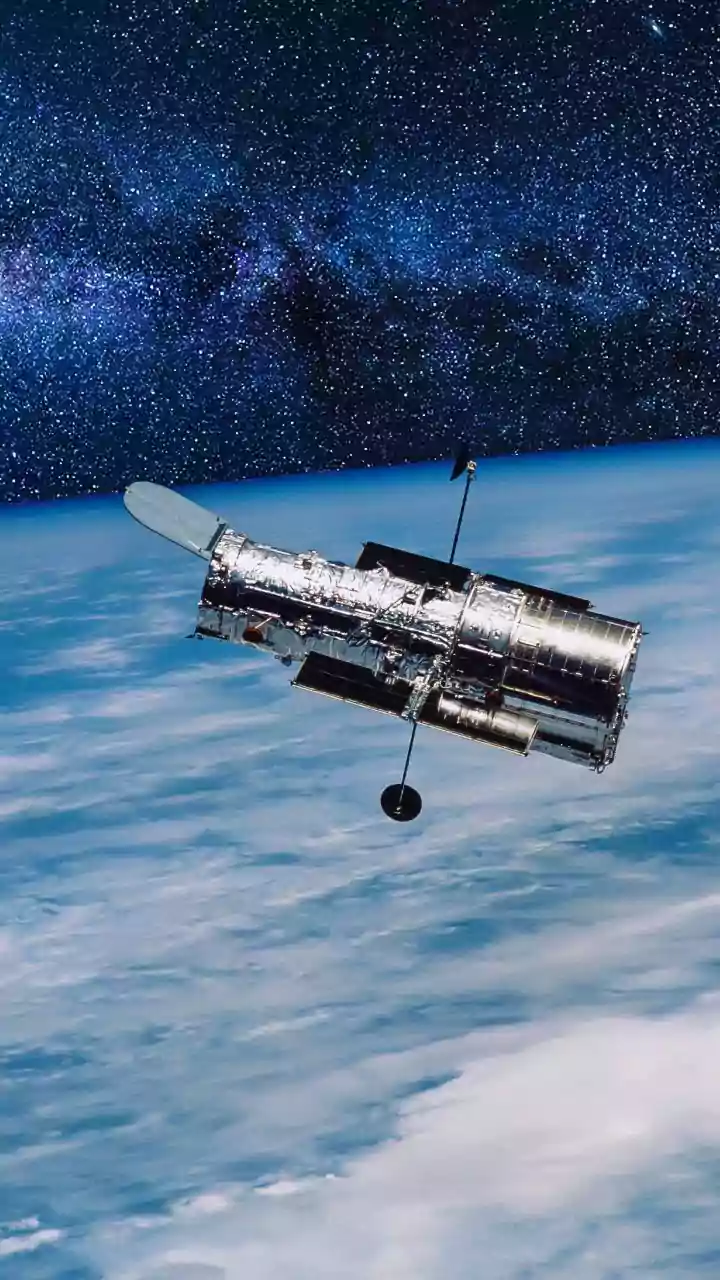
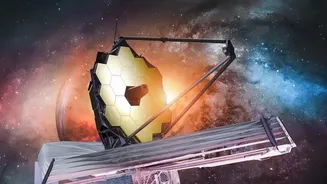
The James Webb Space Telescope is not just a more powerful version of its predecessors like the Hubble; it's a fundamentally different kind of observatory. Its primary mirror, a giant construct of 18 hexagonal segments, is designed to capture infrared
light. This is crucial because the light from the most distant objects in the universe has been stretched into the infrared spectrum by the expansion of the cosmos. But for exoplanet hunters, this infrared capability offers another, more immediate advantage. It allows scientists to peer through cosmic dust and into the atmospheres of planets orbiting other stars with astonishing clarity. Previous telescopes could detect hints of atmospheric composition, but Webb’s sensitivity marks a monumental leap forward in our quest to characterize worlds hundreds of light-years away.
Decoding a Planet's Breath
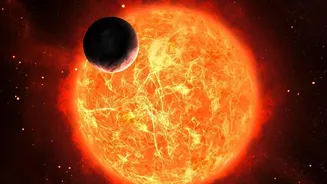
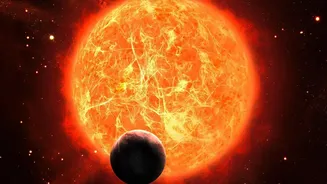
So how does Webb 'see' water on a planet it can't even resolve into a disk? The primary method is called transmission spectroscopy. When an exoplanet passes in front of its host star from our perspective (an event called a transit), a tiny fraction of the starlight filters through the planet's atmosphere. Different molecules in that atmosphere absorb specific wavelengths, or colours, of light. By analysing the starlight that reaches its instruments, Webb can identify the chemical 'fingerprints' left behind. Water, methane, carbon dioxide, and other molecules each have a unique absorption signature. Webb’s Mid-Infrared Instrument (MIRI) and Near-Infrared Spectrograph (NIRSpec) are exquisitely tuned to detect these subtle dips in brightness, effectively decoding the chemical makeup of a distant world's air.
From Gas Giants to Rocky Worlds
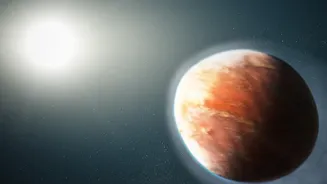
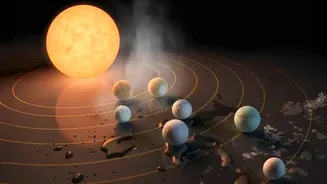
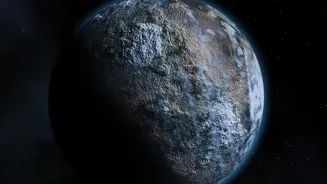
Webb’s early observations have already yielded a diverse gallery of water-bearing worlds. On gas giants like WASP-96 b, a 'hot, puffy' planet 1,150 light-years away, Webb provided the most detailed spectrum of an exoplanet atmosphere to date, confirming the distinct signature of water. For WASP-107b, a 'fluffy' exoplanet, the telescope detected not only water vapour but also sulfur dioxide and clouds made of silicate sand. More recently, and perhaps more excitingly, Webb has turned its gaze to smaller, rocky planets. In the PDS 70 system, it detected water vapour in the inner disk where rocky, Earth-like planets are thought to be forming. This suggests that the raw ingredients for water-rich worlds might be present from the very beginning. However, scientists remain cautious. In cases like the rocky exoplanet GJ 486 b, it can be difficult to determine if the detected water signature is from the planet's atmosphere or from cool spots on the host star itself.
The Implications for Habitability
Detecting water vapour is a monumental step, but it is not a direct sign of life or even habitability. Many of the planets where water has been found, such as 'hot Jupiters' or scorching rocky worlds, are far too extreme to support life as we know it. However, these findings are crucial for understanding the processes of planetary formation and evolution. By studying the concentration of water and other molecules, scientists can build a more complete picture of a planet’s climate and history. The detection of methane alongside water vapour on the 'warm Jupiter' WASP-80 b, for example, provides deeper insights into atmospheric chemistry. The ultimate goal is to use this technology to analyse smaller, temperate, rocky planets within their star's habitable zone — the region where conditions could be just right for liquid water to exist on the surface. Webb's findings on planets like K2-18b, a super-Earth in the habitable zone, are key targets for follow-up studies.