


The Grand Plan: More Than Just Rivers
India is undertaking a massive expansion of its inland waterways, aiming to develop a network of navigable rivers and canals to move cargo across the country. Spearheaded by the Inland Waterways Authority of India (IWAI), the initiative, which includes
the flagship Jal Marg Vikas Project (JMVP), involves readying key routes like National Waterway-1 (NW-1) on the Ganga-Bhagirathi-Hooghly river system for heavy freight traffic. The goal is to increase the share of waterway transport, which is currently underutilised, by creating a cost-effective and greener alternative to road and rail. This involves dredging to ensure year-round navigability, building multi-modal terminals to connect rivers with roads and railways, and deploying modern navigation systems. As of early 2026, 32 National Waterways were operational, with plans to activate 20 more over the next five years.
Decoding 'Door-to-Door' Journey Time
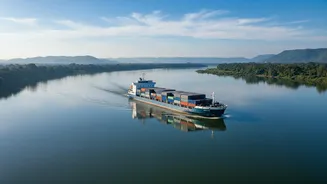
When we talk about 'door-to-door' journey time, it's a mistake to only think about the speed of a barge on a river. Water transport is inherently slower than road or rail. However, the true measure of efficiency is the total time and cost from the factory (the first 'door') to the warehouse or customer (the final 'door'). The waterways plan focuses on optimising this entire chain. By creating multi-modal terminals, a container can be moved from a truck onto a barge, travel hundreds of kilometres on the river, and then be transferred back to a truck or train for the final leg of the journey. The aim is to create a seamless, integrated system where the most efficient mode is used for each part of the trip, thereby reducing overall transit time by avoiding road congestion and railway bottlenecks.
The Cost and Efficiency Equation
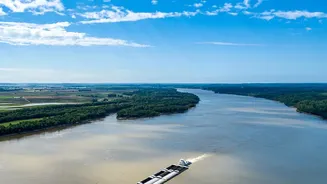
The primary advantage of waterways is not speed but cost and scale. Transporting goods via water is significantly cheaper per tonne-kilometre compared to road and rail. Estimates show the cost can be less than half that of road transport. One litre of fuel can move 105 tonne-km by waterway, compared to just 24 tonne-km by road. A single large barge can carry the equivalent of over 100 trucks, making it ideal for bulk commodities like coal, cement, fertilisers, and food grains. This massive capacity helps reduce the number of trucks on highways, leading to less traffic, lower pollution, and reduced maintenance costs for road infrastructure. By shifting bulk cargo to rivers, the high-speed road and rail networks are freed up for goods that require faster delivery, improving efficiency across the board.
Beyond Speed: The Broader Benefits
The impact of the waterways expansion extends far beyond logistics. As a greener mode of transport, it produces significantly lower carbon emissions than road vehicles, aligning with India's climate goals. Furthermore, it enhances supply chain resilience. Over-reliance on roads and railways makes the system vulnerable to disruptions. Waterways provide a secure and stable alternative, especially during global supply chain issues or domestic crises. The project also promises to spur economic development in hinterland regions, particularly in states like Bihar, Jharkhand, and West Bengal along NW-1. New terminals and jetties create jobs and connect remote areas to major economic centres and ports, offering them better market access.
Navigating the Hurdles
Despite the immense potential, the path is not entirely smooth. A significant challenge is maintaining adequate water depth for navigation throughout the year, as many Indian rivers are seasonal. This requires continuous and costly dredging, which raises environmental concerns about its impact on river ecosystems. Another issue is ensuring seamless last-mile connectivity. The success of the entire system hinges on the efficiency of the multi-modal terminals and their links to road and rail networks. Attracting private investment for building and operating vessels has also been slower than hoped, and some terminals have seen lower-than-projected traffic in their initial years. Overcoming these operational challenges is crucial for the network to achieve its full potential.