






A New Chapter for a Legendary Probe
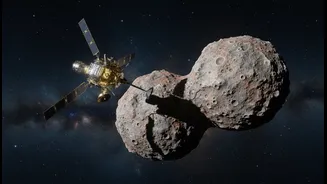
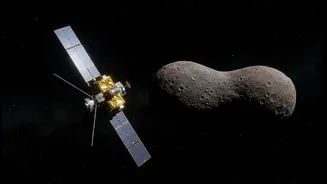
First, it's important to understand Hayabusa2's incredible legacy. This is the probe that successfully landed on asteroid Ryugu, collected subsurface samples, and returned them to Earth in 2020—a mission of staggering complexity. But JAXA didn't retire
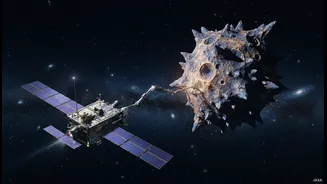
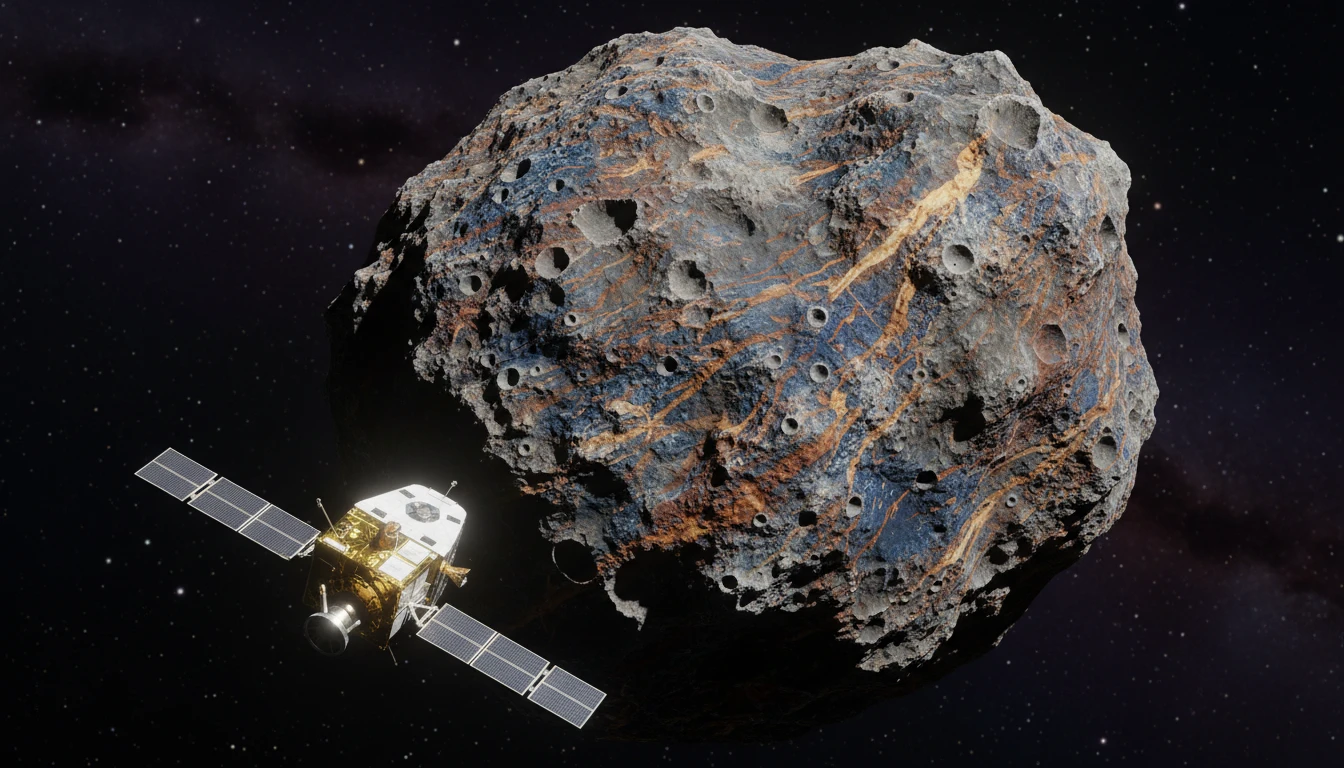
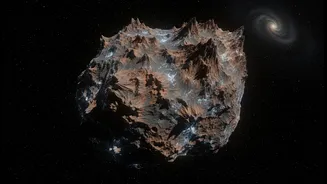
this veteran explorer. Instead, it embarked on an extended mission, nicknamed Hayabusa2#. This new phase involves a series of flybys, including the recent one of asteroid Torifune in July 2026, and a final rendezvous in 2031 with a tiny, fast-spinning asteroid called 1998 KY26. The Torifune flyby was a high-speed encounter, testing the probe's ability to perform precision manoeuvres and gather data at a relative velocity of over 5 kilometers per second—a feat its systems were not originally designed for.
The Scientific Prize and Planetary Defense
Each asteroid target offers a unique scientific window into the early solar system. Studying different types of asteroids—from the carbon-rich Ryugu to the stony S-type Torifune—helps scientists piece together how planets formed and where Earth's water and organic materials originated. More pressingly, this mission is a crucial test for planetary defense. The flyby of Torifune was an opportunity for JAXA to test the kind of high-speed navigation and orbital maneuvering that would be necessary for a mission to deflect an Earth-bound asteroid. The final target, 1998 KY26, is a micro-asteroid less than 15 meters in diameter, similar in size to objects that could cause significant regional damage if they hit Earth. Understanding these small, fast-rotating bodies is a global priority.
Mirroring India's Own Deep Space Goals
This is where the story pivots to India. ISRO has proven its prowess with complex interplanetary missions like Chandrayaan-3 and the Aditya-L1 solar observatory. Now, ISRO is setting its sights on even more ambitious targets, including a Venus orbiter mission and a lunar sample-return mission (Chandrayaan-4). ISRO Chairman S. Somanath has also explicitly stated India's interest in participating in global asteroid research and planetary defense initiatives. Hayabusa2's journey provides a valuable, real-time case study. The challenges JAXA overcomes in long-duration spaceflight, autonomous navigation, and high-speed data collection offer priceless lessons for ISRO as it plans its own future deep-space and asteroid missions.
A Future of Collaboration and Resources
The relevance goes beyond just observation. India and Japan are already strong partners in space. The two nations are collaborating on the Lunar Polar Exploration (LUPEX) mission, where JAXA will provide the rover and ISRO will build the lander to explore the Moon's south pole. This partnership builds on decades of scientific cooperation. Successes like Hayabusa2 strengthen the foundation for even deeper collaborations. As ISRO develops capabilities for missions like its Space Docking Experiment (SpaDeX), the potential for joint missions, sharing of deep-space network resources, and technology transfer grows. In the long term, this expertise feeds into the strategic goal of asteroid mining. While still a distant prospect, nations are laying the groundwork, and Hayabusa2's ability to physically interact with asteroids is a foundational step toward that resource-rich future.