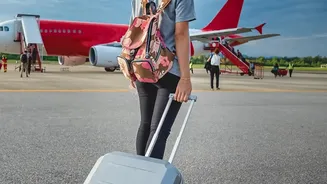





You’re on a plane, doors closed, but stuck on the tarmac. As the delay stretches on, you wonder, ‘Can I just get off for a bit?’ The answer is more complex than you think, and doing so could mean watching your flight depart without you.
The Security Bubble
The primary reason
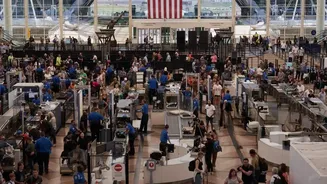
you can’t simply hop on and off an aircraft is security. Once you pass through airport security checks and enter the 'sterile' area of the terminal, you are considered a secured passenger. When you board the plane and the doors close, the aircraft itself becomes a secure bubble. If you deplane, you are breaking that sterile seal. Airline staff and security officials would have no way of knowing who you interacted with or what you might have picked up after leaving. To maintain the integrity of the flight's security, allowing a passenger to re-board would require a new security screening, which is simply not feasible once the departure process has begun.
The Headcount and Manifest Puzzle
A commercial flight operates on a precisely reconciled passenger manifest. This list confirms that every person who checked in and boarded is accounted for. It's also used to ensure every checked bag onboard belongs to a passenger on the flight. If a passenger deplanes, the flight's manifest becomes inaccurate. The crew must then begin a time-consuming reconciliation process. Did the passenger intend to abandon their journey? Is their checked luggage still in the hold? For security reasons, airlines are often required to offload the baggage of any passenger who is not on the flight. Locating and removing specific bags can cause significant delays for everyone else. To avoid this operational nightmare, the rule is often simple: if you get off, you stay off.
The Captain's Final Authority
Aviation law, much of it derived from old maritime law, gives the pilot-in-command (the captain) ultimate authority over the aircraft and everyone on board. This authority is absolute when it comes to the safety and security of the flight. While passengers have rights, the captain’s decisions regarding safety are final and can override passenger convenience. If the captain determines that allowing a passenger to re-board would introduce a security risk or cause an unacceptable operational delay, that decision is law on that aircraft. They are not required to let you back on, even if you were only off the plane for a few minutes during a tarmac delay.
Tarmac Delays: The Limited Exception
There are specific rules governing long tarmac delays. In many countries, including the U.S. and as per directives in India, airlines are required to provide passengers with the opportunity to deplane if a delay on the ground exceeds a certain time limit (often three hours for domestic and four for international flights). However, this comes with a major catch. Airlines must notify you that you can leave, but they are under no obligation to let you back on. The flight could receive clearance to depart at any moment, and it will not wait for passengers who chose to return to the terminal. Furthermore, your checked bags will likely continue to the destination without you.
What About Transit Stops?
The rules can feel different on flights with a planned stop where some passengers disembark and others stay on. In these 'through flights', continuing passengers are sometimes asked to remain on board, while the aircraft is cleaned and refuelled. In other cases, all passengers are required to deplane and wait in a designated transit lounge before reboarding. This process is highly controlled. You are kept within a sterile area, and the reboarding process involves another headcount and boarding pass check. This is different from spontaneously deciding to get off. Unless explicitly instructed by the crew to disembark and reboard, you should assume you must stay on the aircraft.