






Start With Your Pookkalam Design
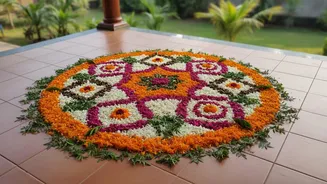
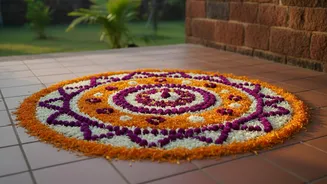
Before you can estimate quantity, you need a vision. Are you planning a simple, traditional pookkalam with concentric circles for your apartment, or a large, intricate design for a family gathering? The complexity and size of your design are the biggest
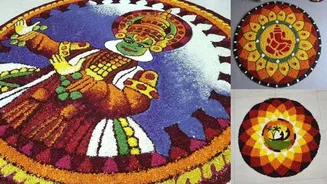
factors influencing the amount of flowers you'll need. Simple circular patterns are the most traditional and beginner-friendly. More complex designs, like peacock or Kathakali motifs, require a wider variety of colours and a larger quantity of petals to achieve the detailed look. It's a good idea to sketch your design on paper first. This helps you map out which colours go where, making your shopping list more precise.
Measure the Diameter
Once you have a design in mind, measure the space where you'll create the pookkalam. Use a measuring tape to determine the diameter of your intended floral carpet. This simple number is your best friend when it comes to calculating flower quantities. A small pookkalam of about one to two feet in diameter is perfect for a doorway or small apartment and will naturally require fewer flowers. Larger designs for courtyards or competition pieces can span several feet and will consume significantly more petals. Having a clear measurement prevents the common mistake of buying heaps of flowers for a design that ultimately occupies a small space.
Consider the Number of Layers
Traditionally, the Onam pookkalam grows each day over the ten days of the festival. It begins on Atham day with a single, small ring of yellow flowers, and a new layer is added each subsequent day. Decide if you are creating a pookkalam for a single day, like the main Thiruvonam celebration, or if you plan to follow the tradition of building it up daily. If you are building it daily, your flower needs will increase incrementally. A single-day pookkalam requires one large shopping trip, while a ten-day design might mean smaller, more frequent purchases to ensure freshness.
Know Your Flowers
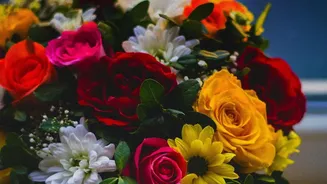
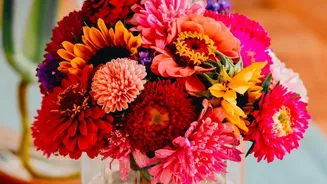
Not all flowers provide the same volume of petals. Some are for bulk coverage, while others are for accents. Marigolds (jamanthi), available in bright yellows and oranges, are a pookkalam staple because they are affordable, widely available, and their petals provide excellent volume. Chrysanthemums also offer great coverage in various colours. In contrast, flowers like tube roses, jasmine, or Shankhupushpam (Butterfly Pea) are often used for detailed lines, fragrance, and colour highlights. When making your list, think about which flowers will be your 'fillers' for large sections and which will be your 'detailers' for patterns. This distinction will help you buy larger quantities of the former and smaller amounts of the latter.
A Practical Estimation Guide
While an exact science is impossible, you can use a rough guide. For a simple, two-foot diameter pookkalam with 3-4 colours, you will likely need around 1 to 1.5 kilograms of loose flower petals in total. A good starting mix would be about 500g of yellow marigolds, 500g of orange marigolds, 250g of white flowers like jasmine or chrysanthemums, and a small quantity (around 100g) of accent leaves or a darker coloured flower. For a more intricate, multi-layered pookkalam of about one meter in radius, the quantity could easily go up to 6-7 kilograms. Always buy a little extra of your base colours, as it's better to have a small surplus than to run out mid-design.
Create Your Market Shopping List
Armed with your design, measurements, and flower types, make a detailed shopping list before you head to the market. List each flower by name and the estimated weight you need (e.g., Orange Marigold - 500g, White Chrysanthemum - 250g). This simple act of planning transforms your shopping from a guessing game into a targeted mission. It helps you stick to a budget, ensures you don't forget a crucial colour, and saves you from the stress of last-minute panic buying. A well-planned list is the final step to ensuring your Onam pookkalam is both beautiful and stress-free to create.