





Why Mandu Is Magical in Monsoon
While many destinations slow down during the rains, Mandu comes alive. The monsoon season, from July to September, is arguably the best time to visit. The scorching summer heat gives way to pleasant, cool weather. The entire plateau is enveloped in a blanket
of fresh green, and mist gently rolls through the valleys and over ancient stones. The numerous lakes and reservoirs, like Sagar Talao, fill to the brim, turning the landscape into a painter’s dream. It’s this atmosphere of wet earth, lush surroundings, and floating clouds that makes a monsoon trip to Mandu truly special and memorable.
Explore the Legendary 'Ship Palace'
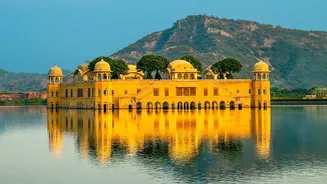
The star attraction of Mandu is the Jahaz Mahal, or the 'Ship Palace'. Built in the 15th century by Sultan Ghiyas-ud-din Khilji, this architectural marvel stands on a narrow strip of land between two artificial lakes, the Munj and Kapur Talaos. During the monsoon, when the lakes are full, the palace creates a stunning illusion of a grand ship floating on the water. This two-storeyed structure, a blend of Afghan, Mughal, and Hindu architectural styles, was built as a sprawling pleasure palace for the sultan's harem. Its pavilions, courtyards, and terraces offer breathtaking views, especially when reflecting in the rain-filled lakes.
Relive a Royal Love Story
Mandu’s soul is intertwined with the legendary romance of its last independent ruler, Sultan Baz Bahadur, and the beautiful singer-poet, Rani Roopmati. Their story echoes through the monuments. Baz Bahadur's Palace, noted for its spacious courtyards, is a testament to his love for music and art. A short distance away, perched on a hilltop, is Roopmati's Pavilion. Originally an army observation post, it was where the queen could gaze upon her beloved Narmada River, a condition she set before agreeing to move to Mandu. The panoramic view from the pavilion, especially with the misty monsoon landscape, is a deeply romantic and unmissable experience.
Your Budget-Friendly Weekend Itinerary
A trip to Mandu doesn’t have to be expensive. It’s easily accessible from Indore (around 95 km) and Bhopal (around 286 km). From Indore, a cab can take less than two hours, with bus options also available and highly affordable. From Bhopal, the journey by road takes about five to six hours. For accommodation, Mandu offers a range of budget-friendly guesthouses and government-run hotels like Malwa Resort and Malwa Retreat, which are clean and centrally located. Local dhabas and small eateries offer delicious Malwa cuisine at very reasonable prices, with a meal costing as little as a few hundred rupees. Entry fees to most monuments are also minimal, making sightseeing very economical.
Don't Miss These Other Gems
Beyond the main palaces, Mandu is dotted with other architectural treasures. The Hindola Mahal, or 'Swinging Palace', is famous for its unique sloping side walls that create an illusion of movement. Hoshang Shah's Tomb holds the distinction of being India's first marble structure, its design even inspiring the architects of the Taj Mahal. The grand Jami Masjid, inspired by the great mosque of Damascus, is an imposing structure of red sandstone that showcases impressive Pashtun architecture. Also worth exploring are the ancient Lohani Caves, the stepwell Champa Baoli, and the serene Rewa Kund, a reservoir built by Baz Bahadur to supply water to Roopmati's pavilion.