






Cabin Baggage: What You Can Carry Onboard
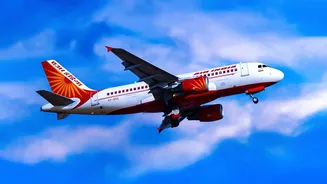
For most domestic flights in India, the rule is generally one main cabin bag and one personal item. The weight limit for the main bag is typically 7 kg. Airlines like IndiGo and SpiceJet adhere to this 7 kg limit, while Air India is slightly more generous
for domestic routes, allowing up to 8 kg. Your personal item, such as a small handbag, laptop bag, or backpack, should be small enough to fit under the seat in front of you and usually has a separate weight limit of around 3 kg. However, some airlines like SpiceJet require the combined weight of your cabin bag and personal item to not exceed the 7 kg total. Dimensions are also key; the standard for a cabin bag is around 55cm x 35cm x 25cm, but this can vary slightly, so always double-check.
Check-In Luggage: The Basics for Domestic Travel
For domestic economy class passengers in India, the standard free check-in baggage allowance is one piece of luggage weighing up to 15 kg. This is the common policy for major low-cost carriers like IndiGo and SpiceJet. Full-service carriers may offer more, but 15 kg is the baseline you should plan for. The total dimensions (Length + Width + Height) of your checked bag should generally not exceed 158 cm. Be aware that these allowances are strictly enforced, and exceeding the limit will result in excess baggage charges, which are significantly more expensive at the airport than if pre-booked online. Some airlines have also introduced 'zero baggage' fares that are cheaper but do not include any free check-in luggage.
The Liquid Question: Understanding the 100ml Rule
The rule for carrying liquids, aerosols, and gels (LAGs) in your cabin baggage is strict and applies to both domestic and international flights from Indian airports. Any such item must be in a container that is 100ml or smaller. It’s the size of the container that matters, not the amount of liquid inside; a half-full 200ml bottle is not allowed. All these small containers must fit comfortably inside a single, transparent, re-sealable plastic bag with a capacity of no more than one litre. Exceptions are generally made for essential medicines (with a prescription) and baby food when travelling with an infant, but you should declare them to security personnel.
Power Banks and Electronics: A Critical Safety Rule
This is one of the most important and misunderstood rules. Power banks and any spare lithium-ion batteries MUST be carried in your cabin baggage. They are strictly prohibited in check-in luggage due to fire risk in the cargo hold. Most power banks with a capacity up to 100Wh (Watt-hours), which covers most standard models up to 20,000mAh, are allowed without special permission. For power banks between 100Wh and 160Wh, you need prior approval from the airline. Anything over 160Wh is banned from passenger aircraft. Furthermore, the Directorate General of Civil Aviation (DGCA) has prohibited passengers from using power banks to charge devices during the flight.
Prohibited and Restricted Items
The Bureau of Civil Aviation Security (BCAS) maintains a list of items that are either restricted or completely banned. Items completely banned from the aircraft include explosives like fireworks and flares, flammable liquids such as lighter fluid and paint thinner, and compressed gases. Other items are restricted by location. Sharp objects like knives and scissors with pointed tips must be placed in your check-in luggage; they cannot be in your cabin bag. Similarly, sporting equipment like cricket bats, hockey sticks, and martial arts weapons must be checked in. Always remember to pack valuable items like jewellery, cash, medication, and essential electronics in your cabin bag, not your checked luggage.