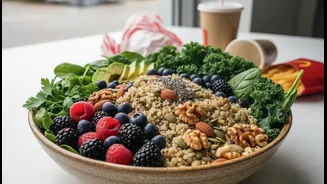









The Calorie Conundrum
For decades, the principle of 'calories in, calories out' has dominated conversations about weight management. A calorie is a unit of energy, and in simple terms, if you consume more energy than you burn, you gain weight. This straightforward equation
made calorie counting a popular strategy. While it can be a useful tool for understanding energy balance, it tells a dangerously incomplete story. Focusing only on the number ignores the vast differences in how foods impact your body, from hormone responses to feelings of fullness. Two foods can have the exact same calorie count but trigger vastly different metabolic processes.
Not All Calories Are Created Equal
Consider a 200-calorie snack. You could have about two-thirds of a chocolate bar, or you could have nearly 600 grams of broccoli. Both provide 200 calories of energy, but their nutritional impact is worlds apart. The broccoli is packed with fibre, vitamins C and K, and other compounds that support everything from digestion to your immune system. The chocolate bar, on the other hand, delivers mostly sugar and fat with very few beneficial nutrients. Similarly, 100 calories from a boiled egg provides high-quality protein and essential vitamins, while 100 calories from a sugary soda offers virtually no nutritional value. This is the core idea of nutrient density: a measure of the vitamins, minerals, and other health-promoting compounds a food contains relative to its calorie content.
The Critical Role of Food Processing
The difference becomes even more stark when looking at ultra-processed foods (UPFs). These are industrial formulations designed to be hyper-palatable, often by adding sugar, unhealthy fats, and salt while stripping away fibre and nutrients. Studies have shown that the physical structure of these foods matters. Because they are often soft and easy to consume, people tend to eat them faster and consume more calories before their body’s fullness signals can kick in. Research has demonstrated that even when matched for calories and macronutrients, diets high in ultra-processed foods can lead to overeating and weight gain. This is because whole, minimally processed foods interact with our gut and brain differently, promoting satiety and stable energy levels.
Satiety, Energy, and Overall Health
Nutrient-dense foods, rich in protein, fibre, and healthy fats, are more satiating. They help you feel fuller for longer, which can naturally regulate your overall calorie intake without the stress of constant tracking. In contrast, 'empty calories' from processed snacks and sugary drinks can lead to sharp spikes and crashes in blood sugar, triggering cravings and a cycle of overeating. A diet focused on food quality rather than just calorie quantity is linked to a host of long-term health benefits, including a lower risk of chronic diseases like heart disease and diabetes, improved gut health, and better mental well-being.
How to Read a Label for Quality
Shifting your focus from calories to quality doesn't have to be complicated. When you look at a nutrition label, start by checking the serving size to put the other numbers in context. Then, look beyond the calorie count. Pay attention to the dietary fibre and protein content, as these nutrients contribute to fullness. Check the ingredients list; if it’s long and full of words you can’t pronounce, it's likely an ultra-processed product. A key number to watch is 'added sugars'. Natural sugars in fruit are different from the refined sugars added to so many packaged foods. Aim to keep your intake of added sugars, saturated fat, and sodium low.