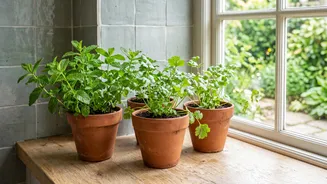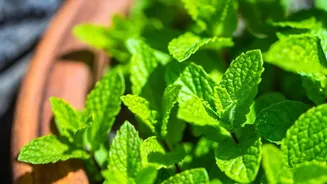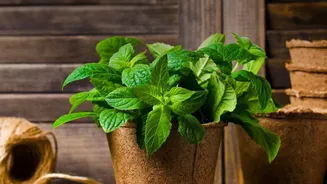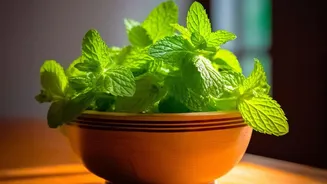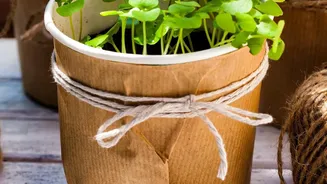


Craving fresh dhania and pudina in winter but struggling to get seeds to sprout? The cool weather and low light of winter can make germination tricky. Here’s how to create the perfect conditions for a thriving windowsill herb garden.
Understanding Winter Germination Challenges
Growing herbs on a
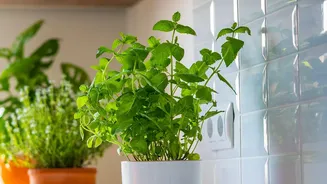
windowsill during cool weather presents a few key hurdles. The primary challenge is temperature; both coriander (dhania) and mint (pudina) seeds have ideal temperature ranges for germination that can be hard to meet on a chilly windowsill. Soil in pots placed near a cold window can easily drop below the optimal 15-22°C needed for these herbs to sprout. Secondly, reduced daylight hours and weaker sunlight intensity mean seedlings might not get the energy they need. Drafts from the window can cause drastic temperature fluctuations, and overwatering in an attempt to compensate for slow growth can lead to rot. Addressing these core issues—warmth, light, and moisture—is the key to success.
The Secret to Sprouting Coriander (Dhania)
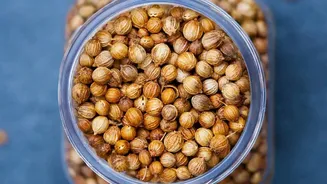
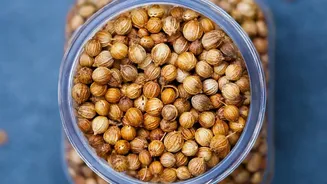
The most common reason for slow or failed coriander germination is planting the seeds whole. What we call a coriander 'seed' is actually a dried fruit containing two individual seeds. To significantly speed up germination, you must split this tough outer casing. You can do this by gently crushing the seeds with a rolling pin, the flat side of a knife, or by rubbing them between your palms. Once split, soak the seeds in water for 6-8 hours. This process, known as scarification and soaking, allows water to penetrate the seed more easily, triggering the germination process much faster. Coriander seeds prefer to be in the dark to germinate, so ensure you cover them with about a centimetre of soil. With these steps, you are working with the seed's biology, not against it.
Mastering Mint Seeds for Quick Growth
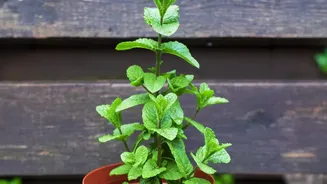
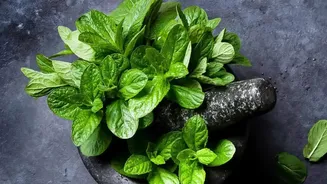
Mint seeds are famously tiny and have their own specific needs. Unlike coriander, mint seeds require light to germinate, so they should not be buried deep in the soil. The best technique is to scatter the seeds evenly over the surface of your moist potting mix and then gently press them down to ensure good contact with the soil. You can cover them with a very light dusting of soil or vermiculite, but no more. To further encourage sprouting, soaking mint seeds in warm water for a few hours before planting can be beneficial. Because the seeds are so small, it is important to keep the soil surface consistently moist, but not waterlogged. Using a spray bottle to mist the surface is an ideal way to water without dislodging the seeds.
Creating a Warm Microclimate for Your Pots
Maintaining a consistent, warm soil temperature is crucial in winter. A windowsill can be one of the coldest spots in a room. To combat this, avoid placing pots directly on a cold surface. You can create an insulating layer by wrapping pots in bubble wrap or placing the smaller pot inside a larger one and stuffing the gap with newspaper. Placing your pots on a tray can also help buffer them from the cold. For an extra boost, cover your pots with a clear plastic lid or plastic wrap to create a mini-greenhouse effect; this traps both heat and humidity, which aids germination. Once the seedlings sprout, you can remove the cover. Positioning your pots in a south-facing window will provide the most warmth and light.
The Importance of Light and Moisture
Herbs generally need at least six hours of sunlight per day to thrive. During winter, this can be difficult to achieve. Always choose your sunniest windowsill, which is typically south-facing. Rotate your pots every few days to ensure all sides of the plant get light and to prevent them from leaning in one direction. When it comes to watering, the rule is 'moist, not soggy'. Let the top inch of soil dry out slightly between waterings. Overwatering is a common killer of indoor herbs, especially in winter when evaporation is slower. Check the soil moisture by inserting a finger into the pot; if it feels dry an inch down, it's time to water.
Choosing the Right Pot and Soil Mix
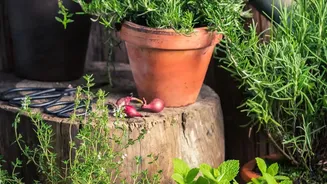
Your choice of container and soil can make a big difference. Both coriander and mint prefer well-draining soil. A standard, high-quality potting mix, perhaps with a little added compost, will work well. Avoid using heavy garden soil, which can become compacted and waterlogged in a pot. Ensure any pot you use has drainage holes at the bottom. This is non-negotiable, as it allows excess water to escape and prevents the roots from sitting in water, which leads to rot. For coriander, which has a long taproot, a deeper pot is preferable. Mint has a spreading root system, so a wider pot is a good choice to give it room to grow.