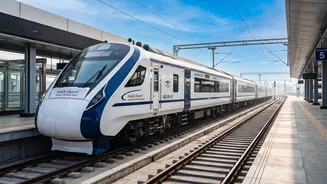



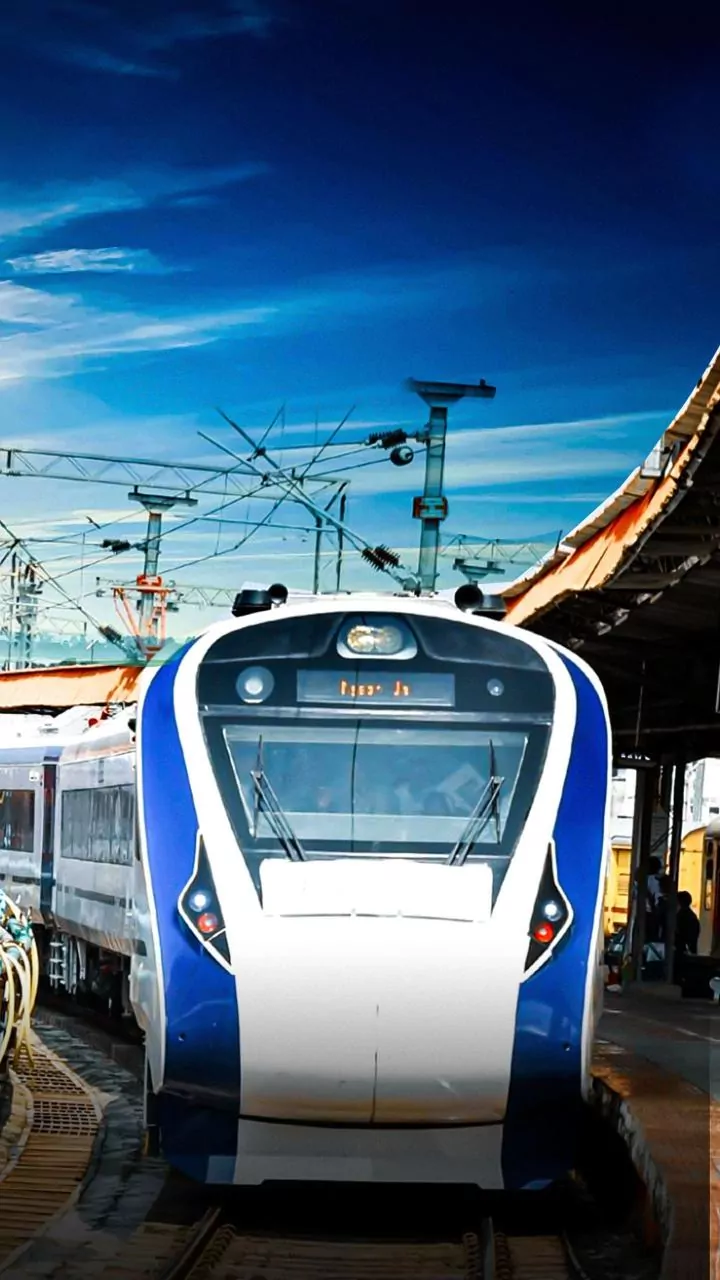

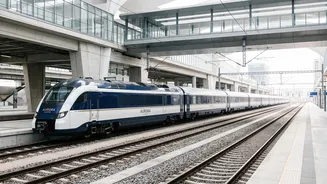

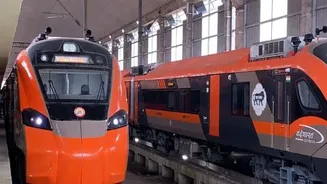
Indian Railways has launched a new Vande Bharat sleeper train connecting India's IT hub, Bengaluru, with its financial capital, Mumbai. This move marks a major upgrade in overnight travel between the two bustling metropolises.
A New Era of Overnight Travel
On November 1, 2026, Union
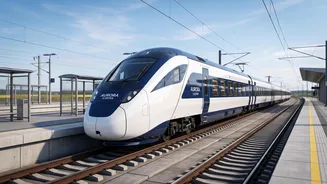
Railway Minister Ashwini Vaishnaw flagged off the much-awaited Vande Bharat sleeper express from SMVT Bengaluru to Chhatrapati Shivaji Maharaj Terminus (CSMT) in Mumbai. This is South India's first Vande Bharat in a sleeper format and is set to redefine overnight journeys between the two major economic centres. For years, passengers had limited direct daily options, with most trains taking between 22 and 24 hours. This new service promises to cover the distance in about 16 hours, offering a faster, more comfortable, and modern alternative for professionals, students, and tourists alike. Regular commercial services are slated to begin from Mumbai on November 2 and from Bengaluru on November 3.
Timings and Route Details
The service is scheduled to run six days a week. Train No. 27652 will depart from SMVT Bengaluru at 7:45 PM and arrive at CSMT Mumbai at 11:55 AM the next day, with no service on Mondays. In the opposite direction, Train No. 27651 will leave CSMT Mumbai at 8:10 PM and reach SMVT Bengaluru at 12:00 PM noon the following day, excluding Tuesdays. The train will make eight stops, connecting key towns across Karnataka, Andhra Pradesh, and Maharashtra. The designated halts are Anantapur, Guntakal, Raichur, Yadgir, Kalaburagi, Solapur, Pune, and Kalyan, enhancing connectivity for several regional hubs.
Inside the Modern Sleeper
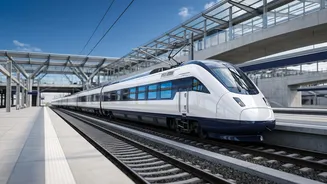
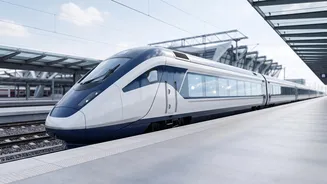
The Vande Bharat sleeper is designed for comfort on long-distance overnight routes. The 16-coach train has a capacity of 823 berths, configured into three classes: AC First Class, AC 2-tier, and AC 3-tier. It comprises one AC First Class coach, four AC 2-tier coaches, and eleven AC 3-tier coaches. Passengers can expect ergonomically designed berths with improved cushioning for better sleep quality. Other features include enhanced noise reduction, bio-vacuum toilets, a passenger infotainment system, and modular pantry cars. The train is also equipped with modern safety systems like Kavach, an indigenous automatic train protection system.
How It Compares: Speed, Time, and Cost
The headline feature of the Vande Bharat sleeper is its speed. The trainsets are designed to operate at up to $160$ km/h$, which enables faster acceleration and deceleration compared to conventional locomotive-$hauled$ trains like the Rajdhani Express. This capability helps slash the Bengaluru-$Mumbai$ journey time by nearly six to eight hours compared to the popular Udyan Express$, which takes around $23$-$24$ hours.$ In terms of cost$, the new service commands a premium fare.$ Indicative fares are approximately ₹$2$,$810$ for AC $3$-tier$, ₹$3$,$630$ for AC $2$-tier$, and ₹$4$,$450$ for AC First Class$, though these can vary.$ While this is higher than older trains$, it offers a competitive middle ground when compared to air travel$, which is significantly more expensive$, especially without advance booking.$
The Bigger Picture for Indian Railways
The launch of the Bengaluru-$Mumbai$ route is a significant step in Indian Railways'$ plan to modernise its long-$distance$ network.$ This service is the third Vande Bharat sleeper in the country$, following introductions on other key corridors.$ These trains$, manufactured under the '$Make in India$' initiative$, are designed to replace and upgrade the existing premium train network.$ Railway Minister Ashwini Vaishnaw has also announced plans for another Vande Bharat sleeper service from Bengaluru that will connect northern Karnataka via Hubballi before proceeding towards Pune and Mumbai$, signaling a broader strategy to enhance connectivity in the region.$