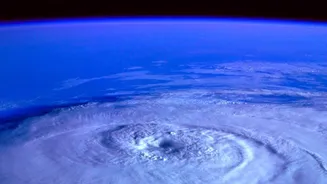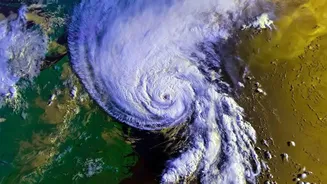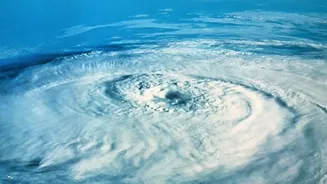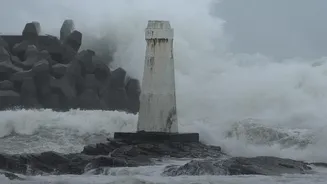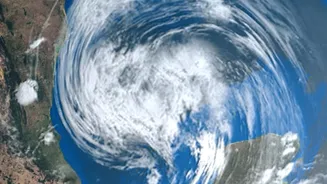







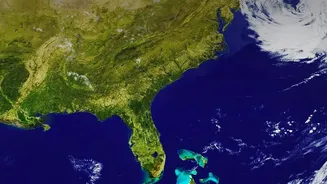
For centuries, India's coastlines have lived with the seasonal fury of cyclones. But the storms are changing. Scientists are observing new, unsettling patterns, yet they caution against treating complex climate projections as absolute facts.
More Than Just a Tally
When discussing
cyclones, the first question is often: are we getting more of them? The answer, according to many meteorologists, is not a simple yes or no. While the overall frequency of cyclones forming in the North Indian Ocean has not necessarily increased, the nature of these storms is undergoing a significant transformation. The focus is shifting from counting the storms to measuring their destructive power. Scientists are observing that cyclones are maintaining their strength for longer durations after making landfall and, more critically, are becoming more intense, more quickly. This phenomenon, known as 'rapid intensification', means a relatively weak storm can escalate into a severe cyclone in less than 24 hours, posing a severe challenge for disaster management agencies.
A Tale of Two Seas
Historically, the Bay of Bengal has been India's primary cyclone hotspot, accounting for the vast majority of storms. The Arabian Sea, by contrast, was relatively placid. This long-standing meteorological balance is now shifting. While the Bay of Bengal remains an active basin, the Arabian Sea has seen a marked uptick in the frequency and intensity of severe cyclones over the past couple of decades. Warmer sea surface temperatures in the Arabian Sea are believed to be a key driver, providing the thermal energy needed to fuel these powerful systems. This change has put India's western coast, from Gujarat to Kerala, on higher alert, forcing a strategic rethink of preparedness in regions that were once considered less vulnerable.
The Challenge of Looking Ahead
This is where the headline's crucial caveat comes in: 'without treating projections as certainty'. While the trends are clear, forecasting the exact behaviour of future cyclones remains one of climate science's greatest challenges. Climate models are incredibly complex simulations of the Earth's atmosphere and oceans, but they operate on a coarse global scale. Projecting the path or intensity of a specific, localised weather event like a cyclone years or decades in advance is fraught with uncertainty. Factors like a cyclone's interaction with the land, upper-level steering winds, and cyclical phenomena like El Niño all introduce variables that are difficult to pin down with absolute confidence over the long term.
From Prediction to Preparedness
Given the uncertainties in longterm prediction, the scientific and administrative focus is on bolstering shortterm forecasting and overall resilience. The India Meteorological Department (IMD) has made significant strides in improving its 3to5day forecasts, providing crucial lead time for evacuations and disaster response. The emphasis is on what is known: that warmer seas can support stronger storms and that sealevel rise will worsen coastal flooding from storm surges. Therefore, the strategy is not to wait for a perfect 30year forecast but to act on the current understanding. This involves strengthening coastal infrastructure, restoring natural barriers like mangroves, and continuously improving early warning dissemination to the last mile.