




Arunachal Pradesh, a land of breathtaking biodiversity, stands at a crossroads. As tourism grows, two distinct paths are emerging: one of community-led conservation and another of unchecked commercial development. The choice will define its future.
The Community-Led Sanctuary
In
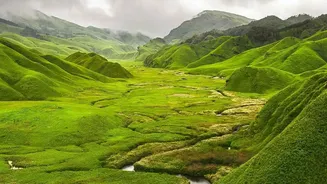
the Western Arunachal Landscape, a powerful conservation model is thriving. Here, indigenous communities have voluntarily set aside vast tracts of ancestral land as Community Conserved Areas (CCAs). One of the most prominent examples is the Thembang Bapu Community Conserved Area (TBCCA), which spans an impressive 635 square kilometres of dense forests, alpine meadows, and critical habitats. Started in 2004 with support from organisations like WWF-India, the CCA model empowers villagers to become the primary guardians of their natural heritage. The management committee, comprising village elders, panchayat members, and youth, oversees the forest, ensuring its resources are used sustainably and its wildlife is protected. This is not a top-down government project, but a grassroots movement rooted in a deep sense of ownership and responsibility.
Tradition as a Conservation Tool
The success of these protected valleys is intrinsically linked to ancient traditions and spiritual beliefs. For centuries, communities like the Monpa have revered certain forest patches as sacred groves, known locally as 'Gompa Forest Areas' or 'Phu'. These areas, often attached to monasteries or dedicated to mountain deities, are protected by strong cultural taboos where hunting, logging, and even touching fallen leaves are forbidden. This belief system fosters a profound respect for nature, viewing the mountains, rivers, and forests as living entities. This traditional ecological knowledge, passed down through generations, forms the ethical backbone of the modern CCA, proving that ancient wisdom is a powerful tool for contemporary environmental challenges.
The Other Side: A Torrent of Concrete
In stark contrast, other parts of the Himalayas are grappling with the consequences of a different development model. An explosive growth in tourism, often unplanned, has led to a proliferation of hotels, resorts, and guesthouses. A recent parliamentary panel report highlighted that this 'unbridled' growth in infrastructure is putting immense pressure on natural resources across the Himalayan region. Unregulated construction on fragile slopes destabilises the land, contributing to soil erosion and increasing the risk of landslides. The influx of tourists often outstrips the capacity of local waste management systems, leading to pollution of rivers and forests with plastic and other garbage. This model, which prioritizes commercial expansion over ecological limits, threatens the very pristine beauty that attracts tourists in the first place.
What 'Cleaner Forests' Really Means
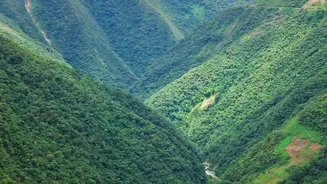
The term 'cleaner forests' goes far beyond the absence of litter. In valleys managed by communities, the entire ecosystem is healthier. Because these areas restrict harmful activities, they serve as secure habitats for an astonishing array of wildlife, including endangered species like the red panda, snow leopard, and Himalayan black bear. Community rangers actively patrol these areas to monitor threats and ensure rules are followed. These intact forests maintain crucial wildlife corridors, allowing animals to move freely, which is essential for genetic diversity. Furthermore, by preventing deforestation and degradation, these protected valleys preserve natural springs and safeguard the stability of the soil, ensuring the land remains resilient. The result is not just a forest that looks clean, but one that is ecologically functional and teeming with life.
A Sustainable Path Forward
The community conservation model in Arunachal Pradesh offers a blueprint for sustainable tourism. Instead of large, impersonal resorts, visitors stay in community-run homestays, eat local food, and are guided by trained local youth. This approach, known as community-based tourism, ensures that the economic benefits flow directly to the local families, creating a powerful incentive for conservation. The Thembang CCA, for example, generated significant revenue from this model, which is equitably distributed among households. This proves that economic prosperity and environmental preservation do not have to be mutually exclusive. The challenge now is to apply these lessons more broadly, balancing the state’s economic aspirations with the urgent need to protect its fragile, invaluable ecosystems.