







A Fiery Gift from Halley's Comet
The Orionid meteor shower is one of the most beloved astronomical events of the year, and for good reason. It’s created from the cosmic dust left behind by none other than Halley's Comet, arguably the most famous comet in history. While the comet itself
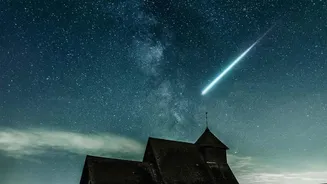
only visits the inner solar system every 76 years—last seen in 1986 and not due back until 2061—its legacy of debris provides two annual meteor showers: the Eta Aquariids in May and the Orionids in October. What makes the Orionids particularly special is their speed and brightness. These tiny particles, often no bigger than a grain of sand, slam into Earth's atmosphere at a blistering 66 kilometres per second. This incredible velocity causes them to burn up intensely, often producing very bright, swift meteors. Lucky observers may even spot a “persistent train,” a glowing trail of incandescent debris that can linger for several seconds, or a “fireball,” which is an exceptionally bright and explosive meteor.
Peak Viewing Time From India
The key to any meteor shower is timing. For 2026, the Orionid meteor shower will be active from early October through early November, but the absolute best time to watch will be during its peak. The peak is forecast for the night of October 21-22. Specifically for viewers in India, the most activity is expected in the hours after midnight. However, this year presents a unique challenge that makes a specific window much more important. The shower’s radiant—the point in the sky from which the meteors appear to originate—is in the constellation Orion. In India, Orion will rise in the eastern sky after midnight, meaning the hours leading up to dawn are generally the best time to see the highest number of meteors. This is when our side of the Earth is facing directly into the stream of cometary debris.
The Challenge: A Bright Moon
Unfortunately, sky-gazers in 2026 will have to contend with a significant obstacle: a bright Moon. On the peak night of October 21, the Moon will be in its waxing gibbous phase, around 80% illuminated. A bright moon acts like natural light pollution, washing out the fainter meteors and drastically reducing the number you can see. But don't lose hope. There is a clear strategy to overcome this. The bright Moon will set a few hours before sunrise. This creates a precious window of true darkness that is ideal for viewing. Therefore, the absolute best time to watch the Orionids in India this year will be in the pre-dawn hours of October 22, specifically after the Moon has set. Aim to be outside from around 3:00 AM IST until dawn breaks. This period will offer the darkest skies combined with the radiant being high in the sky, maximizing your chances.
Where to Look in the Night Sky
As their name suggests, the Orionids appear to radiate from the constellation Orion the Hunter. To find it, look for three bright stars in a straight line, which form Orion's belt. The radiant is located near the reddish star Betelgeuse, which marks the hunter's shoulder. However, a common mistake is to stare directly at the radiant. While the meteors originate from this point, they will streak across all parts of the sky. Looking only at Orion means you might miss the longest and most spectacular meteors further away. The best advice is to find a comfortable position, lie back, and take in as wide a view of the sky as possible. The meteors can appear anywhere and everywhere, so a broad field of vision is your best bet.
Your Guide to a Perfect Viewing Night
To make the most of the Orionid meteor shower, a little preparation goes a long way. First, get away from city lights. The darker your location, the more meteors you will see. Find a park, a field, or any spot with a wide, unobstructed view of the sky. Second, give your eyes time to adjust. It takes about 20-30 minutes for your eyes to fully adapt to the dark, so put away your phone and avoid bright lights. Third, comfort is key. Since you'll be looking up for a while, bring a blanket to lie on or a reclining chair. Even on milder nights, it can get chilly in the pre-dawn hours, so dressing in layers is a smart move. Finally, be patient. Meteor showers are not a constant downpour; they come in spurts. Expect to see about 15 to 20 meteors per hour under dark skies, though the rate can vary.