






A Policy Shift Opens The Skies
The pivotal change arrived in 2020 when the government opened the space sector to private participation. This led to the creation of the Indian National Space Promotion and Authorisation Centre (IN-SPACe), a single-window agency designed to promote, authorize,
and supervise the activities of non-governmental entities. IN-SPACe's role is to bridge the gap between private companies and the vast infrastructure and expertise of the Indian Space Research Organisation (ISRO). This reform was designed to transition ISRO towards research and development for complex future missions, while allowing private players to take over manufacturing and operational services. The goal is to significantly expand India's share of the global space market, with projections suggesting the domestic space economy could grow from around $8.4 billion to over $44 billion by 2033.
The Launch Pad Pioneers
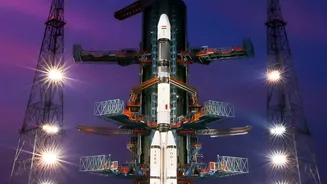
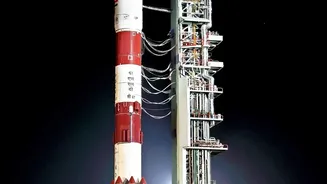
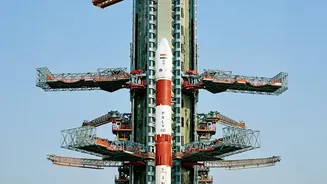
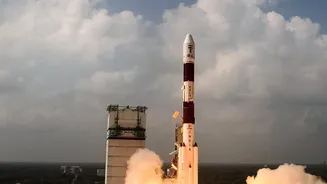
At the forefront of this new wave are startups building launch vehicles, a domain once exclusive to ISRO. Hyderabad-based Skyroot Aerospace made history in July 2026, becoming India's first private company to launch a rocket, the Vikram-1, into orbit. This achievement made India only the third country, after the US and China, to have a private company demonstrate orbital launch capability. Close behind is Chennai-based Agnikul Cosmos, which is developing its Agnibaan rocket. Agnibaan is notable for its semi-cryogenic engine, which is the world's first single-piece 3D-printed rocket engine. Agnikul has successfully test-fired clusters of these engines and is targeting its first orbital launch by the end of 2026. These companies aim to offer cost-effective and rapid launch services for the booming small satellite market.
India's Eyes in the Sky
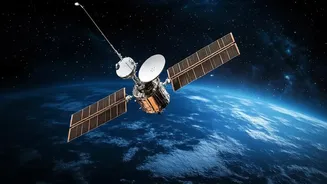
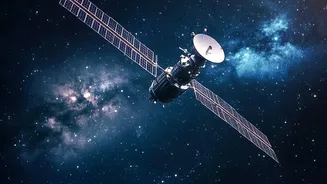
Beyond launch vehicles, startups are making significant strides in satellite manufacturing and services. Pixxel, a Bengaluru-based startup, is building a constellation of hyperspectral imaging satellites. Unlike standard satellites that capture a few bands of light, Pixxel's technology captures data across hundreds of spectral bands, providing incredibly detailed information about the Earth's surface. This has applications in detecting crop diseases, monitoring pollution, and identifying illegal mining activity. Another key player is Dhruva Space, one of the country's first space-tech startups, founded in 2012. The Hyderabad-based company offers full-stack space engineering solutions, building everything from modular satellite platforms to ground stations, providing an integrated service for clients from design to deployment.
From Data to Decisions
The space economy isn't just about hardware. A significant opportunity lies in the downstream segment: analyzing the vast amounts of data beamed back from satellites. This is where space technology translates into direct economic impact across various sectors. The data from Earth observation satellites, like those built by Pixxel, can be used to create decision-making tools for agriculture, urban planning, disaster management, and financial services. Startups are developing platforms that convert raw satellite imagery into actionable intelligence, helping farmers monitor crop health, insurance companies assess flood damage, and governments track infrastructure development. This downstream market is considered the largest economic opportunity in the space sector.
Challenges on the Final Frontier
Despite the rapid growth and landmark achievements, the path for India's space startups is not without obstacles. These deep-tech ventures are capital-intensive and have long gestation periods, making it difficult to secure early-stage funding. While investment has grown significantly, many companies are still navigating the path to profitability and scale. Furthermore, a lack of sufficient testing facilities and infrastructure outside of ISRO's control remains a bottleneck for rapid development and prototyping. Regulatory clarity and attracting top-tier aerospace talent are other persistent challenges as the ecosystem matures.