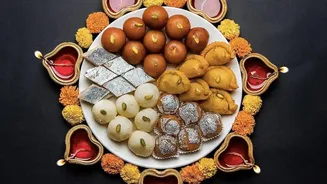


Prioritise Freshness and Storage
Always check for a 'best before' or expiry date, which is a mandatory requirement by the Food Safety and Standard Authority of India (FSSAI) for sweet boxes. For loose sweets, don't hesitate to ask the seller about when they were made and their recommended
shelf life. Milk-based sweets like sandesh and rasmalai are highly perishable and have different storage needs than dry sweets like laddoos or barfis. Look for shops that keep perishable items in chilled cabinets and ensure the sweets on display are protected from dust and flies. A stale sweet may appear dry, have a slightly off smell, or a hardened texture.
Beware of Unnaturally Bright Colours
Vibrantly coloured sweets might be visually appealing, but they can be a major red flag. Some sellers use non-permitted and potentially harmful industrial dyes like metanil yellow to make sweets look more attractive. These synthetic colours can be carcinogenic and neurotoxic. A safer choice is to opt for sweets with natural, muted colours. Pure, well-made mithai gets its colour from its ingredients—the golden brown of besan, the creamy white of milk, or the gentle yellow from pure saffron, not from a bottle of synthetic dye. If a sweet looks too bright to be true, it probably is.
Scrutinise the Silver Foil (Vark)
That shimmering layer on your kaju katli or barfi should be pure, edible silver. Unfortunately, it's often substituted with cheaper and toxic aluminium foil. There's a simple test you can do: gently rub the vark on the sweet with your finger. Real silver leaf is incredibly delicate and will disintegrate or dissolve into your skin. Fake foil made from aluminium, however, will not dissolve and will instead roll up into a tiny, sticky ball. Genuine silver has a soft, subtle sheen, while aluminium often looks excessively bright and metallic.
Examine the Main Ingredient: Khoya
Khoya, or mawa, is the base for many traditional Indian sweets and is one of the most frequently adulterated items during the festive season. To increase volume and cut costs, some producers mix in starch, blotting paper, urea, or detergent. Pure khoya has a slightly grainy texture, an oily feel, and a sweet, milky aroma. If it feels pasty, dry, or has no smell, be cautious. A simple home test suggested by FSSAI involves dissolving a small amount of khoya in hot water and adding a few drops of iodine. If the solution turns blue, it confirms the presence of starch.
Use Your Senses: Smell, Touch, and Taste
Your senses are powerful tools. A fresh sweet should have a pleasant, appetising aroma characteristic of its ingredients, like ghee, milk, or roasted flour. If you detect any sour, chemical, or stale smell, it's a clear warning sign. The texture is also a giveaway. The sweet should not be overly sticky or dry. A small taste test can also help; if the sweet tastes soapy, unusually sour, or just 'off', do not consume it. High demand during Diwali often leads to the use of poor-quality or rancid oil and ghee, which can spoil the taste and cause health issues.
Buy from Reputable and Licensed Vendors
While it might be tempting to buy from a roadside stall offering a festive discount, your safest bet is always a trusted and licensed sweet shop. Look for a displayed FSSAI license or registration number, which indicates the business is regulated. A clean, hygienic shop with sweets kept in covered displays is a basic but important indicator of quality control. In recent years, FSSAI has increased its surveillance during the festive season, deploying mobile testing vans and conducting raids on suspicious units, but the first line of defence is always the consumer's own diligence.