





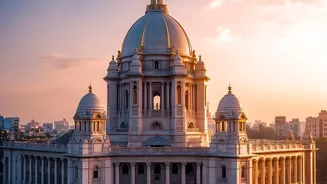
Kolkata has many titles: City of Joy, City of Palaces, and the Cultural Capital of India. But one of its most intriguing, 'the London of India,' speaks to a deep and complex history. So, where did this famous nickname come from?
The Seat of an Empire
The most direct reason
for the comparison is historical. For nearly 140 years, from 1772 until 1911, Kolkata (then known as Calcutta) served as the capital of British India. It was the administrative and commercial heart of the entire British Empire in the East, making it the 'second city' of the empire after London itself. As the headquarters of the British East India Company and later the British Raj, the city was intentionally developed to project imperial power and prestige, mirroring the grandeur of the British capital. This period saw a massive influx of investment and construction, transforming three small villages into a sprawling metropolis designed to European standards.
An Architectural Echo
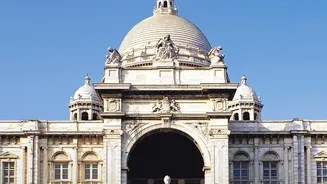
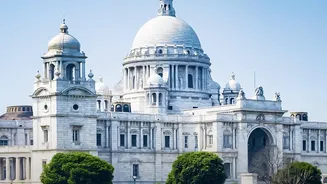
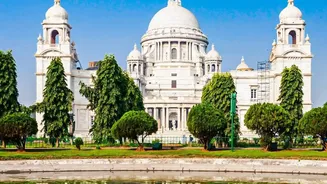
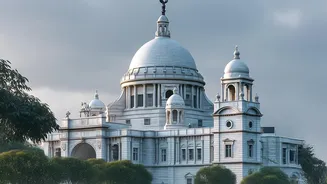
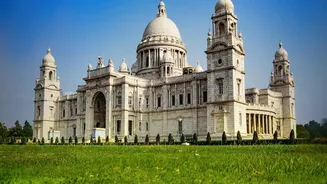
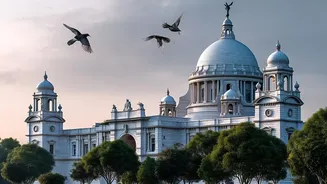
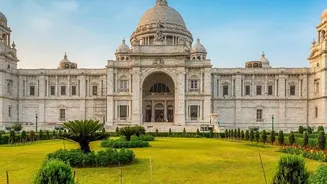
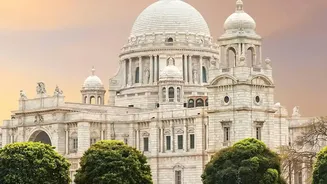
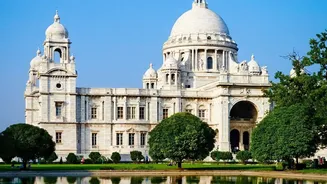
Walk through central Kolkata today, and the nickname begins to make visual sense. The British built a city filled with grand edifices in styles popular back home, leaving a legacy of Neoclassical, Gothic, and Victorian architecture. Landmarks like the Calcutta High Court, the General Post Office, and the iconic Writers' Building were designed to evoke a sense of London's imperial might. The most famous of these is the Victoria Memorial, a magnificent white marble monument built to honour Queen Victoria, which some envisioned as a 'British Taj Mahal'. This vast collection of colonial-era buildings, unmatched in many other former colonies, created a distinct townscape that felt like a sub-continental reflection of London.
A River Runs Through It
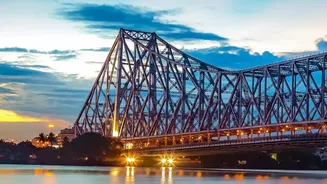
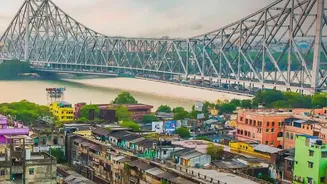
Another simple but powerful parallel lies in geography. Just as London grew along the banks of the River Thames, Kolkata's development is inextricably linked to the Hooghly River. The Hooghly was a vital artery for trade and communication during the colonial period, connecting the city's port to global shipping routes. This riverside setting, with its ghats and promenades lined with colonial structures, creates a landscape that visually echoes the Thames' role in London's identity as a historic trading hub. The functional and visual importance of the river in both cities strengthens the comparison.
Cultural and Intellectual Life
The connection goes beyond just buildings and rivers. The British established numerous institutions that mirrored those in London, shaping the city's cultural fabric. Anglophile gentlemen's clubs like the Bengal Club and the Royal Calcutta Golf Club (the oldest outside of Britain) became elite social hubs. The city also became a major centre for English education, journalism, and intellectual thought, fostering a unique 'Babu culture' that blended English liberalism with Bengali intellectualism. For over a century, Kolkata was considered the intellectual and artistic capital of the region, led by luminaries like Rabindranath Tagore and Satyajit Ray. This fusion of cultures cemented its reputation as a sophisticated urban centre with a deeply ingrained intellectual curiosity, much like London.
A Nickname for a Modern City
Today, the 'London of India' nickname is viewed with a mix of pride and complexity. For some, it's a nod to the city's rich architectural heritage and its historical significance on the world stage. For others, it’s a reminder of a colonial past. The city's tram system, the only one remaining in India, adds to an old-world charm that strengthens the comparison for many visitors. While modern Kolkata has forged its own vibrant identity, far removed from its colonial origins, the echoes of its past as the empire's second city remain a fundamental part of what makes it so unique. The name persists not just as a historical fact, but as a description of the enduring atmosphere that still lingers in its streets and structures.